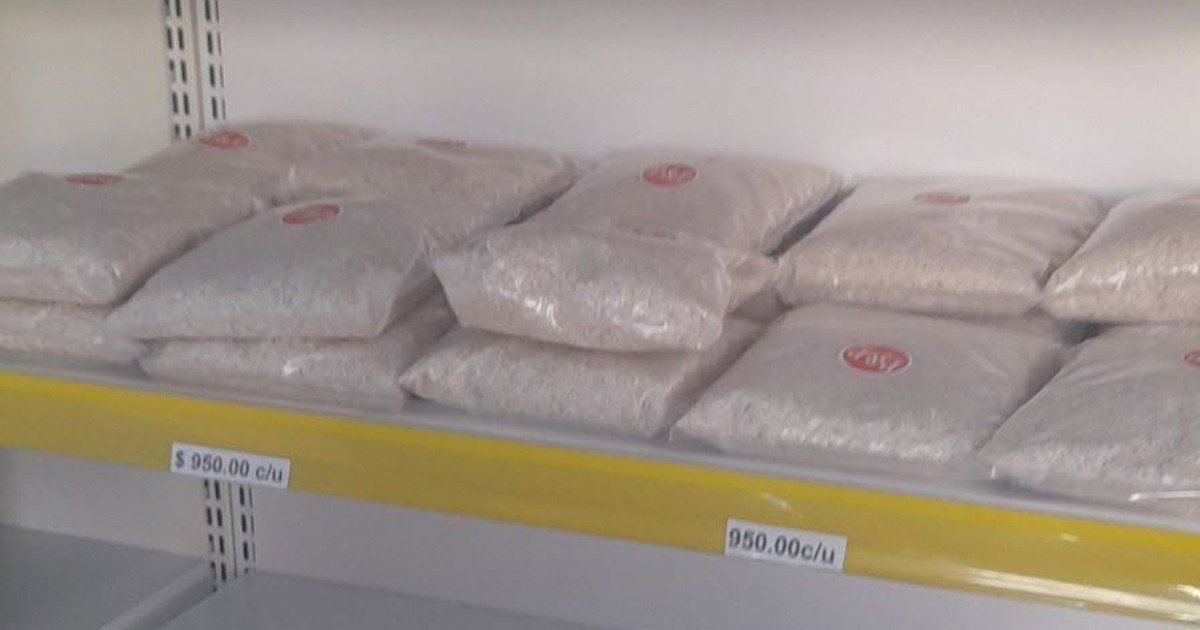
A Cuban mother residing in Trinidad, Sancti Spíritus, reported this Thursday on Facebook the relentless rise in rice prices and her inability to feed her daughters despite having money in her bank card.
"I don't know where this is going to end. Every day, everything keeps rising more and more. Today, I went to Yoyo's mipyme, where I filmed the video a few days ago, and I left feeling disappointed. A few days ago, rice was over 800, and now it's over 900 for a bag," wrote the woman who identifies herself as Estilo Sans.
"I went to pay by transfer and was disappointed because they didn't accept it. Then I went to several small businesses and no one accepted transfers. I know I was late, but it was when the money was transferred to my card so my girls could eat today. I returned empty-handed and with a pain I can't even express. It's hard to have money in your account and not be able to feed your children, and even harder that today's price is one thing and tomorrow it will be different," she confessed.
"I don't know where this is going to lead us, and no one is doing anything. It's hard, very hard what we, the mothers, are going through in this country, and not just the mothers: everyone, a teacher, a doctor, even an ordinary worker. We need to eat, to feed our children, and having money on a card is useless in this country. And now what am I supposed to do if everywhere only accepts a thousand pesos? What can you eat in a day with a thousand pesos? Nothing. This situation is outrageous," she added.
Several Cubans confirmed in the comments of the post that the situation is not exclusive to Trinidad. From Las Tunas, they wrote: "Here, the price is at 1,100 pesos and keeps rising." From Granma: "At 1,100, no one is stopping it, and it will continue to rise." From Moa, in Holguín: "Here it's even 1,100."
The structural trigger for the price crisis was the Decree 156 signed by Prime Minister Manuel Marrero Cruz, which removed the national price cap on rice in July, previously set at 155 Cuban pesos per pound. Since then, prices have been on a continuous rise. The minimum wage in Cuba is barely 3,210 pesos since July 2026. "Nothing is priced within reach of the salary or pension. Eating is a luxury," noted another individual.
The rejection of electronic payments described by the Trinidadian is a widespread issue throughout the province. According to data from May 2026, less than 10% of private businesses in Sancti Spíritus regularly accepted transfers, despite Resolution 111/2023 from the Central Bank obliging small and medium-sized enterprises and self-employed workers to accept this payment method. The official press acknowledged the failure of transfer payments in Cuba.
Related videos:
Filed under: