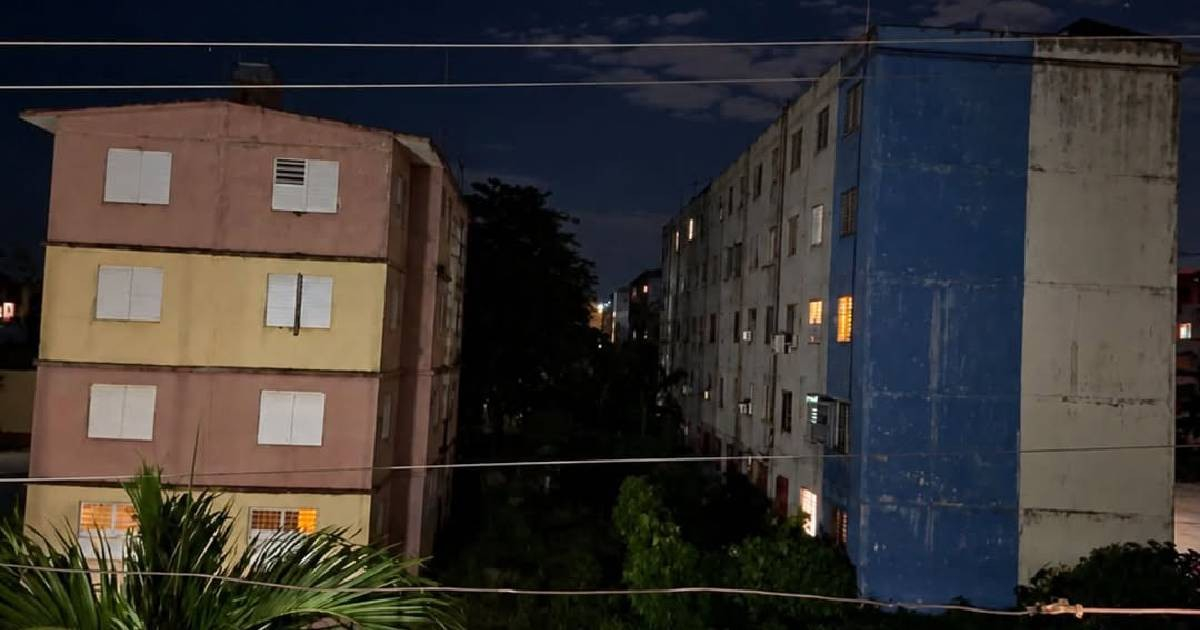
Cuba is heading into another night of massive blackouts this Saturday, with a National Electric System (SEN) unable to meet even half of the expected demand.
The Electric Union (UNE) forecasted an impact of up to 1,790 megawatts (MW) during the peak nighttime hours, amid an energy crisis that continues to affect the daily lives of millions of Cubans, reported the state-run portal Cubadebate.
The official figures once again highlight the seriousness of the Cuban energy crisis and the system's inability to ensure a stable electricity supply.
With a projected availability of just 1,070 MW against a demand of 2,830 MW, blackouts will continue to affect essential activities such as food preservation, water supply, meal preparation, and the operation of small businesses, while the population remains without clear prospects for a sustained recovery of the service.
The situation had already become critical by the early hours of the morning: at 06:00 hours, the National Electric System (SEN) had only 1,040 MW of available capacity against a demand of 2,317 MW, with 1,295 MW already affected at that time.
By noon, UNE estimated an impact of 1,350 MW, a figure that would increase further as night fell.
The only improvement expected during peak hours is the recovery of just 30 MW from unit three of the Cienfuegos thermal power plant, a marginal relief considering the magnitude of the deficit.
Three units remain out of service: unit one from the CTE Santa Cruz, unit two from the CTE Felton, and unit three from the CTE Renté. Additionally, three units are under maintenance: unit three of Santa Cruz, unit five of the CTE Nuevitas, and unit five of Renté. The limitations in thermal generation amount to 455 MW.
On Friday, the actual maximum impact reached 1,814 MW at 7:40 PM, with service interrupted for 24 hours and the disruption persisting throughout the entire night.
The photovoltaic solar parks contributed 4,655 MWh on Friday, with a maximum output of 724 MW at noon. However, this contribution does not cover the nighttime peak, which is when the greatest impacts occur.
The same units in Santa Cruz, Felton, and Renté have been out of service continuously since at least November 2nd, when the UNE forecasted only 958 MW available against a demand of 2,850 MW.
In Santiago de Cuba, residents of Micro 7 reported being without electricity for more than a month, while the incident map recorded 414 events in the municipality and 433 across the province as of Friday.
The crisis is due to structural causes that the Cuban regime has failed to address: thermoelectric plants that have been in operation for over 40 years, deferred maintenance, a shortage of spare parts due to a lack of foreign currency, and chronic dependence on imported oil.
By the end of October, the outages exceeded 2,000 MW for three consecutive days: 2,004 MW on the 29th, 2,039 MW on the 30th, and 2,022 MW on the 31st, making the first week of November a direct extension of that deterioration with no signs of reversal.
Related videos:
Filed under: