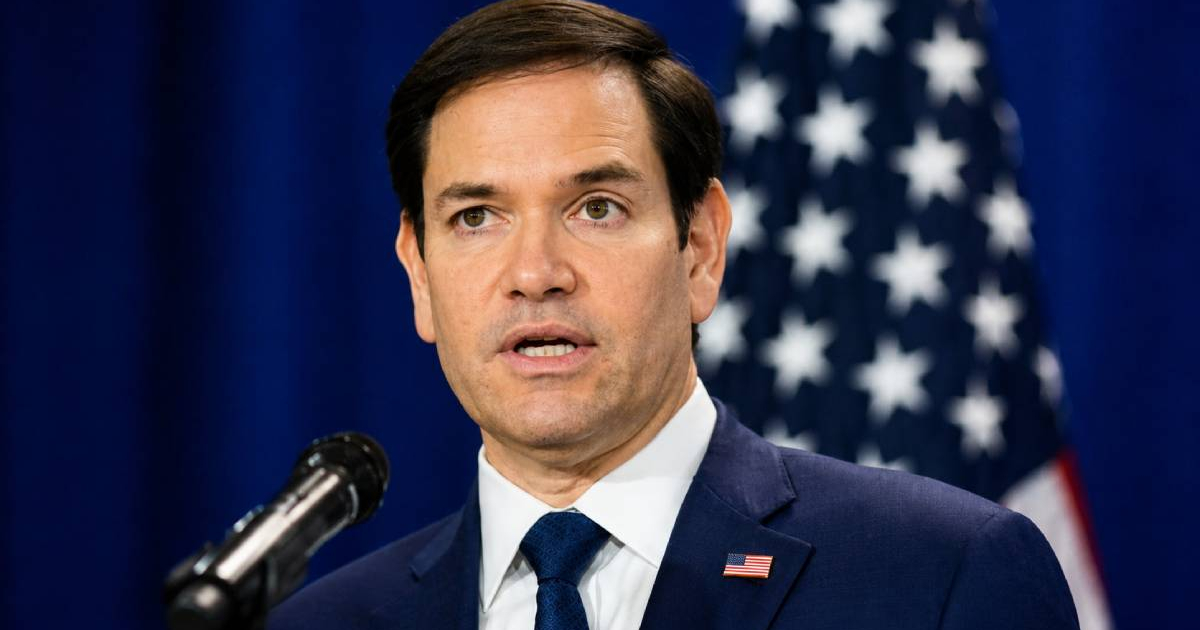
The U.S. Secretary of State Marco Rubio convened a meeting at the end of October with about two dozen high-ranking officials from his department, where he issued a direct warning: any unethical behavior will result in dismissal, regardless of the political contacts or connections that the official in question may have, according to four people familiar with the matter cited by Reuters.
The message was issued during a period of rising ethical tension within the State Department, primarily triggered by the departure of Kimberly Guilfoyle as ambassador to Greece in mid-October, following allegations of selling access to government officials in exchange for money, gifts, and favors. Guilfoyle described the reports as false and announced that she will defend her reputation.
In the meeting, Rubio also noted that "too many officials are making decisions or pushing political agendas without coordinating," and ordered that important decisions require his approval or that of Deputy Secretary Christopher Landau.
Moreover, he established that his office must approve all international travel for political staff, citing what he considered an excess in such trips.
Shortly after the meeting, the head of political planning Jeremy Lewin resigned from his position. Sources cited by Reuters indicated that his departure was partly due to concerns about his work on matters outside of his scope without proper coordination, and for acting against "certain directives from the secretary."
Lewin, however, denied having been fired. "The suggestion that I was fired is false. As had been planned for weeks with the secretary and his team, after staying longer than expected to complete key projects, I submitted my resignation before the midterm elections to take a position in the private sector and organize my wedding," he stated in a statement to Reuters.
Lewin had joined the government through Elon Musk's Department of Government Efficiency and was a key player in dismantling the U.S. Agency for International Development. He was also the primary advisor to Rubio on policy towards Cuba and Venezuela, which is why his departure raised concerns about the continuity of those policies.
Rubio's movement comes at a politically sensitive time for the Trump administration: the Democrats regained control of both chambers of Congress in the midterm elections on Tuesday, allowing them to initiate formal investigations into potential conflicts of interest starting in January 2027.
Meanwhile, the presidential race for 2028 has begun to take shape. Rubio is seen as one of the possible Republican candidates, alongside Vice President JD Vance and Senator Ted Cruz. Rubio himself has downplayed the rumors regarding his potential candidacy, although he has not publicly dismissed them either, and the State Department described this week the rumors about his possible resignation as "completely unfounded fake news".
The Trump administration has systematically denied allegations of conflicts of interest, but the new Democratic majority in Congress will have the ability to issue subpoenas and initiate formal investigations when it takes control in January 2027.
Related videos:
Filed under: