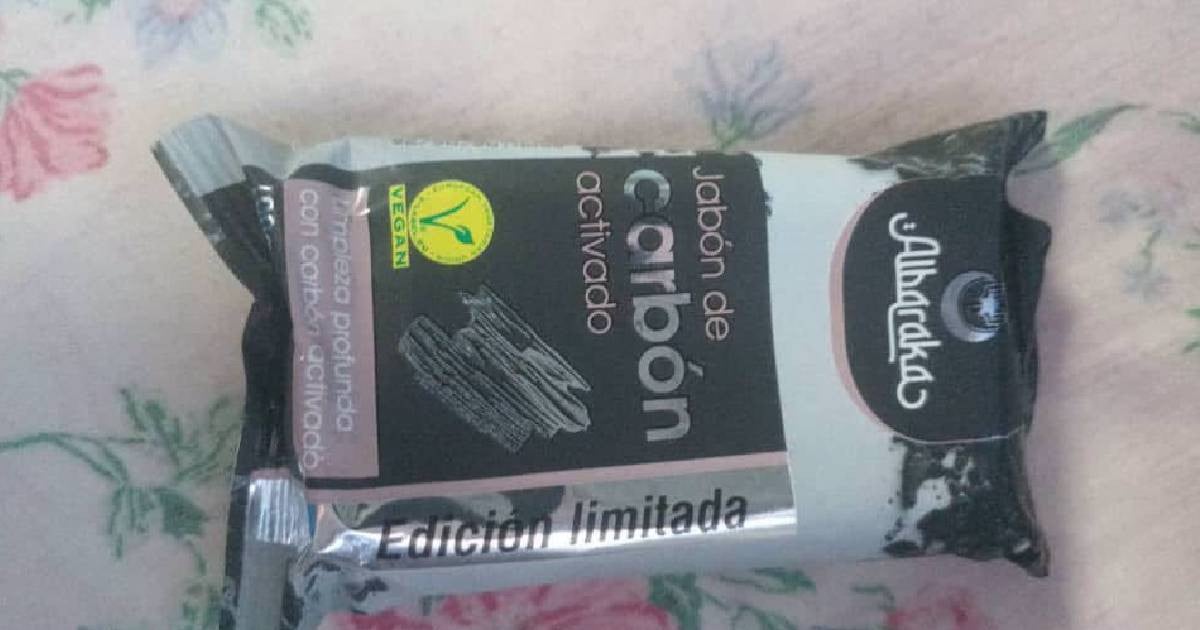
A 100-gram activated charcoal soap bar costs 600 pesos in Placetas, in the province of Villa Clara, a price that has sparked outrage among Cubans from various provinces, with some reporting even higher rates.
The complaint, published on Thursday on Facebook by the user Rubén Carrillo, received dozens of responses from users who confirmed similar or higher prices in their localities.
In Camajuaní and Santa Clara, they reported 700 pesos; in Cabaiguán, between 700 and 800; at the fair in Manicaragua, 800; and in Las Tunas, 650 pesos. There were also reports of equivalent prices in Havana.
A resident of Placetas stated that the cost of soap in the municipality ranges between 780 and 1,000 pesos. "With the expenses for hygiene and food, it's impossible to live in this country; we are truly suffocated," she commented.
Other users warned that the Albaraka pill, a limited edition with vegan certification, was already being sold for between 700 and 800 pesos. "This has gotten out of hand, we are living through difficult times," wrote a Cuban.
The complaints made it clear that the issue is not limited to hygiene products. Participants described prices ranging from 500 to 700 pesos for a pound of rice, 500 pesos for beans, another 500 for sugar, and between 2,500 and 3,000 pesos for a plate of spaghetti. According to another testimony, a pound of pumpkin costs 300 pesos.
"If it were just the soap," summarized one user before listing the prices of food and expressing her uncertainty about how to make it to the end of the year. In Placetas, another commenter noted that a box of matches costs 1,000 pesos.
"People are not truly living; some are struggling and others are simply surviving," summarized another participant in the post.
The impact is particularly challenging for those who rely on fixed incomes. The minimum monthly wage in Cuba is 3,210 pesos, while the minimum retirement pension is 4,000 pesos. With these incomes, a bar of soap costing 600 pesos represents about one-fifth of both the minimum pension and the minimum wage.
An elderly adult expressed their frustration about the situation. "We retirees have no rights after 50 years of being slaves," they wrote.
The pressure on wallets coincides with an accumulated inflation rate of 24.85% from January to September, according to the National Office of Statistics and Information. Food accounted for 73.39% of the monthly variation in the consumer price index in September.
At the end of October, the Holguin writer José Poveda Cruz reported that some private merchants are hiding soap to sell it at a higher price when demand increases. The author recounted that he paid 700 pesos for a 150-gram bar of laundry soap after searching through much of the City of Parks.
Meanwhile, the Government launched the Neighborhood Markets program in July, promising to offer basic products at prices 15% to 30% lower. However, the reported discounts fall short of these objectives. In a store in Plaza de la Revolución, bath soap is sold at 530 pesos compared to a reference price of 600, which is a mere 12% discount.
Related videos:
Filed under: