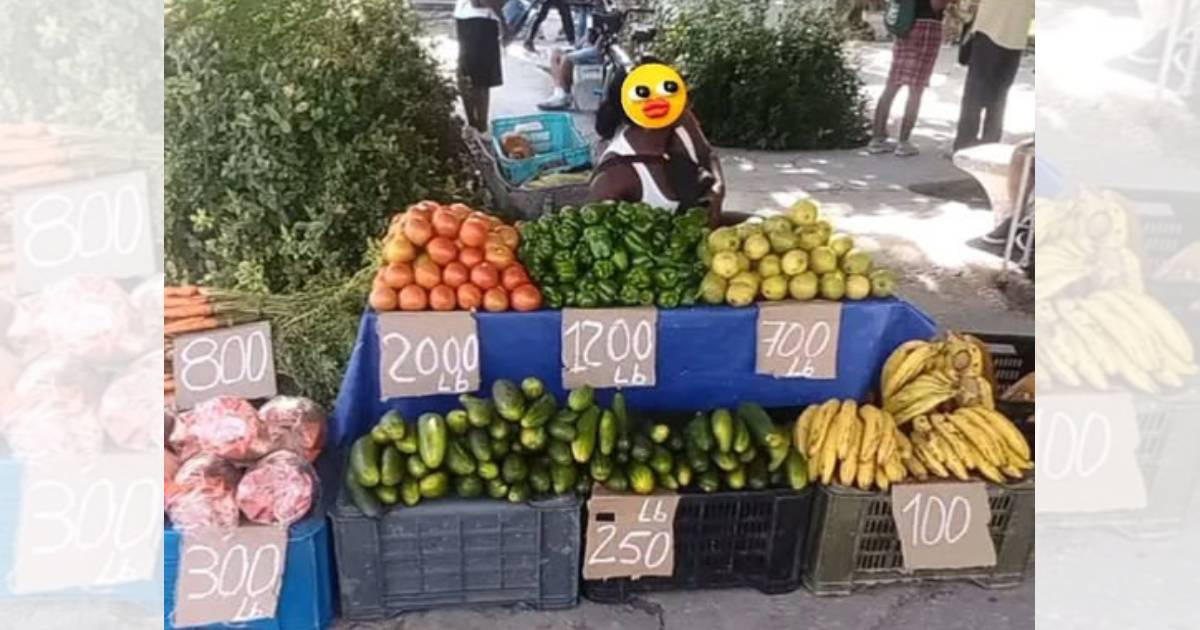
A photograph shared by the page of Facebook Panorama Santiago shows a street vendor selling a pound of tomatoes for 2,000 Cuban pesos, green peppers for 1,200, and guavas for 700, prices that have sparked outrage among consumers from various provinces.
The image, which did not specify the exact date and location, shows plastic bins filled with fresh products and signs indicating the sale prices.
The very page that shared the photograph questioned the values and deemed the price of tomatoes as speculative. "No matter how devalued the currency is, the production cost for a pound of tomatoes will never, ever be 1,000 pesos," it pointed out.
User reactions indicated that high prices are not an isolated problem. A user from Santiago de Cuba commented that he had found tomatoes priced at 1,500 pesos per pound, while another person from Havana replied that the same was happening there.
From Cienfuegos, Bayamo, Las Tunas, and other locations, testimonies have also emerged regarding similar or higher prices, in a debate that highlighted families' difficulties in incorporating vegetables into their daily diets.
The gap between those prices and the population's income is particularly significant. With a monthly minimum wage of 3,210 pesos, effective since July, purchasing just one pound of tomatoes at 2,000 pesos means spending approximately 62% of that income.
"In a pound of tomatoes and one of peppers, my monthly salary goes," wrote a user. A retiree also commented to point out that he receives a pension of 4,000 pesos, an amount that barely allows him to buy two pounds of tomatoes at the price shown in the photograph.
The economist Javier Pérez Capdevila estimated in June that a person needs around 96,000 pesos monthly to cover their basic needs, roughly 30 times the minimum wage.
The debate also included explanations about marketing costs. A user who claimed to be familiar with the wholesale sector detailed that a sack of tomatoes sells for 37,000 pesos, a sack of cucumbers, weighing about 95 pounds, for 12,000, and a quintal of squash for 21,000. He argued that losses due to product spoilage can impact sellers.
Other participants questioned business practices and reported manipulations of weights and alleged bribery of inspectors to evade price controls.
From Puerto Padre, in Las Tunas, a resident stated that some vendors maintain regulated prices during the visits of inspectors but raise them once they leave.
The rise in food prices coincides with an official year-on-year inflation rate of 28.44% reported in September. During the same period, food and non-alcoholic beverages recorded an increase of 42.66% compared to the previous year.
This situation is compounded by the depreciation of the Cuban peso against the dollar, which is hovering around 935 pesos in the informal market, while the euro is now valued at up to 1,010 pesos.
In August, the regime announced the so-called Neighborhood Markets, promising to offer prices 15% to 30% lower than those in the informal market. However, reports published in November revealed actual discounts to be between seven and 12%, significantly below the expectations set.
Meanwhile, the outlook for year-end celebrations is not encouraging either. "This year-end, few will be able to have dinner with side dishes or salad, let alone eat meat," wrote a user, reflecting the discouragement of those who see how even the most common products on the Cuban table are beyond their economic reach.
The sustained rise in prices and the partial dollarization of the economy is compounded by a decline in agricultural production. Reports indicate that Cuba imports between 70% and 80% of the food it consumes, which reflects the low productivity of the agricultural sector after decades of state control and limited incentives for producers.
Similarly, data from the World Food Programme indicates that over 70% of households on the island have had to reduce the quantity or quality of food, while approximately 36% of the population experiences food insecurity.
Related videos:
Filed under: