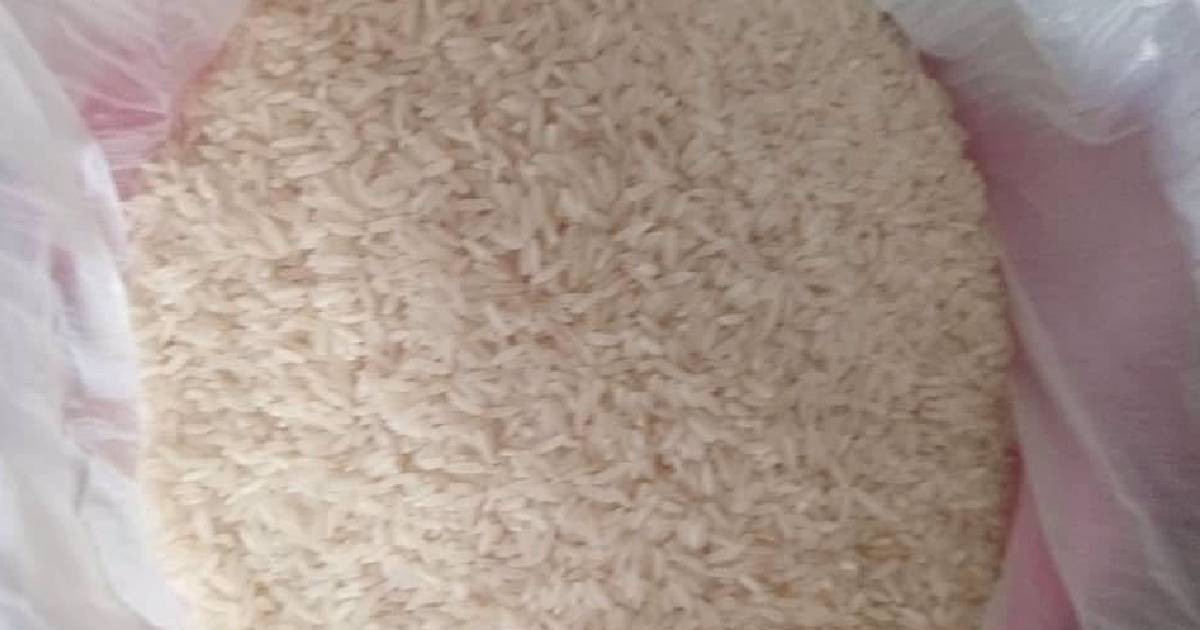
The criollo rice reached 480 pesos per pound in Placetas, Villa Clara province, amid a price surge that sparked numerous complaints from citizens across much of the country.
The testimony shared this Saturday on Facebook by the user Rubén Carrillo reported on the rise in the price of a staple food in the Cuban diet. Purchasing five pounds costs 2,400 pesos, not including beans, oil, or other essential products needed to prepare a meal, he indicated.
According to various comments on the publication, in Santa Clara, the price of the product ranges from 450 to 490 pesos; in Cárdenas and Ciego de Ávila, it reaches 500; in Cabaiguán, it is sold between 420 and 450, and in Santiago de Cuba, it is at 420 pesos. In Las Minas, local rice costs 480 pesos while imported rice is 500. The lowest price mentioned in the comments corresponds to Santo Domingo, also in Villa Clara, where it can be obtained for 350 pesos.
In Placetas, residents claim that actual prices are significantly above the limits that sellers are supposedly required to follow. "Even though inspectors 'say' that the capped price of rice is 350, you won't find a place in the municipality that has a price lower than 450 pesos. Not even the suppliers have it," wrote a neighbor. Another person reported that prices increase daily and that inspectors "are notably absent."
The chaos has its background in Decree 156/2026, which eliminated the national ceiling of 155 pesos per pound that had been in effect since March 2025. The provision, signed by Prime Minister Manuel Marrero Cruz in June and published in July in the Official Gazette, transferred the authority to establish new limits to the Ministry of Finance and Prices, but was not accompanied by a substitution resolution.
In August, the government of Villa Clara set provincial price caps for eggs, oil, and sugar, but excluded rice, which is precisely one of the staple foods in the Cuban diet.
Since July, the minimum monthly wage in Cuba is 3,210 pesos, while the monthly basic basket for one person is estimated to be around 96,000 pesos, of which more than 70,000 correspond to food, according to the economist Javier Capdevila.
The increase in prices affects not only rice, as beans are sold between 620 and 750 pesos per pound, bath soap costs between 600 and 650 pesos, and a small bag of sugar can reach 1,300 pesos.
"Nothing is affordable on a salary or pension. Eating is a luxury," summarized one citizen. Another user, a retiree, lamented that a single bag of sugar represents almost half of her monthly income.
Due to the inability to buy rice, some families have started to replace it with yuca, which is sold at around 70 pesos per pound.
A mother from Trinidad, in Sancti Spíritus, reported on Thursday that she was unable to feed her daughters because vendors rejected her payment via bank transfer. According to her testimony, the price of a bag of rice went from 800 to over 900 pesos in just a few days.
"Our people are suffering from hunger, unfortunately," wrote another citizen in the post that sparked the discussion, a sentence that encapsulates the discontent expressed by Cubans from various provinces regarding the rising cost of a food item that has been essential on the family table for decades.
Related videos:
Filed under: