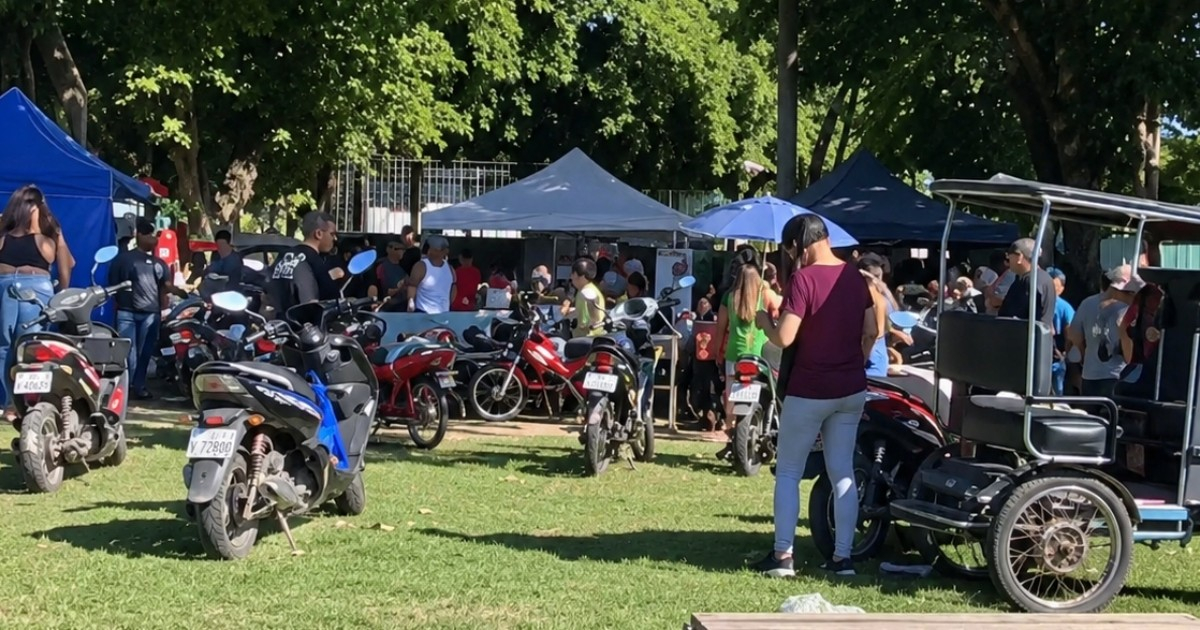
A Cuban posted on Saturday a detailed complaint in the Facebook group "The Cuba We Want" regarding the conditions that prevail every week at the agricultural fair in the municipality of La Lisa: vendors mistreating customers, systematic rejection of bank transfers, and speculative prices, all of which occur in the presence —and inaction— of the inspectors, according to his testimony.
The La Lisa fair on Saturdays is a lucrative business, the vendors act like they own the place, mistreating customers who count every last cent to bring some food home; they do not accept transfers, and if they do, they charge a 20% fee, wrote Daniel Granda Fernández.
According to the account, when he tried to seek support from the government official in charge of the fair, identified only as "Wendys," she claimed that the vendors are street vendors without paperwork or a card to accept digital payments.
The contradiction, however, was evident: the vendors themselves openly stated, in front of the official and the inspectors, that they did not accept transfers and that anyone wishing to pay that way had to go to the bank "to withdraw money at 30%."
“In front of the inspectors, they say it openly. When we think we have some hope with the inspectors, that's when you realize that corruption is at a much higher level,” the citizen remarked.
When "Wendys" asked the inspectors to act, none responded to the call. The official later explained that those inspectors are "from Finance" and do not have the authority to intervene in those irregularities, which led the complainant to wonder: "What are they doing at the fair, what are they looking for if the community cannot at least have the protection it deserves from them?"
"The crime, corruption, and abusive, speculative prices in La Lisa are our daily bread every Saturday," he concluded.
The post gathered dozens of comments from Cubans in other municipalities who confirmed almost identical situations. In Parque La Normal, in Cerro, a commenter noted that the same happens there, with government presence included. In Parque John Lennon, reports of thefts—torn bags—and motorized vehicles dangerously weaving through the crowd without anyone intervening were shared. Similar testimonies came from Arroyo Naranjo, Marianao, San Miguel del Padrón, Playa, and Centro Habana.
In September, an onion was priced at 910 pesos at the Línea and L market, compared to the official price of 180 pesos per pound. This same month, images from Santiago de Cuba showed tomatoes at 2,000 pesos per pound, green peppers at 1,200, and guavas at 700.
Both Resolution 111/2023 of the Central Bank and Decree 167/2026 mandate that economic actors accept electronic transfers and payments without imposing additional conditions on the buyer. Additionally, Decree 143/2025 requires vendors to have a license and a tax bank account. In practice, the surcharge for paying with a transfer —which can reach up to 40%— has become a norm at fairs throughout the island, while only 3.77% of transactions in Cuba are digital, according to figures from the official press.
A report from April 2026 revealed that inspectors acknowledged that they were required to fine businesses to "show results" even if no infractions had occurred.
Related videos:
Filed under: