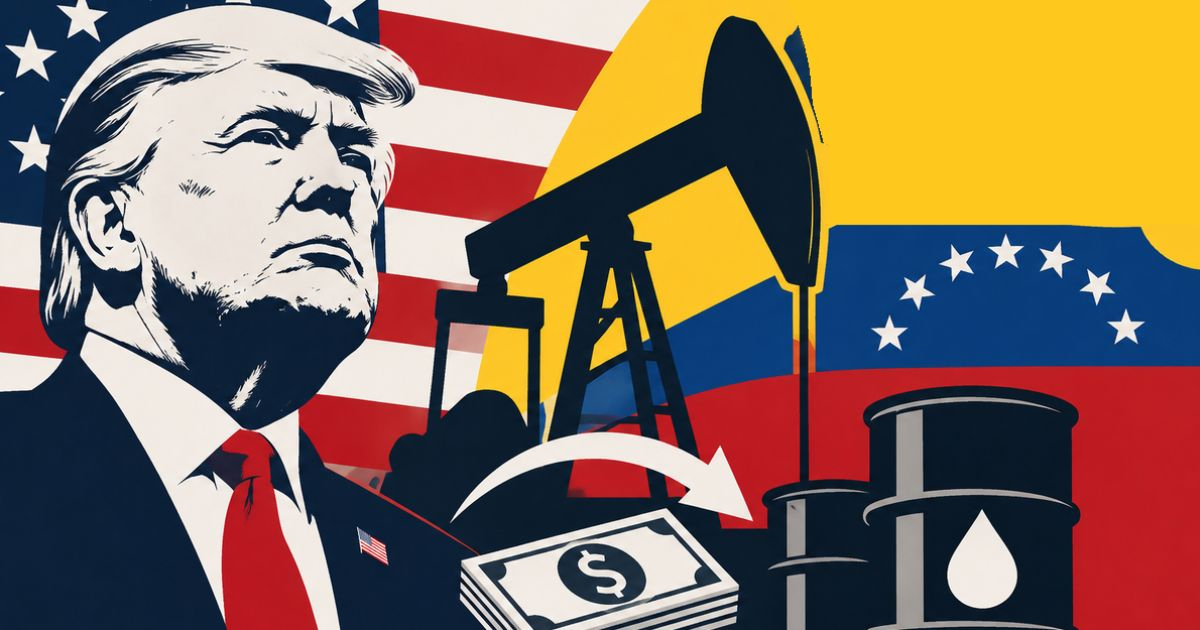
The United States has returned to Venezuela more than 12.1 billion dollars resulting from the sale of oil and other natural resources from the South American country since the capture of Nicolás Maduro on January 3rd.
The figure represents nearly 99% of the revenues managed by Washington during the first nine months of the year, according to a document released this Thursday.
According to the report on the operations of the Custody Account in Venezuela, published by the United States Department of State and prepared with the involvement of the professional services firm KPMG, from January 3 to September 30, 2026, approximately $12,260 million was received and about $12,110 million was disbursed, equivalent to 98.7% of the deposits.
At the end of the analyzed period, 168.6 million dollars remained in the account managed by the U.S. Department of the Treasury.
Most of the money comes from the exports of Venezuelan crude oil, although the mechanism also received smaller revenues from the sale of gold, other minerals, and fertilizers.
The document, the results of which were also disclosed this Thursday by the agency Associated Press, provides new details on the financial control that Washington exerts over Venezuelan oil revenues since the military operation that ended with Maduro's capture and his transfer to New York to face drug trafficking charges.
The mechanism operates through the sale of Venezuelan oil in the international market. Buyers deposit payments into an account under U.S. supervision, and Venezuelan authorities must request authorization to utilize those resources.
Money is released after officials from the State and Treasury Departments review the transactions. KPMG is involved in the financial monitoring and compliance with established procedures.
This system was announced in January by the U.S. Department of Energy, which then explained that the revenues from oil sales would initially go through accounts controlled by Washington and would be distributed according to the authorizations of the U.S. government.
The Executive Order 14373, signed by Donald Trump on January 9, establishes that these funds are the sovereign property of the Venezuelan state and that the United States holds them as custodian, not as owner.
According to the information presented by Washington, most of the returned resources have been channeled through currency exchange operations with Venezuelan commercial banks, aimed at providing foreign currency to individuals and businesses within the country.
The report also indicates that approximately 133 million dollars were used to directly pay for services and supplies related to the needs of the Venezuelan government.
Among the approved operations are 5 million dollars allocated to the law firm Greenberg Traurig, based in Miami; nearly 24 million for dialysis and coal mining equipment; and 8.7 million to settle debts related to the acquisition of vaccines through the Pan American Health Organization, as reported by Associated Press.
The report keeps the identities of the 20 companies purchasing oil and gold whose operations are recorded confidential.
U.S. authorities assert that they were subjected to checks to verify compliance with financial sanctions and anti-money laundering regulations.
The publication comes after the newspaper The New York Times revealed on Tuesday, November 10, details of a KPMG report that had not been made public until then.
The document provides information on transfers and oversight mechanisms, though the firm is not presented as responsible for an independent audit of all operations.
In February, the United States had completed the return of the first 500 million dollars obtained from the sale of Venezuelan oil, after transferring a final tranche of 200 million to Caracas.
Subsequently, Secretary of State Marco Rubio defended the new marketing system for Venezuelan oil and stated that the crude was being sold at market prices and that the revenue was returning to the country to meet the needs of the population.
In May, the organization Transparencia Venezuela reported the lack of public information regarding buyers and recipients of oil revenue.
Its director, Mercedes de Freitas, then questioned why the official transparency portal of the Venezuelan government displayed a figure that was significantly lower than the resources that, according to U.S. authorities, had already been transferred to Caracas.
Related videos:
Filed under: