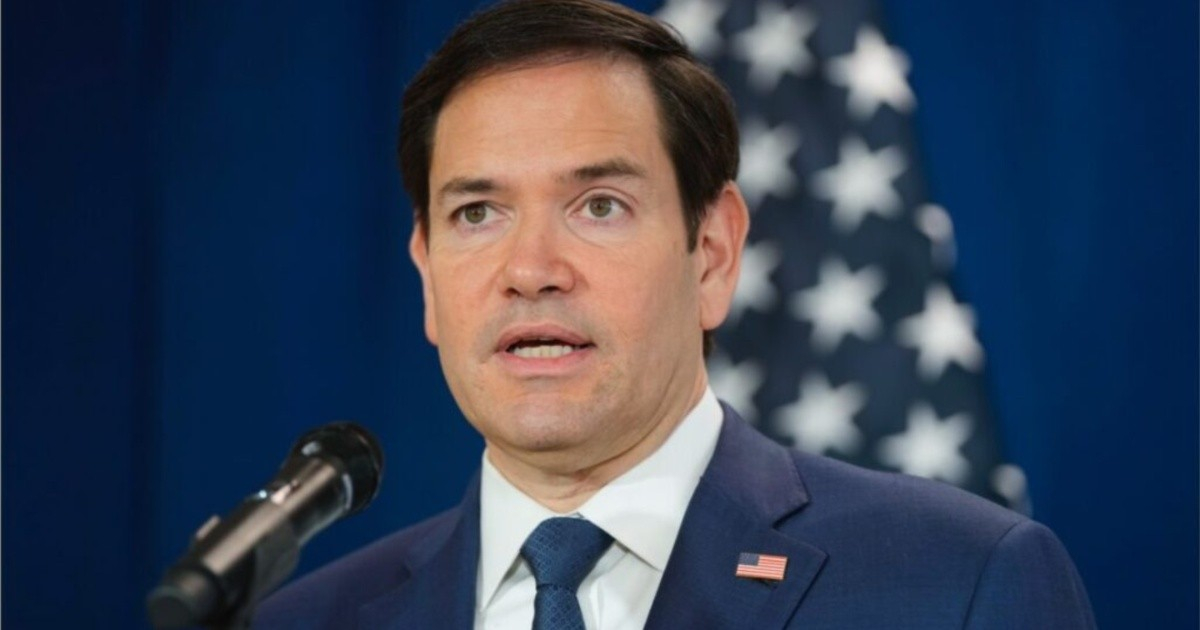
The Secretary of State Marco Rubio announced on Thursday a new round of sanctions against Cuba targeting a network for the maritime transport of crude oil, officials linked to the military conglomerate GAESA, and two Chinese companies supplying equipment to the Cuban army.
The package, announced by the Department of State, designates eight entities and two individuals and identifies five vessels as blocked property: Esperanza, Gloria C, Maria Cristina, Emilia, and Lourdes.
Among those sanctioned is Guillermo Faustino Rodríguez López-Calleja, brother of the late General Luis Alberto Rodríguez López-Calleja, former leader of GAESA, whom Washington links to a network of offshore maritime companies involved in the transportation of Cuban crude oil.
Any Rodríguez Lastres was also appointed, daughter of Ania Guillermina Lastres Morera —president of GAESA, already sanctioned in May 2026— and former commercial director of Terminal de Contenedores de Mariel S.A., also sanctioned.
The designated maritime entities include Caroil Transport Marine Ltd. (Cyprus), Tentacool Commercial Inc. (Panama), Internacional Marítima S.A., and Petróleos Marítimos del Caribe S.A. (PETROMARCA), both Cuban.
Caroil had already been sanctioned by the U.S. in September 2019 for transporting Venezuelan oil to Cuba, and it is now being designated again under Executive Order 14404.
On the front of Chinese military support, the State Department sanctioned two Chinese state-owned companies: China National Electronic Import and Export Company (CEIEC) —previously sanctioned in 2020 for supporting digital surveillance in Venezuela— and Beijing H&C Technologies Co., Ltd., both for supplying components for military equipment of the Ministry of Revolutionary Armed Forces through the Cuban entity Duna S.A.
The sanctions package includes two Cuban state-owned companies: Cubaelectrónica, which is dedicated to the importation of supplies and electronic equipment, and the Empresa Comercializadora de Servicios Técnicos y Tecnológicos (Tecnosime), associated with the provision and commercialization of technical and technological services.
Both were added to the sanctions list of the Office of Foreign Assets Control (OFAC) of the U.S. Department of the Treasury, as part of measures targeting economic sectors linked to the Cuban state apparatus.
Beijing rejected US sanctions on Friday and accused Washington of trying to sabotage economic ties between China and Cuba.
The spokesperson for the Chinese Ministry of Foreign Affairs, Guo Jiakun, stated at a press conference that the relations between the two countries are legitimate and transparent, and he questioned the unilateral sanctions for lacking, as he asserted, a basis in international law and authorization from the United Nations Security Council.
The official reiterated China's support for Cuban sovereignty and warned that his government would take "all necessary measures" to protect the rights and interests of affected Chinese companies, although he did not specify what actions could be taken.
The Department of the Treasury also issued a determination that expands the possibility of sanctioning foreign individuals and companies operating in Cuba’s electronics, manufacturing, maritime transport, and technology sectors.
Rubio accused the Cuban ruling elite of "hoarding the island's energy, maritime, and technological resources for their own enrichment, leaving the Cuban people to deal with blackouts, shortages, and a stagnant economy."
"The Marxist regime in Havana relies on a network of state-owned enterprises, joint ventures, and extraterritorial intermediaries to keep this system running," declared the Secretary of State.
The Trump administration began the rounds of sanctions against Cuba in May with the signing of Executive Order 14404 and the subsequent designation of GAESA.
In July, he lashed out against the Port of Mariel and other related entities, and in August with the designation of Duna S.A. for facilitating military imports from China and Russia.
In October, Rubio publicly invited Cubans to collaborate with the CIA, and President Trump suggested the possibility of bringing military ships closer to the island's coast.
"The Trump administration will not remain idle while the Cuban regime channels the island's resources to its military elite, while those close to the regime and their relatives enrich themselves through opaque extraterritorial networks, and while Cuba continues to serve as a platform for a global coalition of hostile anti-American actors," Rubio warned on Thursday.
Related videos:
Filed under: