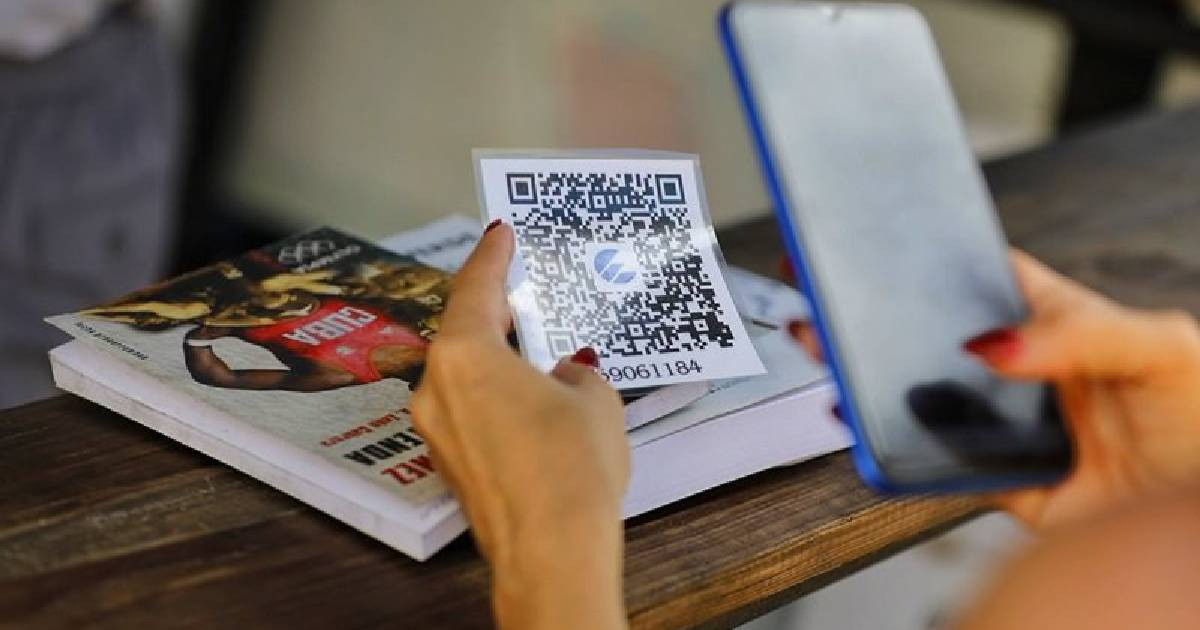
The Banco Popular de Ahorro (BPA) of Sancti Spíritus announced this Thursday through its profile on Facebook that it will close inactive tax accounts of self-employed workers starting November 30, marking a new tightening of controls over the private sector.
The provision covers two categories of accounts: those formalized by their holders that do not record any transactions, and those opened centrally by the Economic Actors Platform for which the owners did not visit the branch to activate them within 30 days of their opening.
José Arturo Couzo Villarreal, head of the Business Banking Department of the provincial BPA, told the newspaper Escambray that the central province has more than 14,000 fiscal bank accounts corresponding to self-employed workers. The official clarified that account holders will be able to claim the deposited funds even after the closure is declared due to inactivity.
The bank justifies the measure based on the provisions of Decree Laws 90 and 91, which require private workers to use their tax accounts for commercial transactions and establish noncompliance with this obligation as a serious offense. It also invokes Decree Law 100, published in February, which mandates that payments related to obligations to the State Budget must be made from declared current accounts for fiscal purposes.
The decision is coordinated with the Departments of Labor and the National Office of Tax Administration (ONAT), through a reconciliation system that allows for the identification of entrepreneurs who have requested temporary licenses or declared the closure of their businesses.
This is not the first warning of this kind in the province. In August, an investigation by Escambray revealed that about 6,000 of the more than 15,000 self-employed workers with active tax accounts were maintaining those banking instruments without transactions.
An auditing operation initiated on August 10 resulted in over 6.3 million pesos returning to the banking system. However, Couzo himself acknowledged at that time that the outcome was still "far from the potential."
The new pressure arises amid the difficulties faced by the private sector in complying with mandatory banking regulations. The state press has acknowledged that many businesses need cash because their wholesale suppliers require payments in that form, which makes it challenging to operate exclusively through transfers.
Additionally, those who need to convert digital balances into cash turn to the informal market, where intermediaries charge fees of up to 40% for transactions via transfer.
The tightening of controls also affects the assets of taxpayers. Since October, Resolution 126/2026 from the Ministry of Finance and Prices allows ONAT to seize accounts and assets without the consent of the account holder in order to collect outstanding tax debts.
In July, the National Assembly approved Agreement X-171, which directs the Government and the Central Bank to adopt new corrective measures regarding banking, with an evaluation scheduled for December.
Related videos:
Filed under: