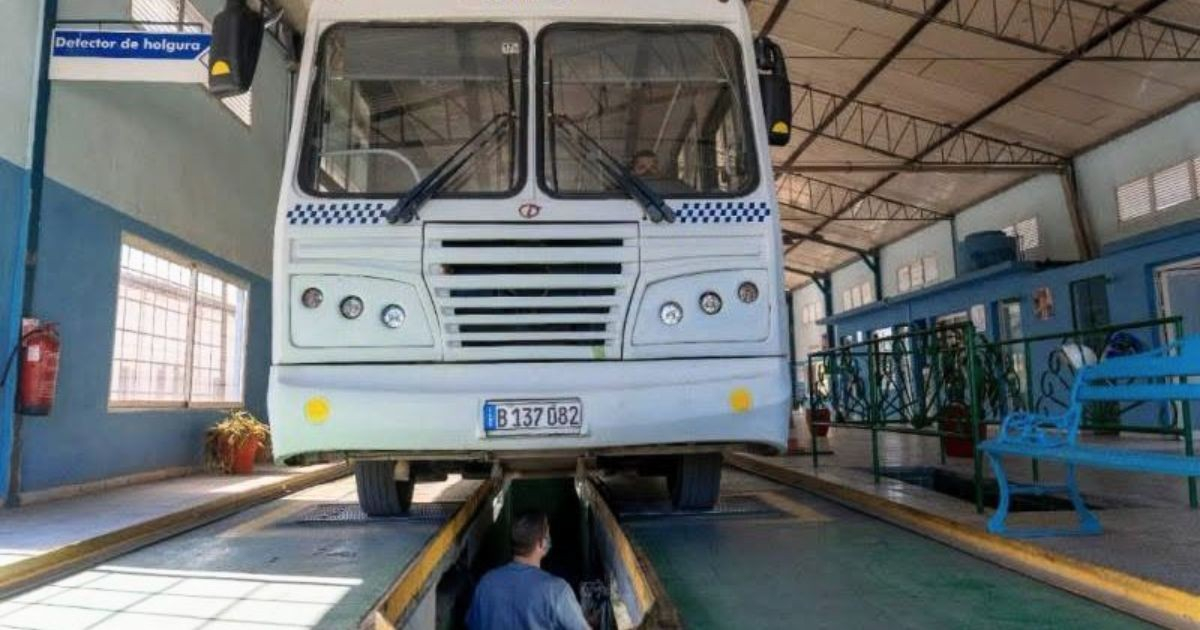
The electrical crisis shaking Cuba has nearly paralyzed the operations of the Centro Sancti Spíritus Technical Review Plant, the only facility of its kind in the province, commonly known as "somatón," according to reports the Escambray newspaper this Saturday.
The facility, under the Ministry of Transport and located in the El Chambelón area, is meant to serve vehicles of state enterprises and organizations from all municipalities in the province of Sancti Spíritus, as well as private carriers transporting goods or passengers. However, prolonged power outages have drastically reduced its operational capacity just a few weeks before the year's end.
Javier Echemendía Martínez, the supervisor in charge of monitoring the technological process, described the magnitude of the problem: "Sometimes, if they supply electricity for at least three hours in the morning, we serve about 20 customers, whereas the daily average, in normal times, was 80 or more."
This is particularly dangerous in a context where traffic accidents claim numerous Cuban lives every day. Alongside the poor condition of the streets, the circulation of vehicles in very poor condition exacerbates the likelihood of these incidents.
In addition to the lack of electricity, the situation in Sancti Espíritus is further complicated by a vicious cycle involving fuel. The supervisor himself explained: “Many drivers state that their organization does not guarantee them access to the technical inspection. Similarly, they argue that if they were allocated [the fuel], they would risk attending and losing the trip due to a lack of electricity. Furthermore, company regulations dictate that diesel or gasoline is provided only to vehicles that have already been approved for the so-called somatón.”
In other words: without the approved somatón, there is no allocation of fuel, but without fuel, it is not possible to go to the somatón. Echemendía Martínez was emphatic in pointing out the central problem: "The most serious issue is the lack of electrical power, because our equipment depends on energy to function."
In addition to these difficulties, the loss of telephone communication in the area is compounded by the theft of one of the solar panels from the telephone cabinet located near Rancho Hatuey. As a result, customers connected to that network only receive a signal when there is electricity.
These technical inspection plants have been associated in Cuba for years with corruption crimes, involving high payments "under the table" from vehicle drivers to technicians so that their vehicles can "pass" the inspection without issues and are not prevented from circulating.
The review system in Sancti Spíritus is fully automated and digitized, according to its workers. Yander Quintana Pérez, the IT technician at the facility, told the state media that the entity "operates with cutting-edge technology and provides real-time information about the vehicle, including the photo, engine number, and body number." He added that the national director can monitor the process in Sancti Spíritus by connecting to the network from anywhere in the country.
The national electricity context impacting the province is of unprecedented severity in recent times. This Saturday, the Electric Union estimated an availability of only 970 MW against a demand of 2,800 MW, with a projected shortfall of 1,860 MW during peak hours. The situation has rapidly deteriorated, and the country has experienced at least eight nationwide collapses of the National Electric System so far this year.
In Sancti Spíritus, power outages exceeded 50 continuous hours last June, and the provincial electricity company received between 90 and 120 reports of malfunctions daily.
At the Technical Review Plant of El Chambelón, according to Escambray, there is an atmosphere of order and discipline. However, there is no immediate solution in sight for the challenges that hinder its performance, as the end of the year approaches and fewer vehicles are in condition to undergo the mandatory inspection.
Related videos:
Filed under: