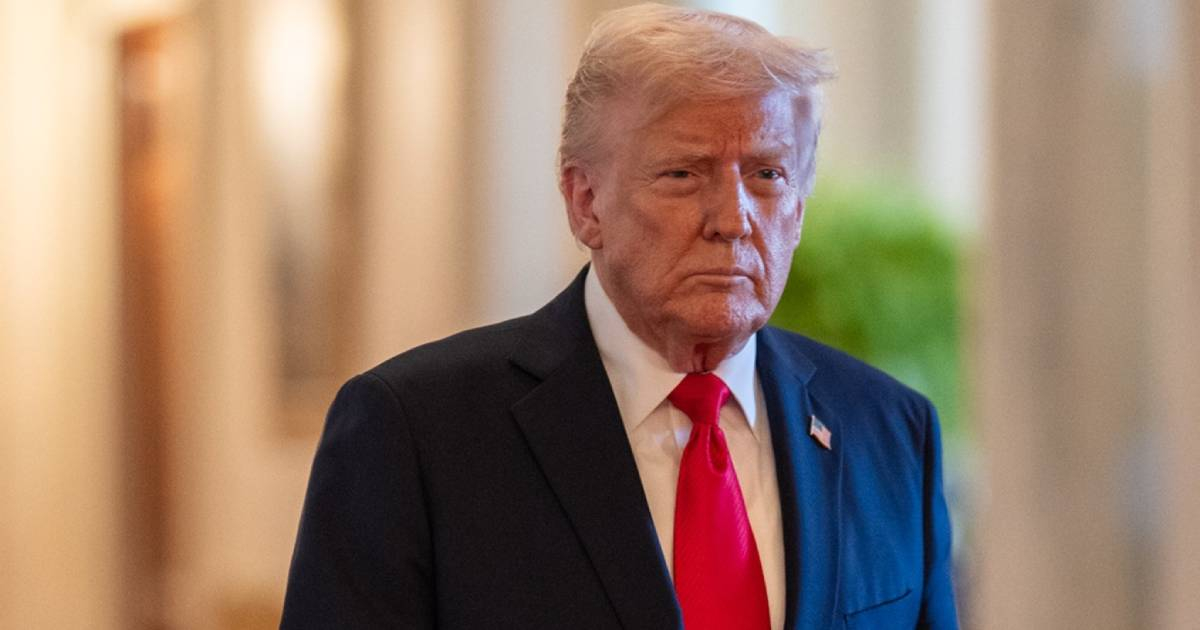
The President of the United States, Donald Trump, urged Congress on Sunday to urgently approve new funds to modernize the country's air traffic control system, following a technical failure that grounded departures nationwide and caused thousands of cancellations and delays over the weekend.
According to reported by the agency EFE, the Trump administration has requested $30.1 billion from lawmakers to update the air infrastructure.
In a post on his social network Truth Social, the president emphasized: "We need Congress to allocate the funds, and to do it quickly!".
Trump stated that his administration has already begun modernization work, but he insisted that improvements should be implemented comprehensively and not through partial interventions.
He also held the administration of former President Joe Biden responsible for the deterioration of the system, accusing it of spending large amounts of money without addressing its deficiencies.
The official stated that the United States has the knowledge and the necessary plan to renew air traffic control, but it needs funding from Congress to complete the project.
What caused the air chaos in the United States?
The presidential demand comes after, on Friday, the Federal Aviation Administration (FAA) ordered the suspension of all takeoffs in the United States due to a telecommunications failure that compromised the stability of the systems used by air traffic controllers.
The halt of departures lasted for more than four hours and forced airlines to reorganize their operations. This was an exceptional measure, previously implemented on a national scale following the attacks of September 11, 2001, and during a computer system failure of NOTAM in January 2023.
According to the Federal Aviation Administration (FAA), air traffic was able to resume at 8:15 p.m. on Friday, November 13.
Investigations point to a problem that arose during the replacement of old copper cables with fiber optics, conducted by the contractor L3Harris Technologies at a facility in El Dorado, Arkansas.
According to the Secretary of Transportation, Sean Duffy, one of the routers began sending an abnormal amount of connection requests, overloading other equipment in the network. The instability ended up affecting 17 out of the 22 regional air traffic control centers in the country.
Authorities are investigating whether the incident was caused by faulty equipment or errors during the installation work. So far, they have found no evidence of a cyberattack.
The consequences continued this Sunday. According to figures from FlightAware, gathered by EFE, by 10:00 AM Eastern Time, there were 1,569 canceled flights and 2,737 delayed flights in the United States.
On Saturday, there were 6,695 cancellations and 9,011 delays, while airports such as Chicago O'Hare, Atlanta, New York, and Dallas-Fort Worth experienced significant disruptions.
The interruption also affected air connections between Miami and Cuba. A flight by American Airlines to Havana was canceled on Saturday and rescheduled for Sunday with a delay of over three hours, while other connections to Havana and Camagüey experienced delays of more than two hours.
An aging system and billions pending
The Secretary of Transportation had warned since Friday that the deterioration of the infrastructure could lead to further disruptions if Congress does not authorize the necessary funds to replace outdated equipment and communication systems.
Duffy acknowledged that the FAA still uses components installed decades ago, including old routers and copper connections. He also pointed out that some control towers have structural issues and that part of the infrastructure continues to rely on analog technology.
The official demands an investment of approximately 50 billion dollars to modernize the air traffic control system, an amount higher than the request of 30.1 billion presented by the Trump administration for air traffic control and airport projects.
Congress had already approved $12.5 billion in July 2025 to begin the modernization, but the Government believes that this budget is insufficient to complete the overhaul.
The need to improve the system was also documented by the Government Accountability Office (GAO). In a report published in September 2026, the agency noted that more than 75% of the 138 air traffic control systems evaluated in 2024 were unsustainable or potentially unsustainable.
The GAO also warned that the FAA still did not have a comprehensive and well-documented estimate of modernization costs, nor a overall schedule that coordinated all projects. This lack of planning, it noted, increases the risk of delays, cost overruns, and further service interruptions.
As the technical investigation continues, Duffy assured this Sunday that air operations could return to their normal capacity before the end of the day or during Monday, November 16, once the airlines manage to reposition their planes and crews.
Related videos:
Filed under: