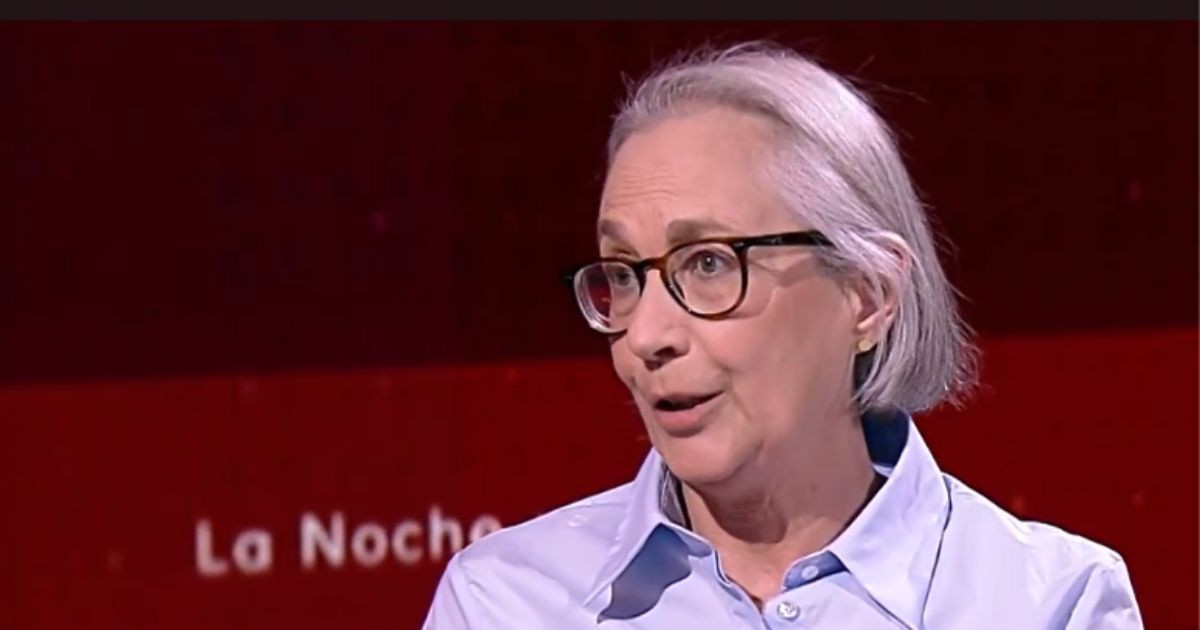
The Cuban journalist and writer Gina Montaner published an opinion column in El Nuevo Herald on November 13, in which she denounces the arbitrary detention of Yoani Sánchez and highlights the double standards of the Cuban regime: while its foreign minister was attending an international summit, political police were arresting independent journalists in Havana.
The central argument of Montaner begins with an eloquent image: the chancellor Bruno Rodríguez Parrilla participated in the XXX Ibero-American Summit, held in Madrid on November 4th and 5th, "pretending to be just another politician among representatives of the democracies of Latin America," while repression intensified on the island.
The contrast pointed out by Montaner is significant: precisely on November fifth, while heads of state and government were signing documents that celebrate the values of open societies, State Security detained Sánchez as she was leaving her home in Nuevo Vedado to go shopping. The journalist managed to write to her colleagues: "I have been kidnapped by the police," before they lost contact with her.
Sánchez was held in custody for approximately nine hours and was transferred to the Fourth Police Station in the Cerro municipality. After regaining her freedom, the authorities charged her with an alleged crime of "attempting against the constitutional order," without presenting evidence or initiating a formal criminal process. Sánchez posted on Facebook: "I just got home, thank you all for the solidarity and for spreading the news about the arbitrary detention I suffered this morning. That support was what managed to unlock the bolts and open the bars."
Montaner, who is the daughter of the renowned Cuban journalist and writer Carlos Alberto Montaner, emphasizes that this arrest was not an isolated incident, but rather the most visible point of a week of systematic repression. On November 2, Adelth Bonne Gamboa, a contributor to CubaNet, was violently arrested, his equipment was confiscated, and he was fined 3,000 pesos.
The next day, Camila Acosta, a reporter for CubaNet and correspondent for the Spanish newspaper ABC, was arrested and held for more than eight hours. She reported that State Security destroyed her phone with a corrosive substance: "They poured some kind of green liquid on it, perhaps some acid [...] They broke it because they fear my work, because they fear the truth." In addition, Henry Constantín, director of La Hora de Cuba, has been imprisoned in Camagüey since September 16, 2026.
For the columnist, all this repressive machinery follows a logic that the regime cannot abandon. "Like a trained dog ready to lunge for the throat of its opponent, the Castroists know how to do nothing else," she writes. "This is their schizophrenic dichotomy, presenting a victim narrative (every abuse is justified by the U.S. embargo) while simultaneously being the perpetrators of a society they keep muzzled and condemned to misery."
Montaner also highlights the contradiction embodied by Raúl Guillermo Rodríguez Castro, the grandson of Raúl Castro and a colonel in MININT, who has acted as an informal interlocutor between the Cuban leadership and the Trump administration. "No matter how much [...] Raúl Guillermo Rodríguez meets with representatives of President Donald Trump's government and vaguely assures that Cuba is willing to take steps, in Havana, they always return to square one: exercising repression," the author asserts.
Amnesty International issued a statement on November 5th denouncing the arbitrary arrest of Sánchez. The U.S. Assistant Secretary of State for Western Hemisphere Affairs, Juan Pablo Segura, also condemned the detention and linked it to "the regime's sustained campaign to crush independent media" in Cuba.
Montaner concludes his text by advocating for those who, despite facing harassment, document the reality of the island: the power outages, the shortage of food and fuel, the daily precariousness. "If it weren't for Yoani Sánchez and the brave independent journalists operating in the Cuban capital and across the island, risking persecution and imprisonment, we would also be plunged into the darkness that envelops Cuba from abroad. They are the light that shines and that the Castro regime wishes to extinguish."
Related videos:
Filed under: