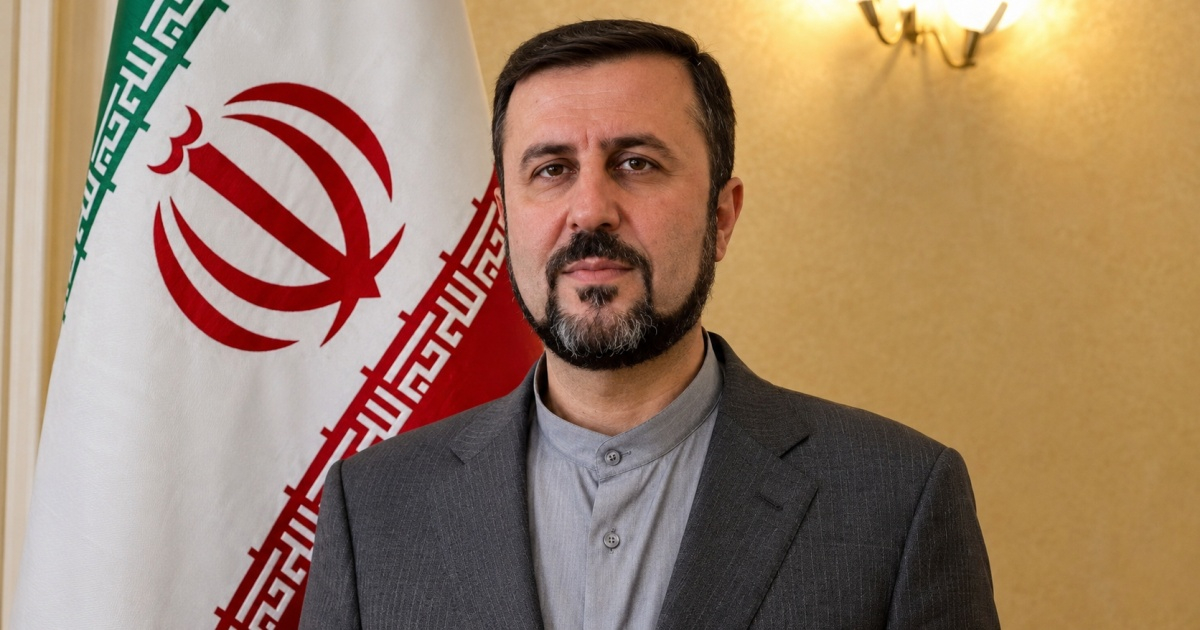
The Iranian Deputy Foreign Minister, Kazem Garibabadi, mentioned Cuba and Venezuela while warning the United States that it will not succeed in subduing Iran through blockades and economic sanctions, amidst the war and the stagnation of negotiations to end the conflict.
“Iran is not Cuba, which can be subjected to a blockade, nor Venezuela, which can be forced to surrender,” stated Garibabadi in an interview with Iranian state television late Sunday, according to the EFE agency, as reported by several news outlets.
The statement refers to the pressures from Washington on Havana and to the U.S. operation that culminated in the arrest of Nicolás Maduro in January 2026.
The Iranian diplomat used both cases to argue that his country will not yield to U.S. economic and military measures.
Iran questions the effectiveness of U.S. sanctions
Garibabadi stated that Washington has not achieved its objectives with the pressure measures against Tehran, which include a naval blockade and an intensification of economic sanctions.
Among these measures are the "Economic Paria" operation, aimed at Iranian airlines, and the "Iron Door" operation, designed to restrict the transportation of sanctioned goods via land routes and the Caspian Sea.
The statements from the deputy minister responded to the words of U.S. Secretary of State, Marco Rubio, who on November 10 defended the effectiveness of the sanctions against Iran and asserted that they were "having an effect."
Rubio also warned that the Iranians "ultimately have to eat," remarks that the spokesman for the Iranian Foreign Ministry, Ismail Bagaei, described as "an open and blatant threat to starve the Iranians."
The reference to Cuba and the links with Tehran
The mention of Cuba is significant due to the political and diplomatic relations between Havana and Tehran, two governments facing U.S. sanctions that have defended bilateral cooperation for decades.
In September 2026, the Cuban Foreign Minister Bruno Rodríguez reaffirmed Cuba's interest in strengthening its ties with Iran and the coordination between both countries within the framework of the BRICS.
Garibabadi's comparison positions Cuba as an example of a country under U.S. blockade, although his words do not suggest an announced change in relations between Tehran and Havana.
The Iranian economy, affected by war
The warning from the deputy minister comes as Iran faces a severe economic decline following nearly nine months of war and the intensification of international sanctions.
According to data collected by EFE, the year-on-year inflation reaches 89%, while the gross domestic product contracted by 10.1% year-on-year between March 21 and June 20, 2026.
The Iranian national currency has also lost 66% of its value against the dollar since the start of the conflict on February 28.
In October, the Iranian president, Masud Pezeshkian, acknowledged that many citizens are struggling even to secure "their daily bread," due to the war and economic uncertainty.
Related videos:
Filed under: