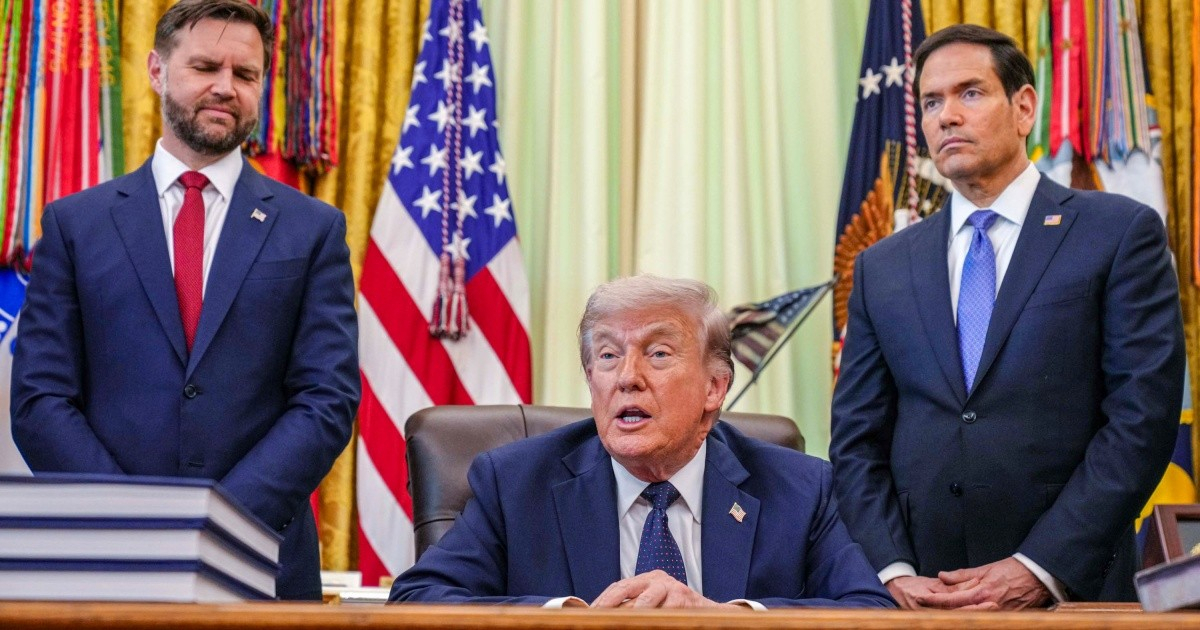
The Vice President of the United States, JD Vance may delay announcing his plans for the 2028 presidential election until spring 2027 for fear that an early campaign might overshadow Donald Trump and jeopardize his relationship with the President, whose support could be crucial for his ambitions.
According to a report published by Axios, Vance does not plan to make a definitive decision regarding his potential candidacy until after New Year's and may wait until late next spring to announce it publicly, according to sources familiar with his plans.
Those close to the vice president believe that Trump's political presence is an additional reason to postpone the announcement.
The concern is that Vance might start behaving like a presidential candidate while his current boss is still in the White House, which could be interpreted as an attempt to displace him from the spotlight.
Although his closest advisors believe he should run and expect that he will ultimately do so, the vice president has still not confirmed his decision. A spokesperson for Vance declined to comment on his plans when asked by Axios.
The caution also responds to the scenario left by the midterm elections on November 3rd.
The Republican defeat, which allowed the Democrats to regain control of both chambers of Congress, opened a debate within the party about the advisability of selecting a figure directly associated with the current administration for 2028.
Vance contributed to that debate when he blamed the war with Iran for the electoral outcome.
"The reason we lost is the war. The president himself said so last night," he wrote at the beginning of the month on social media X, while analyzing the causes of the Republican setback.
The vice president also noted the dissatisfaction with the cost of living and emphasized the need to reassess the relationship between the United States and Israel, positions that highlighted differences with Republican sectors that support military intervention.
Trump later denied that those statements had harmed his relationship with Vance, although he acknowledged that they were not well received by everyone.
"No, not at all," he replied when asked if the comments had affected his relationship with the vice president.
“But many people did not like his comments, although I did. He was right,” he added.
The president, however, stated that Vance should have added that the decision to intervene in Iran remained justified. Trump asserted that if he had to make that decision again, he would act in the same way.
The relationship between the two is facing another delicate moment after Trump ordered on November 12 that Vance stop focusing on negotiations with Iran to dedicate his attention to investigations into alleged cases of corruption and fraud in states governed by Democrats.
The vice president had been involved for months in diplomatic efforts to end the conflict.
Vance's difficulties have also opened the door for other potential Republican contenders. Secretary of State Marco Rubio and Florida Governor Ron DeSantis have begun to emerge as alternatives within the party following the election results.
Rubio also has a favorable piece of data in the polls: a recent survey by Reuters/Ipsos found that 45% of Republican voters consider the Secretary of State an excellent presidential candidate, compared to 43% who gave that rating to Vance. The difference falls within the margin of error of the survey.
Among the names also being considered for the Republican nomination are Texas Senator Ted Cruz, former Virginia Governor Glenn Youngkin, and Georgia Governor Brian Kemp.
Trump has not officially endorsed any of the potential candidates to succeed him. In recent statements, he acknowledged that he had spoken with Vance about various issues but avoided committing to a specific candidacy.
The president has also publicly mentioned Rubio as a possible candidate for 2028.
Related videos:
Filed under: