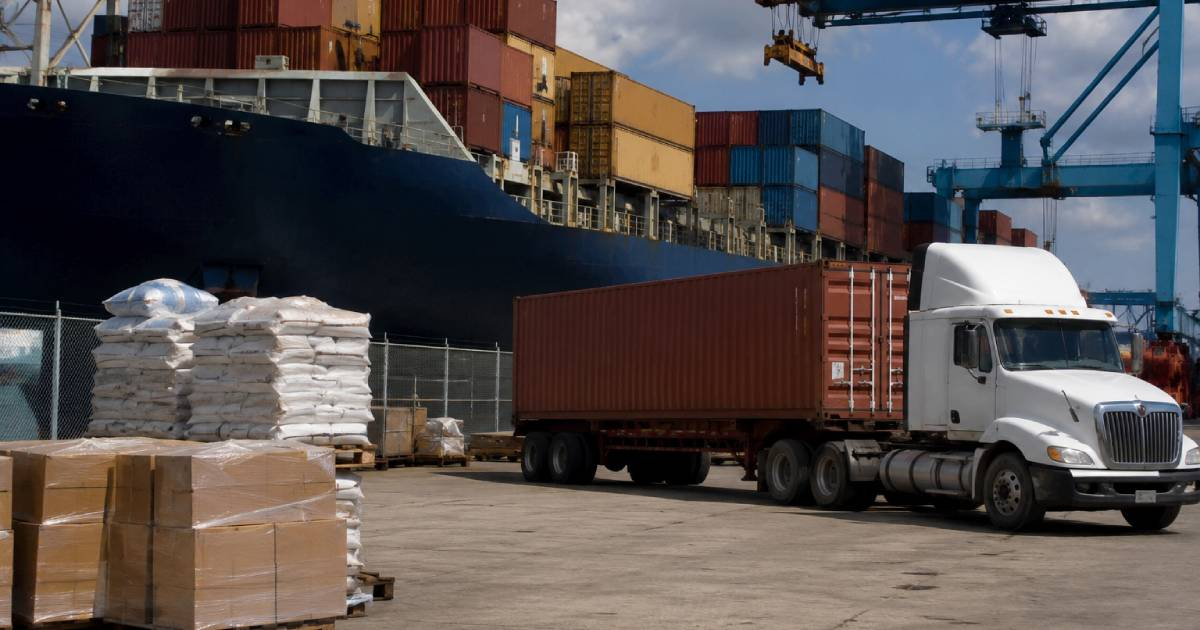
Food and agricultural product exports from the United States to Cuba reached 97.5 million dollars in September 2026, an increase of 188.1% compared to the same month the previous year.
The results are found in the monthly report "Economic Eye on Cuba" from the U.S.-Cuba Trade and Economic Council, published on Sunday with data from the Census Bureau.
In September 2025, U.S. agricultural exports to Cuba amounted to $33.9 million, while in September 2024, they were $31.2 million.
The jump places Cuba in the 30th position out of 221 agricultural export markets of the U.S. during September 2026, when just a year earlier it ranked 52nd.
In the total from January to September 2026, agri-food sales amount to $411.8 million, which is 14.5% higher than the same period in 2025, according to the .
The standout product was chicken in its various forms: frozen thighs (9.6 million), frozen chicken meat (8.1 million), and frozen legs (5.1 million) topped the list for September, followed by peanut oil (7.9 million), sugar syrup (4.2 million), beer (4.1 million), fresh eggs (3.6 million), and waffles (3.0 million).
These products accounted for 53.9% of the total exported in September.
In addition to food, the U.S. sold Cuba in September fuels for 50.6 million dollars, vehicles and parts for 25.1 million, solar panels for 10.8 million, lithium batteries for two million, and propane for 1.7 million.
The surge in fuel exports is particularly striking. In 2025, they totaled only $311,558, while in the first nine months of 2026, they have already exceeded $284.4 million.
The report indicates that the Trump Administration included fuels on the list of products authorized for export to Cuba, without halting the sales of food or vehicles initiated by previous administrations.
The total exports of all goods from the U.S. to Cuba between January and September 2026 amount to 1.096.5 million dollars, of which 201.5 million correspond to donated products.
The figures show that, despite the U.S. embargo, Cuba maintains access to important supplies of food and agricultural products from the United States, whose exports are authorized under certain conditions.
Sanctions may affect other commercial and financial operations, but the purchasing volume recorded in September shows that the embargo does not prevent these imports, raising questions about the causes of the persistent food shortages and the difficulties faced by the population in accessing them.
The First Vice President and Minister of Foreign Trade, Óscar Pérez-Oliva Fraga, claimed in July before the National Assembly that more than 7,000 containers of food and medicine were being held in Caribbean ports due to U.S. sanctions.
The increase in imports does not guarantee that food will be accessible to the Cuban population, especially given the high prices and low wages on the island.
Related videos:
Filed under: