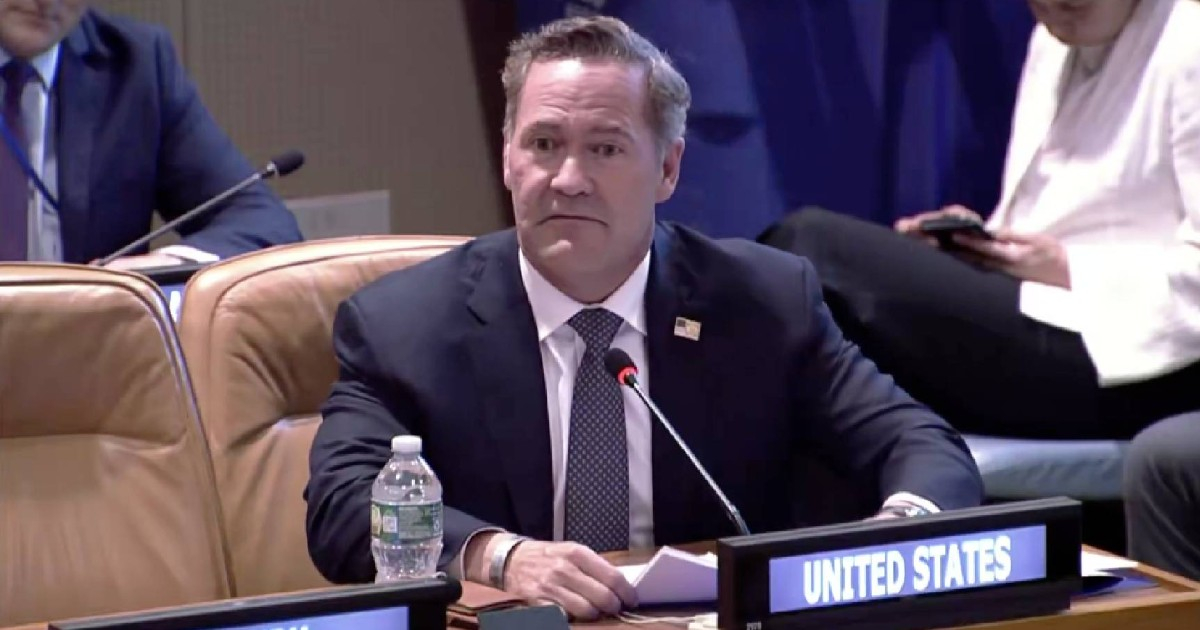
The US ambassador to the UN, Mike Waltz, called for increased international pressure on the Cuban regime, which he accused of corruption and repression, following the decline in support for the resolution against the US embargo.
Waltz published an article in Fox News where he points out that "for the first time in 31 years, under President Trump's leadership, a third of the world refused to support Havana's anti-embargo resolution at the UN."
"The rulers of Cuba can shout at diplomats, but they cannot silence the call for freedom," Waltz said, urging for increased international pressure on Havana.
The diplomat accused the Cuban government of resorting to intimidation and propaganda to evade questions about the country's economic situation, political prisoners, and the privileges of those in power.
He recalled his encounter with the Cuban delegation during the General Assembly session on October 28. He stated that the representatives from Havana pounded their tables, shouted, and attempted to intimidate him after he questioned the contrast between the living conditions of the population and the resources controlled by the ruling elite.
"There was a lot of drama and indignation, but not a single response. And this is what I said to the Assembly: if the regime behaves like this at the UN, in a room full of diplomats, imagine how they treat the people on the island who bravely raise their voices. So, what are they so afraid of?" Waltz wrote.
The voting in the UN and the loss of support for the Cuban resolution
Waltz linked his call for diplomatic pressure with the outcome of the annual vote demanding the lifting of the U.S. embargo on Cuba. On October 28, the General Assembly approved the resolution with 130 votes in favor, 17 against, and 25 abstentions; another 21 countries did not participate in the vote.
A total of 63 states did not vote in favor of the text, although that does not mean all rejected the resolution. As reported by CiberCuba about the voting results, the document lost 35 favorable votes compared to 2025, when it received 165 supports and seven opposing votes.
For Waltz, the reduction of support indicates that more governments are willing to challenge Havana's position. However, the resolution was approved, and its content pertains to U.S. sanctions, not to a political recognition of the Cuban government.
The ambassador urged countries to continue demanding explanations regarding GAESA's financial resources, the situation of political prisoners, and the corruption attributed to the authorities.
"Thus, here is my challenge to all nations that love freedom, and to all Americans who believe that the Cuban people deserve better: keep demanding answers about the billions that have been stolen, the prisoners who remain in jail, and the corruption that is in plain sight," wrote Waltz.
In his column, he contrasted the assets highlighted in an investigation on GAESA with the shortage of medicines, food, and electricity affecting the Cuban population.
“The Cuban people will be free”, Waltz stated, expressing his hope that this moment will arrive during Donald Trump's presidency and Marco Rubio's tenure as Secretary of State. His declaration did not include the announcement of new measures or a timeline for a potential political change on the island.
Related videos:
Filed under: