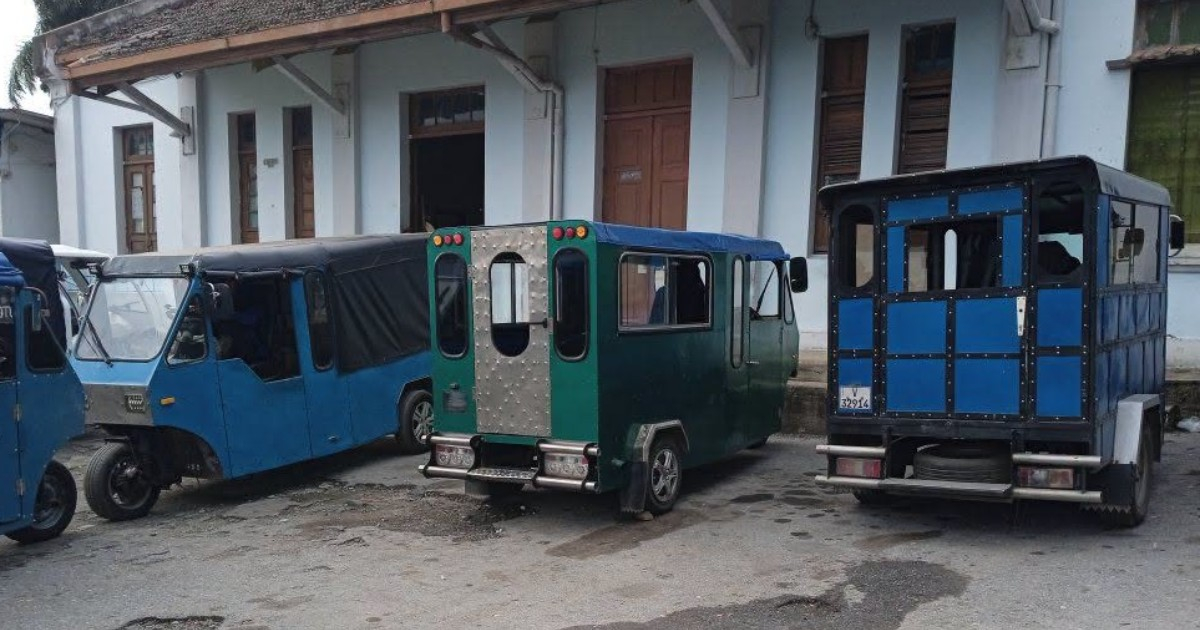
The motorcycles operating at the Cumanayagua Intermunicipal Bus Terminal will have a fare of 1,500 Cuban pesos for the trip to Cienfuegos starting this Thursday, reported the Cienfuegos journalist and radio host Alexis Alejandro Abril Lariño on Facebook.
"That's a huge setback; a retiree with a pension of 3,000 pesos a month will spend it all on a trip to the provincial hospital, leaving nothing for food throughout the month," wrote one of the users in the post.
"Now you can't even go to a hospital. Who has 1,500 to travel for a doctor’s appointment, and the return would be 3,000—then the funds are gone. Where is this country heading, and no one hits the STOP button? You can't rely on salaries anymore; they don't even cover a loaf of bread with croquettes," expressed another person.
Several Cubans also warned that the advertised price may not be honored in practice: “They say 1,500, and when you get in and reach your destination, they tell you the price is one higher”, noted one of them, while another pointed out that currently they already charge between 1,800 and 2,000 pesos for that same route.
Motonetas —handcrafted three-wheeled vehicles— have proliferated in Cienfuegos in response to the collapse of state transportation, although their use on the road to Cumanayagua, with its sharp curves, also raises safety concerns among the users themselves.
"This is crazy, they took over the terminal and that type of vehicle for so many people on a road with so many curves; when an accident happens, we'll see how it ends. It's not the same to have four wheels as it is to have three," warned another commentator.
"I was traveling to Cienfuegos for 0.26 cents. A hired taxi cost 8 pesos and the private cars were 0.50 cents. We're going downhill and without brakes," said a Cuban woman.
The transportation crisis in the province worsened since February 2026, when Cienfuegos suspended intermunicipal and rural departures, as well as the ferry service across the bay, leaving barely ten operational boarding points.
In September, the authorities announced a plan to reactivate five urban routes using private fuel with state buses, set to begin on October 1, and Cumanayagua was expected to have the largest number of operators in this scheme.
Nationally, the interprovincial buses have reduced their passenger volume from over 5,000 daily to less than 1,000 so far in 2026, reflecting a disintegrating transportation system.
Related videos:
Filed under: