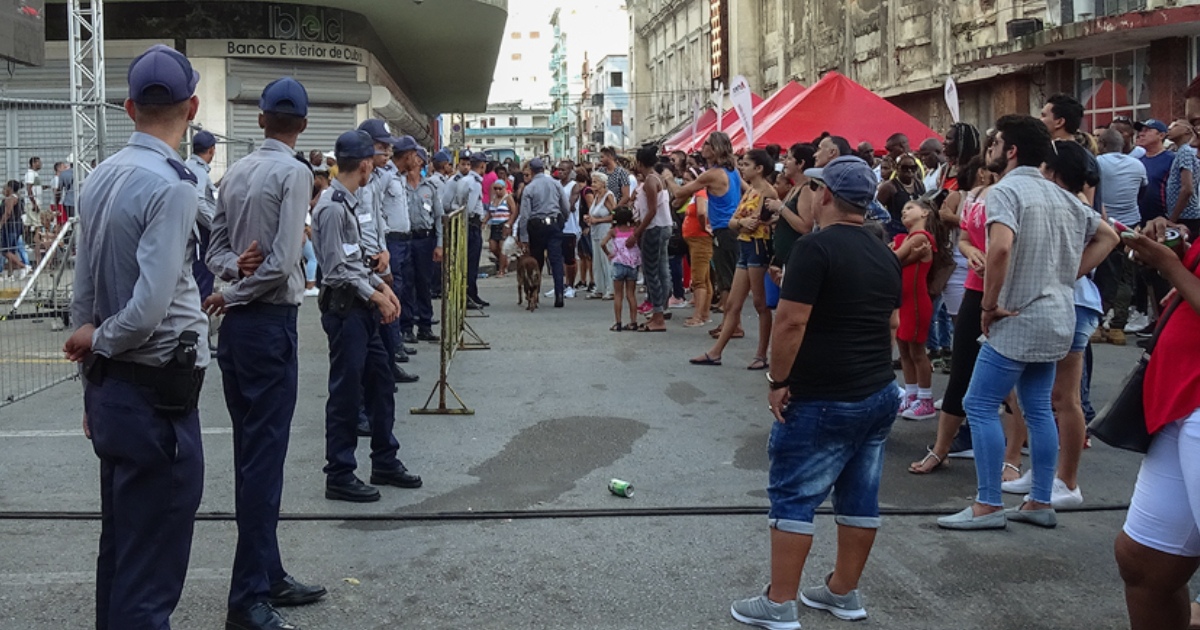
A nationwide survey conducted within Cuba between July 22 and September 7, 2026, reveals that 82% of Cubans believe that the country is governed in the interests of a minority rather than the majority, while nearly 80% view daily corruption as a serious or very serious problem, according to a study by the International Republican Institute (IRI) published this Wednesday.
The survey, conducted by the National Opinion Research Center (NORC) at the University of Chicago through in-person interviews at the homes of 1,199 Cuban adults, provides an unprecedented snapshot of the population's mood under the dictatorship.
The numbers rejecting the regime are striking: 89% state that the government does not represent them, 86% believe that the country is moving in the wrong direction, and 69% responded that the greatest achievement of the current government has been "nothing."
Only 2% of those surveyed have a positive opinion of Miguel Díaz-Canel, while around eight out of ten Cubans express unfavorable views about Raúl Castro, the Communist Party, the National Assembly, the Revolutionary National Police, and the Committees for the Defense of the Revolution.
In terms of corruption, the survey defines it as having to do a favor, give a gift, or pay a bribe because someone is using their position for personal gain. 68% rated it as a "very serious" problem, and an additional approximately 12% considered it "somewhat serious." The rejection is widespread: among Cubans aged 36 to 55, 71% consider it "very serious"; among those aged 18 to 35, 68%; and among those over 56 years old, 65%.
Seventy-three percent stated that they do not trust any political or public figures, eighty-seven percent reject the idea that citizens can influence the country's decisions, and eighty-five percent deny that it is possible to publicly protest against the government.
The full IRI survey also documents the economic decline experienced by the population: 76% state that their quality of life worsened in the six months prior to the interview, 44% had difficulties feeding their families or acquiring essential goods, and 91% rated the situation regarding electricity and fuel supply as "very bad."
Even among those who receive remittances from abroad, 38% assert that this money is not enough to cover their basic needs; among those who do not receive money from abroad, that proportion rises to 48%.
The demand for change is equally overwhelming: 78% say that Cuba needs serious and urgent changes, and 67% believe that nothing in the current system should remain the same. Among the Cuban youth aged 18 to 35, that percentage rises to 85%.
Antonio Garrastazu, Senior Director of IRI for Latin America and the Caribbean, noted that "Cubans' trust in the political system and leadership of their country has collapsed," and that the population is "deeply dissatisfied not only with their leaders but also with the institutions that uphold the single-party state of the regime."
The survey was conducted with a margin of error of ±4.2 percentage points at a 95% confidence level. The response rate of 20% reflects the challenges inherent in working within a restrictive political environment.
"These findings clearly show that Cubans are deeply dissatisfied with the dictatorial status quo and want to choose their own future," concluded Garrastazu.
Related videos:
Filed under: