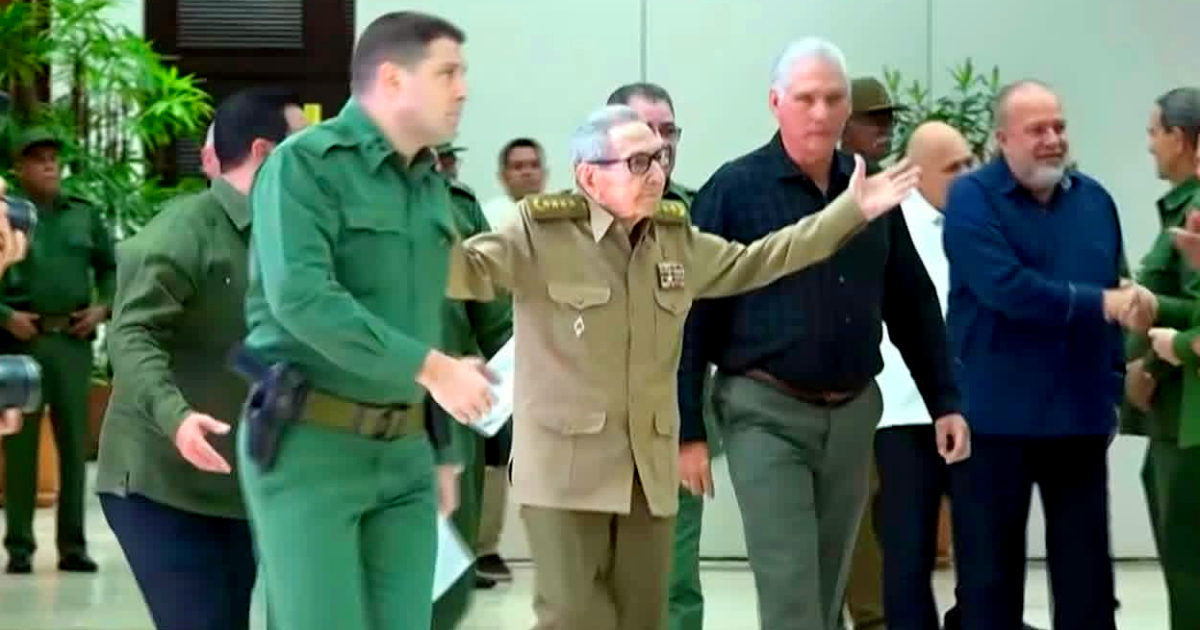
Three out of four Cubans do not trust any political or public figure in the country, according to a national survey published this Wednesday by the International Republican Institute (IRI), which documents the most profound collapse of legitimacy recorded in Cuba in recent times.
The survey, conducted by the National Opinion Research Center (NORC) at the University of Chicago through in-person interviews in the homes of 1,199 adults residing in Cuba between July 22 and September 7, 2026, reveals that churches and religious institutions are the only ones that generate majority trust: 78% in support, compared to the 83% negative opinions accumulated by the Communist Party of Cuba.
The gap between citizen faith in religious institutions and rejection of the regime's structures is vast. The National Assembly of People's Power recorded 84% negative assessments, while the National Revolutionary Police and the Committees for the Defense of the Revolution each received an 83% rejection rate.
Among the individual leaders, Miguel Díaz-Canel accumulated 81% negative opinions and only 2% positive ones. Prime Minister Manuel Marrero Cruz recorded a 78% disapproval rate, and Raúl Castro had a 76% disapproval. The only figures mentioned with any level of confidence —Fidel Castro, the family doctor, and Juan Esteban Lazo— did not exceed 3% each.
The rejection of the country's direction is equally overwhelming. 86% of respondents believe that Cuba is headed in the wrong direction, 89% claim that the government does not represent them, and 82% think that the country is governed for the benefit of a few.
When asked what the greatest achievement of the current government was, 69% responded "nothing." Only 7% mentioned education and 5% health.
«The trust of Cubans in the political system and leadership of their country has collapsed,» stated Antonio Garrastazu, senior director of the IRI for Latin America and the Caribbean. «Cubans are deeply dissatisfied not only with their leaders but also with the institutions that uphold the single-party state of the regime.»
The demand for change is massive: 78% call for deep and urgent transformations, a figure that rises to 85% among young people aged 18 to 35. 67% believe that nothing in Cuba should remain the same.
The complete IRI survey also highlights the economic dimension of the crisis. 65% identified food as the monthly expense they find most challenging to cover. Among those who receive remittances from abroad, 38% stated that they still cannot meet their basic needs; among those who do not receive financial assistance from outside, that proportion rises to 48%.
The study also reflects the extent of the exodus: 61% of respondents have family or friends outside of Cuba, and among them, 76% indicated the United States as the primary destination.
The methodology distinguishes this survey from previous polls: it is a nationally representative probabilistic sample, with a maximum margin of error of ±4.2 percentage points at a 95% confidence level, conducted within Cuban territory. Previous surveys pointed in the same direction: in September 2025, another poll revealed that 94% of Cubans did not trust that the government would resolve the crisis.
"These findings clearly show that Cubans are deeply dissatisfied with the dictatorial status quo and want to choose their own future," concluded Garrastazu.
Related videos:
Filed under: