
Related videos:
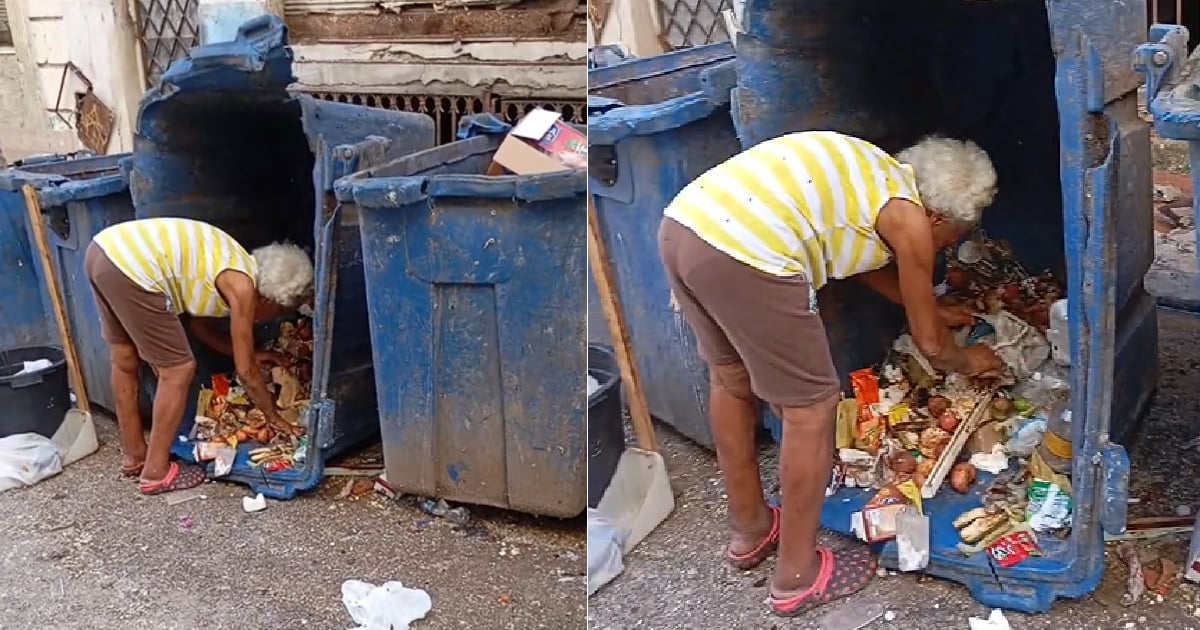
A national survey conducted by the Food Monitor Program (FMP) revealed a striking finding: 94% of Cuban households believe that the government is not interested in reversing the food crisis affecting the country, or that if it has tried, it has not achieved results.
Only 6% of those surveyed believe that official actions have been aimed at improving food security.
The study, presented in the report “(Re)living the Crisis in Cuba: Anatomy of a Fractured Society,” highlights the citizens' distrust towards state institutions and describes an unprecedented structural deterioration situation, marked by what it defines as a polycrisis: economic, energy, demographic, monetary, and social.
The report emphasizes that hunger, poverty, and insecurity have spread to the majority of the population in a country where independent estimates suggest that more than 80% of Cubans live in poverty.
According to the report, between 2022 and 2023, deaths from malnutrition increased by 74%, ranking among the leading causes of death.
Diseases such as diabetes, hypertension, cardiovascular issues, anemia, and chronic gastritis have increased in incidence, all related to nutrient deficiencies and malnutrition.
FMP warns that habitual consumption has shifted towards empty calories and ultraprocessed foods, creating a picture of hidden hunger that jeopardizes the long-term health of millions of Cubans.
The document also links food insecurity with other phenomena of significant social impact. The mass emigration that began in the 1990s has surged recently, and the country has lost at least 18% of its population.
At the same time, the birth rate has fallen to historic lows, with only 7.2 births per thousand inhabitants and a quarter of the population over 60 years old.
By 2030, it is estimated that older adults will represent 30% of the population, making Cuba one of the most aging countries in Latin America.
The survey and the report also reflect the psychosocial effects of a life marked by repeated crises. FMP points to an increase in anxiety, depression, and suicide.
In 2020, there were 1,548 reported deaths by suicide, nearly a hundred more than the previous year, and in municipalities like Diez de Octubre, cases increased by 23% in recent years.
For many Cubans, living under food insecurity and ongoing precariousness not only erodes physical health but also affects the emotional and mental capacity to cope with daily life.
The deterioration is also reflected in the rise of homemade and synthetic drug use, especially among teenagers.
Medical studies from 2023 showed that 80% of synthetic drug consumers were between 15 and 18 years old, and 20% were between 12 and 14 years old.
A year later, the Ministry of the Interior reported 83 cases related to trafficking and consumption, involving 51 young people and 72 minors.
The report also highlights the expansion of homelessness. While the Ministry of Labor and Social Security reported 3,690 people living on the streets as of 2024, independent sources estimate that by 2025, the number exceeds 1.2 million homeless Cubans.
Many elderly adults live in conditions of overcrowding and extreme poverty, while others die in public spaces due to starvation.
Insecurity is also on the rise. The Cuban Citizen Audit Observatory (OCAC) recorded 1,317 crimes in 2024, a 50% increase compared to the previous year, with up to three daily crimes related to thefts and assaults.
The report indicates that socioeconomic deterioration and institutional failure create a conducive environment for crime.
Beyond the numbers, FMP gathers testimonies that reflect the collective weariness. A 72-year-old woman from Havana stated: “In the 90s there was solidarity, we helped each other more. Now everyone is focused on their own issues, looking for ways to get by. It’s as if going back to the crisis has made us more miserable.”
A 64-year-old man from Guantánamo summarized: “I feel that the country is more broken than ever, that there is no desire to move forward.”
The report concludes that Cuban society has been compelled to normalize the crisis as a way of life, leading to a regressive adaptation that promotes individual survival, opportunism, and the loss of collective projects.
According to FMP, the more citizens become accustomed to each crisis, the more enduring the model that marginalizes them becomes.
The organization Food Monitor Program has been systematically alerting about the worsening of food insecurity in Cuba.
One of their most recent investigations indicated that more and more Cubans are only eating once a day, a pattern that highlights the extreme precariousness of the daily diet and the collapse of the food distribution system.
In addition to hunger, the undignified conditions in which many people prepare their food have been reported. About 9 million Cubans cook in precarious conditions, without stable access to gas, electricity, or potable water, which increases health risks and reflects the deterioration of domestic infrastructure.
The organization has also documented the high costs associated with basic food. According to their estimates, a Cuban couple needs at least 40,000 pesos just for food, not including other essential expenses, making nutrition an unattainable privilege for most households.
The impact on public health has also been noted. The regular consumption of empty calories and ultra-processed products has led to an increase in diseases such as diabetes, hypertension, anemia, and chronic gastritis.
Food Monitor Program warned about the increasing risk of diseases arising from the food crisis, including conditions related to severe malnutrition that already affect millions of people.
Frequently Asked Questions About the Food Crisis in Cuba
Why do 94% of Cubans not trust the Government to solve the food crisis?
94% of Cubans do not trust the Government because they believe there is no interest in reversing the food crisis, or if attempts have been made, the results have not been achieved. The situation reflects a structural deterioration of the country, with a significant increase in poverty, hunger, and food insecurity.
What are the main causes of the food crisis in Cuba?
The food crisis in Cuba is due to a combination of inflation, a decline in purchasing power, and ineffective government management. 96.91% of Cubans have lost access to food because of these factors, and 98.82% have noticed a significant increase in prices.
How does the food crisis affect the health of Cubans?
The food crisis has led to an increase in diseases such as diabetes, hypertension, cardiovascular diseases, anemia, and chronic gastritis, all related to deficient diets and malnutrition. Additionally, deaths from malnutrition have risen by 74% between 2022 and 2023.
What impact does the food crisis have on the Cuban demographic?
The food crisis has contributed to massive emigration and a decline in the birth rate, placing a quarter of the population over 60 years old. It is estimated that by 2030, older adults will represent 30% of the population, making Cuba one of the oldest countries in Latin America.
How is hunger manifesting in Cuban society?
Hunger is evident in Cuba, with over 80% of the population living in poverty, and 25% of those surveyed admitting that they go to bed without dinner. The diet has shifted towards empty calories and ultra-processed foods, putting the long-term health of millions of Cubans at risk.
Filed under: