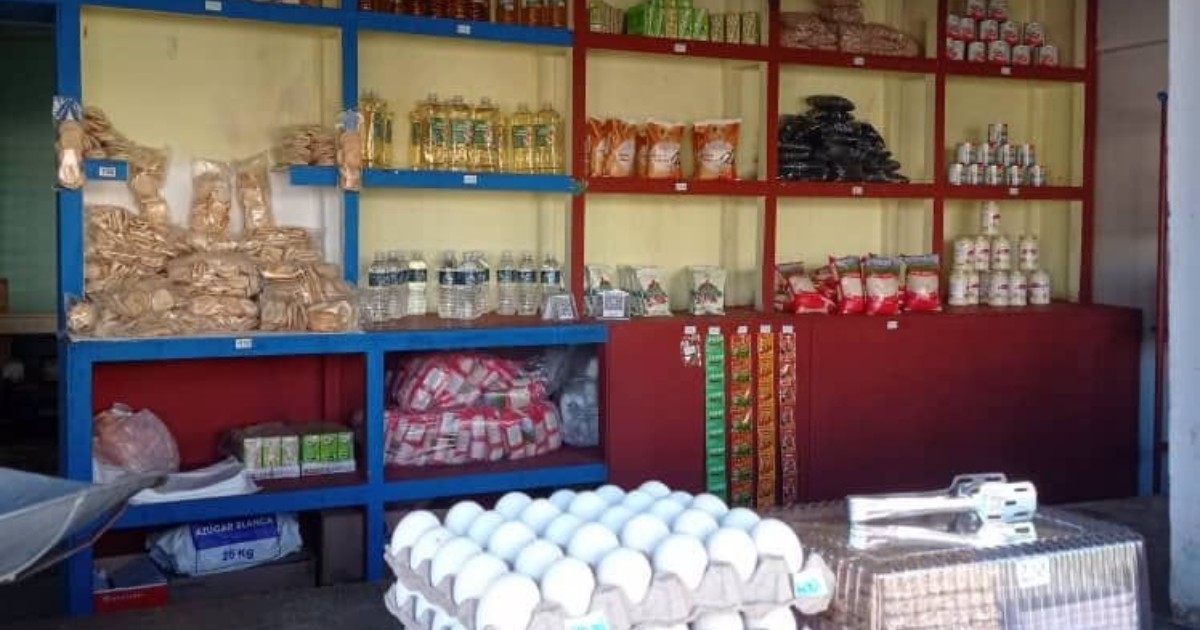
The Municipal Commerce Company of Ciego de Ávila inaugurated the Neighborhood Market "La Loma", the most recent unit of the state program that the Cuban regime promotes as a solution to scarcity and high prices, but which the population rejects as an unfulfilled promise.
The Director of the Ciego de Ávila Business Group for Commerce announced the opening on Facebook, stating that "proposals for Neighborhood Markets continue to be promoted from Avileño Commerce."
The official publication outlines a list of obligations for the new establishment: sales through electronic channels for all products, price boards showing reference prices "10 and 15% below," the presence of a certificate from ONAT with a tax incentive, employment and commercial management contracts, mechanisms for regulated sales, and methods of pre-packaging and messaging.
On paper, the scheme appears orderly. In practice, Cubans have been reporting for months that the discounts are a fiction.
The program launched as a pilot on July 23, 2026, in the Havana municipality of Plaza de la Revolución, under Resolution 16/2026 from the Ministry of Domestic Trade, signed by Minister Betsy Díaz Velázquez.
In Ciego de Ávila, the first neighborhood market, El Jupuro, opened on October 10 at the intersection of Carretera Central and Honorato del Castillo Street, also amid criticism. Previously, in August, the same municipal company had tendered six state warehouses —El Sueño, La Amarilla, La Afortunada, La Paz, La Cubana, and La California— to be managed by non-state actors.
La Loma arrives, however, at the worst moment of credibility for the program.
Authorities initially promised discounts ranging from 15% to 30% compared to other stores. This figure was then officially reduced to 10%-15%. However, the actual discounts observed in November ranged from just 7% to 12%, and in several cases, prices were higher than those of private small and medium enterprises: oil was sold at 3,000 CUP per liter in neighborhood markets, compared to 2,600 CUP at other points of sale.
At El Jupuro, customers noted that the oil was priced around 2,500 CUP, similar to other stores in the municipality, questioning the supposed discount. Electronic payments via Transfermóvil and EnZona were only available for three products, limiting their practical use.
The contrast with the state salary is striking. A basic grocery purchase—without meat, eggs, or dairy—exceeds 8,500 CUP, while the average monthly state salary stands at 7,354 CUP. For retirees, teachers, and public sector workers, the "affordable prices" promoted by the regime are simply unattainable.
The reaction on social media has been strong. Cubans called the program "another big lie to the population" and described it as "same dog, different collar." Others simply summarized the situation in three words: “everything is still expensive”.
An inspection released on October 3 detected violations in 1,337 out of 2,165 economic actors reviewed in Ciego de Ávila, including abusive prices, expired food, absence of payment gateways, and lack of visible prices.
Related videos:
Filed under: