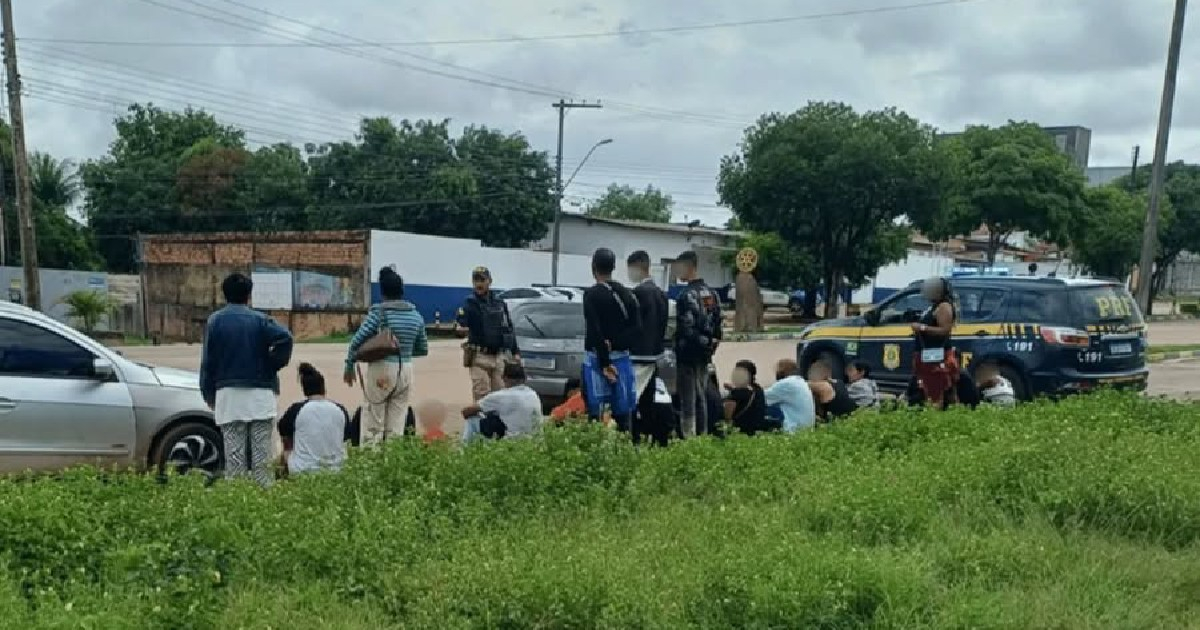
Around 3,000 Cubans cross each month into Brazil through Guyana, according to the IOM Regional Mobility Trends report for Latin America and the Caribbean for the first half of 2026, establishing a route that has become the primary migration corridor for Cubans heading south on the continent.
The journey begins in Havana—sometimes with a stop in the Dominican Republic—heading to Georgetown, the capital of Guyana, the only country in South America that does not require a visa for Cuban citizens.
From there, migrants travel by land to the border town of Lethem and cross the Tacutu River irregularly into the Brazilian state of Roraima, primarily through Bonfim and Boa Vista.
The International Organization for Migration (IOM) describes these movements as "more structured" than those of other nationalities and warns that they are often facilitated by networks of human trafficking that charge between 1,200 and 10,000 dollars per migrant.
The organization states that those traveling through that border stretch face "serious protection risks, including violence, exploitation, and abuse by criminal groups," exacerbated by the remoteness of the crossing areas and very limited access to support services.
The flow is directly reflected in the asylum numbers: Brazil recorded 16,982 applications from Cubans between January and May 2026, and the accumulated figure reached a total of 33,185 by September, with that month setting a historical record of 4,885 petitions, according to data from the International Migration Observatory of Brazil.
Cubans submitted over 33,000 asylum requests in Brazil in the first nine months of the year, accounting for 62.9% of all applications recorded in September.
This volume is a direct consequence of the collapse of the corridor to the United States. The Darién passage, which for years was the most traveled migratory route in the hemisphere, recorded just 280 crossings in the first half of 2026, compared to 201,063 in the same period of 2024, a decline of over 99% caused by the tightening of migration policies implemented by the Trump administration since January 2025.
Northern Brazil serves as a redistribution hub: from Roraima, migrants continue to Manaus, Brasília, Curitiba, and São Paulo, with some moving on to Uruguay.
The Brazilian Ministry of Justice estimates that the country currently hosts around 84,000 Cubans, and Curitiba has established itself as the main settlement hub, to the extent that local media informally refer to it as "the new Miami."
Uruguay also absorbs part of the flow: between January and May 2026, it recorded a positive migration balance of 5,946 Cubans, with an average of 1,190 arrivals per month, according to the National Migration Directorate of that country.
The IOM notes that data from the South American eastern route "increasingly reflect a prolonged stay in Brazil and Uruguay, rather than mere transit."
The formal asylum recognition process is extremely slow in both destinations. As of the end of September 2026, there were 99,306 pending Cuban cases in Brazil, accounting for 58.7% of all unresolved cases.
In Uruguay, only 52 Cubans had been formally recognized as refugees by October 2026, despite a backlog of 30,715 pending applications, 89% of which were from Cubans.
In 2025, Cubans had submitted 41,919 asylum applications in Brazil—an 88.1% increase from the 22,288 in 2024—surpassing Venezuelans for the first time in a decade as the main nationality applying, a trend that the pace of 2026 confirms with no signs of slowing down.
Related videos:
Filed under: