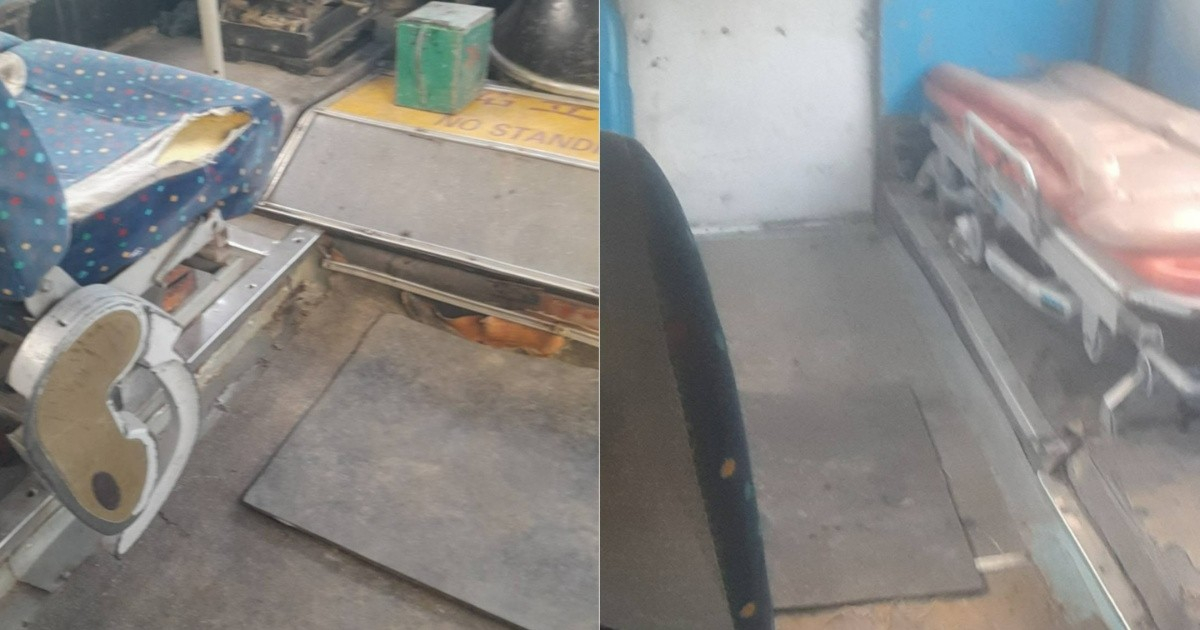
A report circulated on social media reveals that the maternal homes in Camagüey use an old and deteriorated bus as the only available means of transportation for pregnant women admitted to those facilities.
“After a complaint was received alleging that their ambulance had been taken away, they now have to use an old bus in deplorable conditions for these trips,” reported independent journalist José Luis Tan Estrada.
Tan Estrada claims that, according to the account of one of the affected individuals, “the vehicle gets wet when it rains, to the point that the seats end up soaked and emit unpleasant odors. Hygiene, she asserts, is virtually non-existent, and the strong smell of fuel manages to cling to the skin of the passengers.”
"On top of the poor conditions, there are mechanical problems. When the bus won’t start, the workers and those present have to find help to push it and get it running again. The vehicle also shows wear and tear in various parts," added the communicator.
It also states that "among the female passengers, there are pregnant women facing threats of miscarriage and other risks during their pregnancy, women who need to exercise extra care and have suitable conditions for their travel."
The journalist shared images that show the precarious condition of the vehicle.
The situation is not an isolated incident, but the latest link in a chain of precariousness that has been extending for years in the province. The Hogar Materno Clodomira Acosta, the largest facility in Camagüey and inaugurated in 2018, has accumulated complaints since at least August 2022, when it was reported that pregnant women were sleeping on the floor during blackouts.
In May 2023, a source cited by Diario de Cuba described the conditions of the same center: "There were 30 pregnant women and a water truck took more than six hours to arrive."
That same month, the families of the inmates faced serious difficulties in bringing them food due to the transportation crisis in Camagüey, while in Matanzas the situation was equally dire: workers at the maternal home in that province had to travel in horse-drawn carts due to the lack of buses, fuel, tires, and spare parts.
The deterioration of healthcare transportation had dramatic consequences in February 2026, when an ambulance bus transporting patients from Guáimaro to Camagüey overturned at the entrance of Cascorro. The accident left 56 people injured, including several pregnant women, five of whom were in critical condition.
The Ana Betancourt de Mora Provincial University Gynecological and Obstetric Hospital, the main referral center for births in Camagüey, has been the focus of numerous complaints during 2026. In April, it was reported that pregnant women were waiting to give birth in hallways on deteriorated mattresses, without privacy or even minimal hygiene conditions.
In May, a photograph showed electric motorcycles parked inside the perinatal care room of the same hospital. That same month, journalist José Luis Tan Estrada reported that more than 15 babies had died between January and May at that facility, a figure that was not confirmed by any official source.
The situation did not improve in the following months. In October, it was reported that newborns were left on old chairs and used fabrics due to a lack of beds in the delivery room, and days later a woman in labor reported having spent the night in aluminum chairs for the same reason.
Cuban maternity homes were established in the 1960s to accommodate pregnant women living far from hospitals and to facilitate their transfer at the time of delivery. For decades, they were presented as a cornerstone of the Island's healthcare system. According to government statistics cited by the BBC, Cuba had approximately 32,800 pregnant women in March 2026.
The dilapidated bus that today travels through the maternity homes of Camagüey encapsulates, in a single image, the true condition of a system that the regime continues to present as a model to the world.
Related videos:
Filed under: