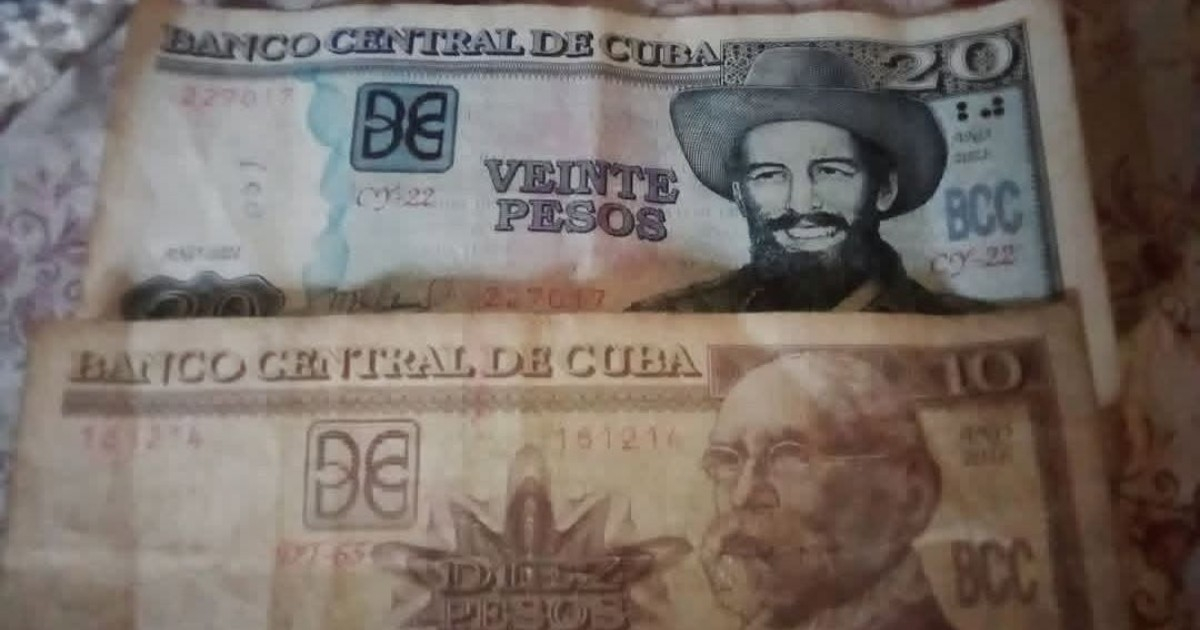
A self-employed worker residing in Havana sparked a debate on social media this Saturday by reporting that, during a recent inspection in her area, no self-employed worker managed to escape without a fine, and that the regime can sanction small businesses with up to 42,000 Cuban pesos —and even order their permanent closure— for not accepting five, 10, and 20 peso bills that remain legal tender.
«We, the TCP, are the lowest link in the chain, those who face the customers and can be fined up to 42,000 pesos or even face removal from the job project, commercial registration, and health license; ultimately, the closure of our business,» wrote Barbara Eshter Cardena in a Facebook post.
The core of the complaint is a contradiction generated by the system itself: TCPs are required to accept any denomination of the Cuban peso, but the Mipymes — where they source their supplies — have been refusing those same small bills for months.
According to Cardenas, the escalation has been gradual: “Mipymes started by only accepting peaks of 20, then peaks of 50, and now many peaks are at 100, only allowing from 200 and above.” This leaves the TCP in a dead end: they receive low denomination bills from their customers, but cannot use them to purchase supplies, and if they reject them, they face inspectors and fines.
Cardenas added, "They tell us to report it, and we do, but we receive no response, we see no change, we can't make any purchases."
"There is only one logical reasoning: where we buy, we experience the same or worse than our clients, only we face greater consequences because we are closer to the people, and for them, we are the only ones to blame," Cardenas concluded in his post.
The Central Bank of Cuba issued 2,000 and 5,000 peso bills in April 2026, and 10,000 and 20,000 peso bills in September, marking the largest denominations issued to date. Paradoxically, these emissions accelerated the practical rejection of smaller bills, which remain legal tender but are considered unmanageable by businesses due to their low value and the physical volume they represent.
The situation is worsening because in November, rejections of 50-peso bills are already being reported, a denomination that until recently was considered acceptable in many establishments.
In December 2025, a case was documented of a self-employed individual in Havana who refused to accept small bills, and in July 2026, private businesses in Santiago de Cuba rejected bills of one, five, 10, and 20 pesos. In September, a business in Holguín refused 300 pesos delivered in 20-peso bills, despite the fact that the customer was supposed to pay 18,000 pesos.
The Credit and Commerce Bank (BANDEC) warned in August 2026 that the rejection of banknotes of any denomination constitutes a "flagrant violation of citizens' rights" and that "no establishment can impose which denominations it accepts". However, the publicly documented sanctions have fallen on the TCP, not on the mipymes that create the problem.
Related videos:
Filed under: