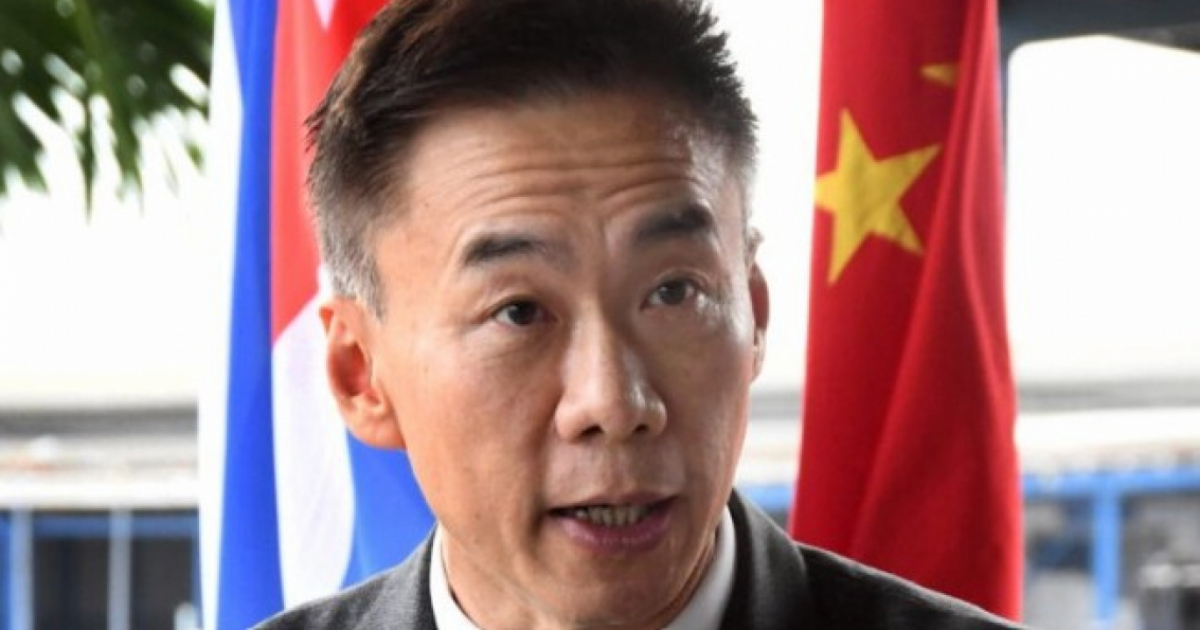
The Chinese ambassador in Cuba, Hua Xin, published in the People's Daily, the official organ of the Communist Party of China, a description of the Cuban energy crisis harsher than any acknowledgment made by the regime itself: blackouts exceeding 20 hours daily in Havana, hospitals and nursing homes "completely in the dark," and births being assisted with flashlights.
The article, titled "The Sun Cannot Be Blocked," is official propaganda from an ally of the regime and should be read as such. Nevertheless, the figures it contains portray a reality that Havana often glosses over in its state media.
"This year, under the impact of unilateral sanctions, Cuba has experienced an unprecedented shortage of oil and electricity. Hospitals, schools, and nursing homes are completely in the dark; in many places, including the capital Havana, power cuts exceed 20 hours a day," wrote Hua Xin, according to the Chinese embassy.
The diplomat recounted that during a visit to a polyclinic in Havana, the staff confided that in the worst moments, "they could only hold flashlights to attend to critically ill patients, and even for assisting with births," until solar panels donated by China were installed.
Hua Xin assigns all responsibility to the U.S. embargo —which he refers to as a "blockade"— and cites statistics from the Cuban government indicating that solar energy could contribute between one-third and half of the generation at peak noon. This figure comes from official Cuban sources and has not been independently verified.
While the Chinese ambassador described that dark Cuba, another revealing episode unfolded in Beijing. Cai Qi —fifth in the hierarchy of the Standing Committee of the Political Bureau of the CPC and de facto chief of staff to Xi Jinping— received a delegation of officials from the Communist Party of Cuba led by Jorge Luis Broche Lorenzo, member of the Secretariat of the Central Committee of the PCC and head of its Economic-Productive Department.
According to the official statement from the Chinese embassy, Broche Lorenzo expressed gratitude to Beijing for its assistance in the "current difficult situation" and stated: "We wish to deeply learn from the successful experience of the Communist Party of China in leading reform and opening up and in driving economic and social transformation."
The Chinese reform that Cuban officials want to study includes agricultural decollectivization, special economic zones, and the market as a central mechanism. These are elements that the regime has been resisting for decades or applying only partially and in a reversible manner.
The visit of Broche is part of an intense bilateral diplomatic activity. Earlier this month, the foreign minister Bruno Rodríguez Parrilla traveled to China as a special envoy of the PCC and the Cuban government, met with Wang Yi, and signed three biopharmaceutical agreements in Shanghai.
Throughout 2026, China approved an emergency package of 80 million dollars and delivered 10,000 photovoltaic systems in two batches, with plans to build 92 solar parks totaling 2,000 MW by 2028.
Related videos:
Filed under: