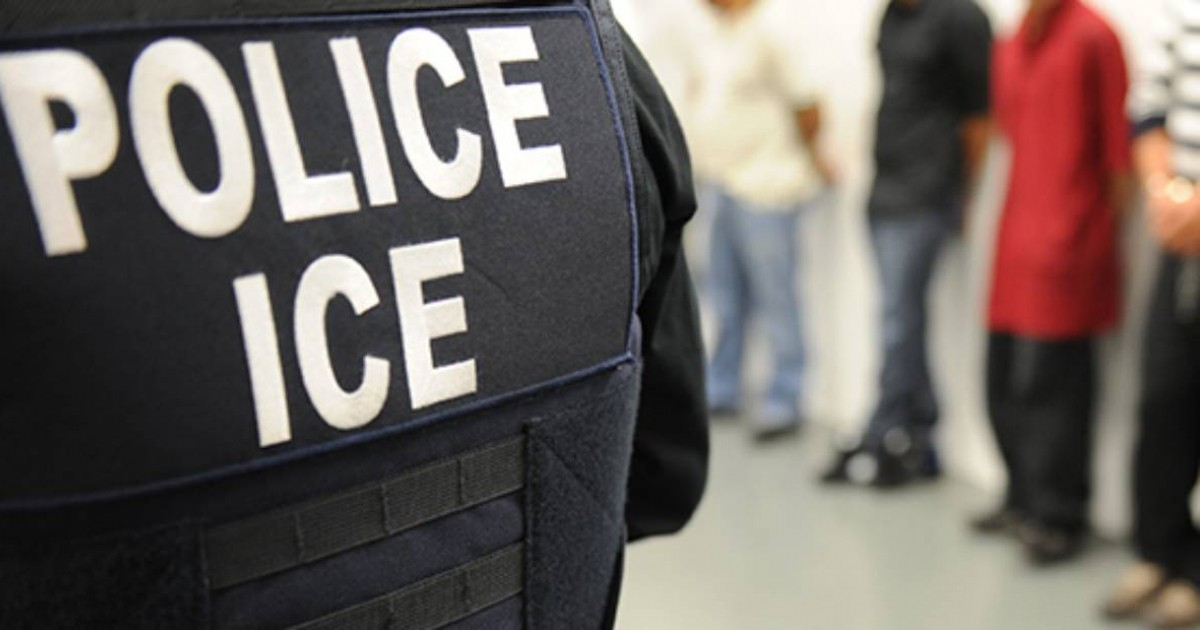
The U.S. Department of Justice has ordered the mobilization of approximately 2,000 lawyers from non-immigration divisions in response to the overwhelming surge of lawsuits filed by immigrants detained by ICE, which has exceeded the capacity of federal prosecutors.
More than 97,000 detainees have filed habeas corpus petitions since Donald Trump returned to the White House, about 10,000 of which have been submitted since October 2026, according to information obtained by CBS News.
"Many of the federal prosecutors' offices in the Department have been overwhelmed by the flood of requests and the impractical procedures established by the courts," wrote Blanche.
The Attorney General characterized many of those requests as "frivolous" and attributed them to an attempt by the immigration attorney group to "undermine President Trump's promise to the American people to prioritize their safety and protection." The memo sets a 30-day deadline for the involved divisions to submit an appeal strategy and deploy attorneys in the districts with the highest caseloads.
What changes for Cubans detained in Florida?
For the Cubans detained at the Krome Detention Center, the Broward Transition Center, and other facilities in South Florida, habeas corpus before federal courts is currently the primary legal tool available. The mobilization of the DOJ has two implications: while more government lawyers may expedite resolutions, they can also strengthen the defense of the detentions.
Recent rulings demonstrate that the pathway works. Judge Beth Bloom ordered the release of a Cuban detained in Krome in mid-November, concluding that "there is no evidence of a real plan for expulsion or any coordination with Cuba."
Another Cuban was released in Kentucky because ICE never provided him with the I-286 form at the time of his arrest. A third case was resolved in September after eight months of detention. All three are documented in recent rulings on Cubans detained by ICE.
This effectiveness, however, faces challenges in the Supreme Court. In Trump v. Suri (No. 26-380), the administration seeks to limit habeas corpus for immigrants who still have an open deportation process.
The ACLU warned in its opposition brief that "by the time a final deportation order is eventually issued, the alleged excessive detention will have already occurred." The Supreme Court has not yet decided whether to accept the case.
Meanwhile, in Rhoney v. Barbosa da Cunha (No. 26-104), the Supreme Court has already agreed to resolve whether ICE detainees have the right to a bail hearing, a matter that is directly relevant to the Cubans with deportation orders that Cuba does not accept, who can invoke the Zadvydas doctrine, which restricts indefinite detention when there is no real prospect of removal.
There is also a practical complication: since September 15, 2026, ICE removed from the public locator those detained with a final deportation order, affecting around 20,000 individuals—almost 30% of the total—and making it difficult for families and lawyers to locate them in time to file a habeas corpus.
If a family member is detained, specialists recommend acting urgently: locate them through the ODLS system or via an attorney, verify if they received the I-286 form, and consult with an immigration specialist before deadlines expire. The Eleventh Circuit ruling of May 2026 recognized the right to a bail hearing in Florida, Georgia, and Alabama, but its applicability depends on what the Supreme Court will decide soon.
On December 9, oral arguments will be held in DHS v. D.V.D. (No. 26-426), a case initiated by a Cuban under a pseudonym regarding deportations to third countries without prior notice, making the upcoming weeks a crucial time for thousands of Cubans detained in the United States.
La situación de los detenidos de ICE en centros como Krome sigue evolucionando. Para estar al día con todo lo que ocurre en materia migratoria, sigue nuestra sección de
Related videos:
Filed under: