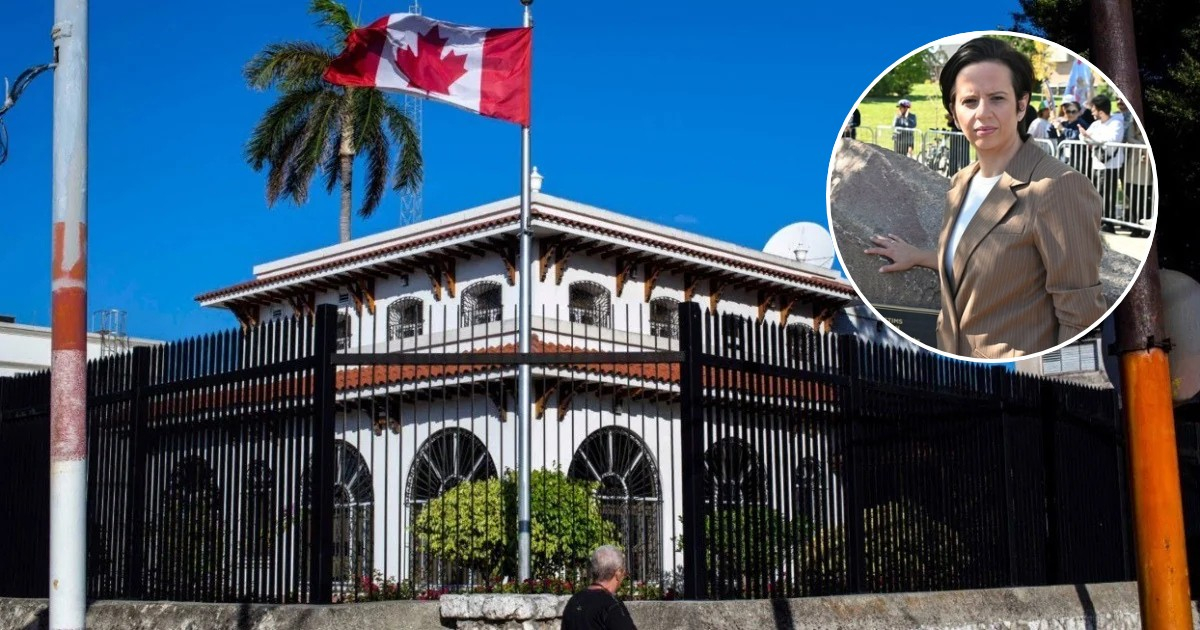
Canadian Conservative MP Melissa Lantsman submitted two written questions to the House of Commons to clarify the extent of the so-called Havana Syndrome among government officials and their families, including minors, as well as the conclusions of the investigations conducted by the authorities.
The parliamentary initiatives, registered on November 18, 2026, request the Canadian government for detailed information regarding those affected, the medical care received, the security protocols adopted, and the possible existence of intentional acts behind the incidents.
Both questions remain unanswered, with a response expected by no later than January 25, 2027, according to official records from the Canadian Parliament.
How many minors were affected?
In the first parliamentary question (Q-1698), Lantsman requests information on how many Canadian officials and their family members have reported symptoms consistent with Havana Syndrome, broken down by adults and minors.
The legislator is also requesting information regarding the medical evaluations, treatments, and psychological and educational support specifically offered to the affected families.
It also requests the identification of medical centers, clinics, and research institutions contracted by the Government, including the amounts of the contracts and the services provided.
It also requests to know the content and dates of the communications sent by the Government to the affected officials and their families to inform them about the updates regarding the case.
What did Canada know since 2017?
In the second parliamentary question (Q-1699), the member of parliament asks for clarification on when the Canadian government first became aware of the incidents affecting its staff.
In particular, ask if any Canadian diplomat informed the embassy about similar symptoms among U.S. officials around April 11, 2017, and what the response from the diplomatic representation was.
Lantsman is also requesting details about the investigations conducted or funded since 2017, including their methodologies, conclusions, and costs, as well as the changes made to the security protocols of the affected diplomatic missions.
Among its requests is information about the meetings held between Canadian officials and investigative journalist Christo Grozev.
The deputy explicitly asks if the Government has determined that the incidents were caused by a deliberate act and if it has identified those responsible.
The research on the origins of the Havana Syndrome
The first cases of Havana syndrome began to be reported between late 2016 and 2017, when U.S. and Canadian diplomatic personnel stationed in Cuba reported symptoms such as headaches, dizziness, auditory problems, and cognitive difficulties.
In October 2020, a Canadian diplomat reported that their government had tried to keep the incidents a secret.
The official stated that on April 11, 2017 —the same date now mentioned in one of the parliamentary questions— he had informed the Canadian ambassador in Cuba about the issues experienced by American officials.
He also recounted that his own children experienced symptoms in June of that year and reported that the authorities had withheld information regarding the impacts on minors.
According to the official Canadian report from August 2024, the Ministry of Health of Canada conducted general medical evaluations for all children aged 12 and under from the families of personnel stationed in Havana.
In April 2024, a joint investigation by The Insider, Der Spiegel, and the American program 60 Minutes pointed to a possible involvement of Russian military intelligence in some of these incidents.
Christo Grozev participated in that journalistic work, and his meetings with Canadian officials are now of parliamentary interest.
In September of this year, an investigation by the Canadian newspaper The Globe and Mail revealed a alleged secret collaboration between Canadian diplomats and U.S. intelligence agents in Cuba between 2016 and 2018. The Canadian Ministry of Foreign Affairs denied that its officials engaged in espionage activities.
That same month, Canadian Prime Minister Mark Carney acknowledged that new information about Havana syndrome had emerged, and he assured that he would evaluate his Government's response. An official Canadian report from August 2024 indicated that investigations had not found evidence linking the incidents to a malicious act by foreign actors nor had they identified a common cause for the symptoms.
In October, the former National Security Advisor of the United States John Bolton accused Washington and Ottawa of not properly investigating the possible role of Russia in the Havana Syndrome and suggested the hypothesis of complicity from Cuban authorities.
Despite the reports and various hypotheses proposed over the years, the responsibility of a foreign power in the incidents has not been conclusively established. The Cuban government has repeatedly denied its involvement.
Related videos:
Filed under: