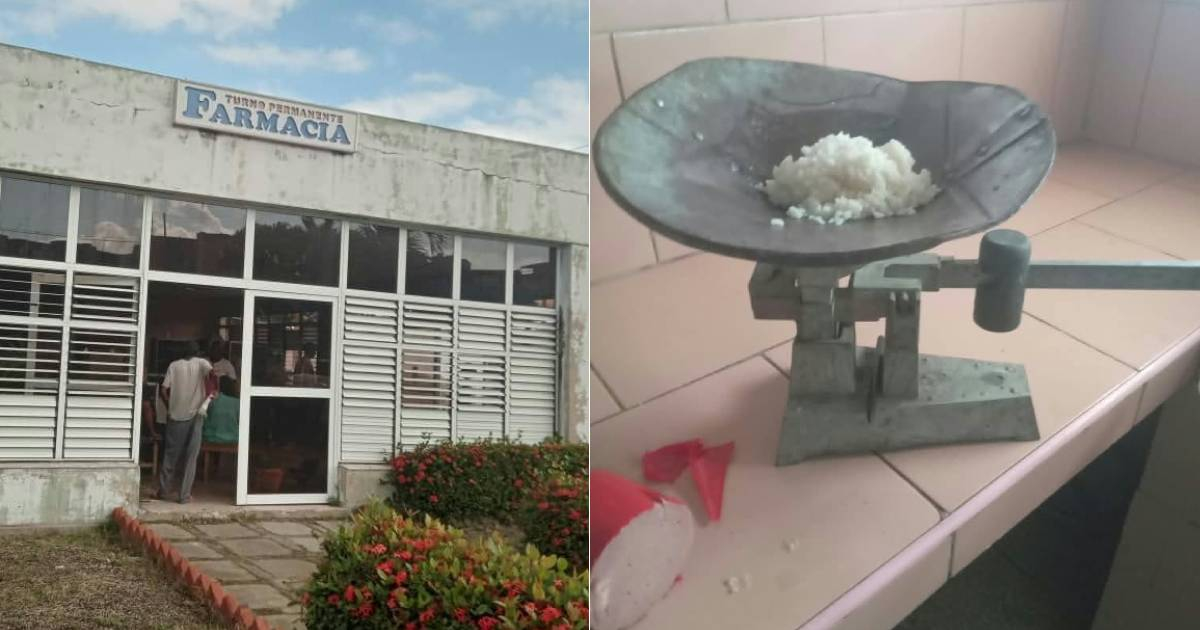
State inspectors from Villa Clara detected medications being withheld in pharmacies, bread intended for children that was below the set weight, and incomplete food rations in establishments of the Family Care System (SAF), along with other commercial irregularities.
According to a Facebook post by Inspección Villa Clara, the findings occurred during the VI National Exercise for the prevention and confrontation of crime, corruption, and illegal activities.
The medications involved include antibiotics, tranquilizers, drugs for the treatment of diabetes, and eye solutions.
At the U-710 pharmacy, inspectors reported the seizure of nine blisters of diazepam by an employee who was also benefiting from that medication.
In unit U-672, located on the Camajuaní road, five blisters of glibenclamide were found stored in a drawer in the office area. They also detected the absence of one blister of amoxicillin when comparing the inventory with the stock records.
At the U-742 community pharmacy, which provides hospital services and is located in the Hospital Popular Council, officials reported the retention of eight bottles of ciprofloxacin eye drops and another eight of sodium diclofenac in the warehouse.
They also found 20 boxes of ranitidine tablets in a house designated as a storage facility for medication.
At another pharmacy in the Hospital Popular Council, identified as U-665, inspectors noted the absence of three bottles of aspirin.
The official statement did not specify the reasons why the medications remained withheld, whether they were subsequently made available to patients, or any possible penalties against those responsible for the irregularities.
The inspectors also reported that a self-employed worker engaged in gastronomy in the Abel Santamaría Popular Council was violating the regulations regarding the use of electronic payment channels.
Low-weight bread for children and incomplete rations for vulnerable individuals
One day earlier, Villa Clara Inspection revealed irregularities in the preparation and marketing of food.
At the bakery El Águila de Oro, a surprise weighing confirmed that the bread intended for a children's circle was below the established 40 grams.
"They even deceive children!" stated the very state entity.
At the Chambery bakery, they also detected violations regarding the weight of the 60-gram bread intended for the public.
The irregularities also extended to establishments within the Family Assistance System, a state program aimed at providing food to people in vulnerable situations.
At the SAF Brisas Riviera, in the José Martí People's Council, inspectors found that the portions of ham that were supposed to weigh 50 grams barely reached 30 grams, while the portions of white rice, set at 240 grams, weighed between 190 and 200 grams.
At the agricultural market El Mamoncillo, it was found that, in a sale of five pounds of rice, only four and a half pounds were delivered.
Forced sales and high prices
The inspectors also reported irregularities in private establishments, including conditional sales of sugar and oil, non-compliance with the use of electronic payment channels, and surcharges exceeding 10% for using these platforms.
In shops within the Capiro Popular Council, prices were reported that they described as abusive: toothpaste for 650 Cuban pesos (CUP), 500 grams of detergent for 1,200 CUP, bath soap for 700 CUP, and oil for 2,700 CUP.
The official reports did not specify the penalties for the commercial irregularities or whether the affected consumers received any compensation.
Medications retained amid a severe shortage
The findings are particularly concerning in a province where the authorities themselves acknowledged in February of this year that 368 out of the 636 medications on the essential list were missing, affecting all pharmaceutical groups.
In August, the ruler Miguel Díaz-Canel admitted that only about 30% of the essential medication inventory was available in Cuba.
The scarcity forces many families to turn to the informal market, where treatments are often sold at high prices.
In October, the seizure of resold medications in Centro Habana raised questions among citizens, who asked where they could obtain treatments that were unavailable in state pharmacies.
More recently, in early November, the Minister of Public Health himself, José Ángel Portal Miranda, acknowledged the serious shortages of medications, supplies, and medical equipment that compromise the ability of Cuban health institutions to diagnose illnesses and provide treatments.
Related videos:
Filed under: