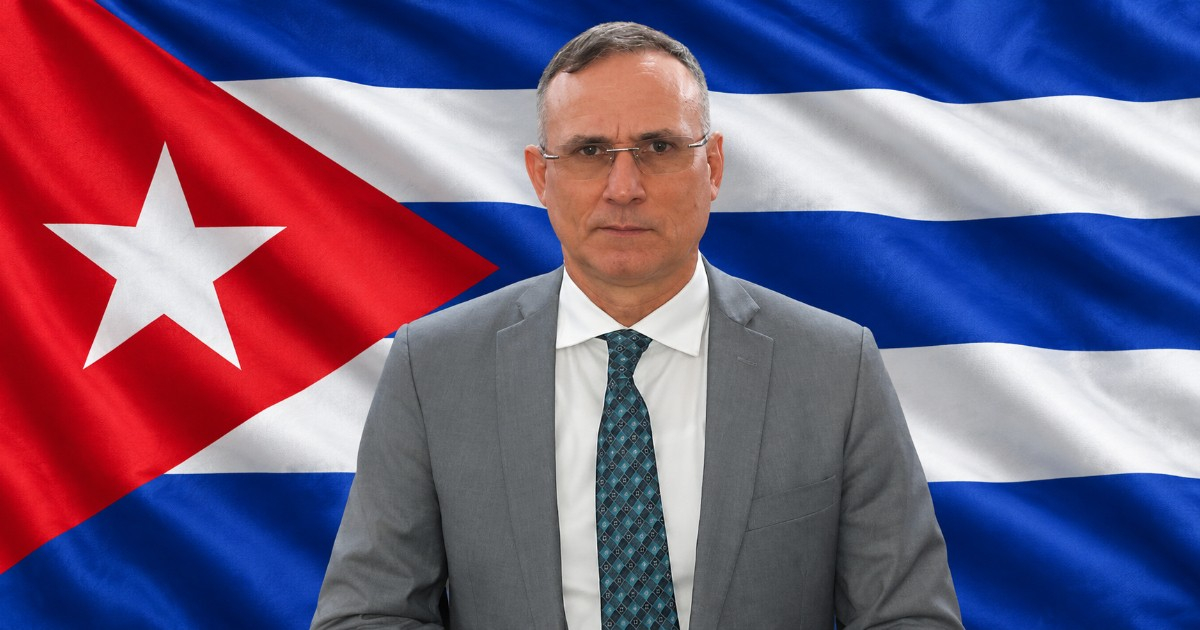
José Daniel Ferrer, leader of the Cuban Patriotic Union (UNPACU) and former political prisoner, warned in an exclusive interview with NTN24 published this Friday that a U.S. military intervention against the Cuban dictatorship is inevitable, because the regime will never negotiate of its own accord.
That surgical military action is going to happen because the regime will not dialogue; they will not come to reason until they see that they are being taken very seriously, very truly, said Ferrer, who has been exiled in Miami since October 2025.
The opposition leader described Washington's military threat as "credible" and expressed optimism about the outcome: "I am very optimistic. I believe that the regime is in a very difficult, very complex situation. I would say it is living in its final times".
His statements come weeks after President Donald Trump declared on November 12 that he would "definitely" consider a brief military campaign against the Cuban regime before his term ends.
The Secretary of State Marco Rubio has described Cuba as a "failed state" and a threat to national security, citing the presence of Russian and Chinese intelligence on the island. However, U.S. officials quoted by AP clarified that Washington is not considering imminent military action, although options remain on the table.
Ferrer listed the factors that, in his opinion, hasten the end of the regime. The first is internal exhaustion: “Even mid-level and low-ranking military personnel can no longer endure what the people of Cuba are experiencing.” The second is the pressure from the United States. The third is the increasing international isolation of Havana.
In this context, it was highlighted that the UN’s annual resolution against the embargo on Cuba received only 130 votes in favor at the end of October, compared to 165 in 2025, marking the worst historical result for the regime. It was also mentioned that on November 24, a resolution was approved in the Chamber of Deputies of Chile—with 88 votes in favor—calling for the establishment of an international tribunal to judge the crimes of Castroism.
Regarding Havana's traditional allies, Ferrer was direct: "Strong>China is quite pragmatic and is not going to provide abundant money to save its communist partners", while Russia "can barely survive" due to the cost of the war that Putin initiated against Ukraine.
In the same interview, Ferrer denounced that the regime uses hunger as a tool for political control. According to the Cuban Observatory of Human Rights, nine out of ten adults in Cuba have had to skip a meal due to lack of money or food.
He also reported that the NGO Cubalex has documented surveillance, raids, and arbitrary detentions against collaborators of the Humanitarian Project "Save Cuba," linked to UNPACU in Santiago de Cuba, with three activists arrested following operations by the Political Police.
Regarding the recent visit of the WHO Director-General to the island, Ferrer dismissed any practical consequences: "It's just going to stay there." He acknowledged that the official confirmed the decline in life expectancy for the first time in 80 years and the rise in infant mortality, but criticized that he did not delve into the actual magnitude of the collapse.
This is Ferrer's most straightforward statement regarding a potential military intervention. In May, he had already expressed doubts about whether the high command of the dictatorship would accept a negotiated transition of power, and in October he urged military personnel and officials to collaborate with the United States before the regime fell.
Related videos:
Filed under: