The U.S. Secretary of State, Marco Rubio, on Tuesday held Cuba, Nicaragua, and Venezuela responsible for the migration crisis in the hemisphere, labeling their governments as "enemies of humanity."
During a press conference in San José, Costa Rica, Rubio noted that these regimes have caused a massive exodus of citizens due to the ineffectiveness of their political and economic systems.
"Esos tres regímenes que existen: Nicaragua, Venezuela y Cuba son enemigos de la humanidad y han creado una crisis migratoria. Si no fuera por esos tres regímenes, no habría una crisis migratoria en el hemisferio", declaró Rubio en presencia del presidente costarricense, Rodrigo Chaves.
Critiques of the regimes in the region
Rubio particularly attacked the government of Daniel Ortega in Nicaragua, describing his administration as a "family dynasty" in which the president rules alongside his wife, Rosario Murillo, now designated "co-president" after a constitutional reform.
"They have tried to eliminate the Catholic Church and everything religious, as well as any institution that represents a threat to their power. As a result, thousands of Nicaraguans have fled the country," stated the U.S. official.
According to Rubio, the migration situation in Nicaragua is comparable to that of Cuba and Venezuela, where "people leave their countries for the same reasons: repression, poverty, and lack of opportunities."
Cooperation between the U.S. and Costa Rica
Rubio arrived in Costa Rica as part of a tour of Central America, where he discusses issues of migration, security, and trade with regional leaders. According to the agency EFE, during his meeting with President Chaves, they discussed bilateral cooperation on cybersecurity and the fight against drug trafficking.
The United States considers Costa Rica a key ally in the region, in contrast to other governments that, according to Rubio, "have undermined stability." In this regard, he highlighted that "there are more Americans living in Costa Rica than Costa Ricans in the United States, which demonstrates the success of the Central American country in comparison to others."
Influence of China in Central America
One of the points discussed in the meeting was the growing influence of China in the region.
Last week, the U.S. special envoy for Latin America, Mauricio Claver-Carone, pointed out that the Chaves government "understands the Chinese threat," referring to Costa Rica's decision to limit the participation of Chinese companies in the rollout of 5G technology for national security reasons.
After his visit to Panama and El Salvador, Rubio will continue his regional tour with visits to Guatemala and the Dominican Republic, aiming to strengthen alliances on security and migration in response to what Washington regards as "authoritarian regimes" in the hemisphere.
Response from Miguel Díaz-Canel
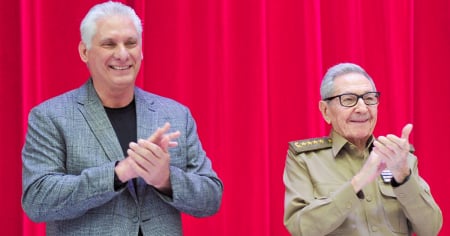
For his part, the Cuban leader, Miguel Díaz-Canel, reacted to Rubio's statements with strong disapproval, accusing the United States of being the true culprit behind the migration crisis on the island.
"Shamelessness is once again taking hold of the cynical politicians in the U.S. It is proven that the migratory exodus in #Cuba is proportional to the tightening of the #blockade, which deprives our people of essential goods. Humanity is at risk due to your neofascism," expressed Díaz-Canel on his X account (formerly Twitter).
In a second message, the Cuban leader questioned the accusation of "enemies of humanity" made by Rubio: "Are those of us who resist blockades without abandoning solidarity with other nations the enemies of humanity, or are those who impose the #Blockade while trampling international laws? The enemy of humanity is the empire with its expansionist appetite and its futile pretension of ruling the world."
Filed under: