
Related videos:
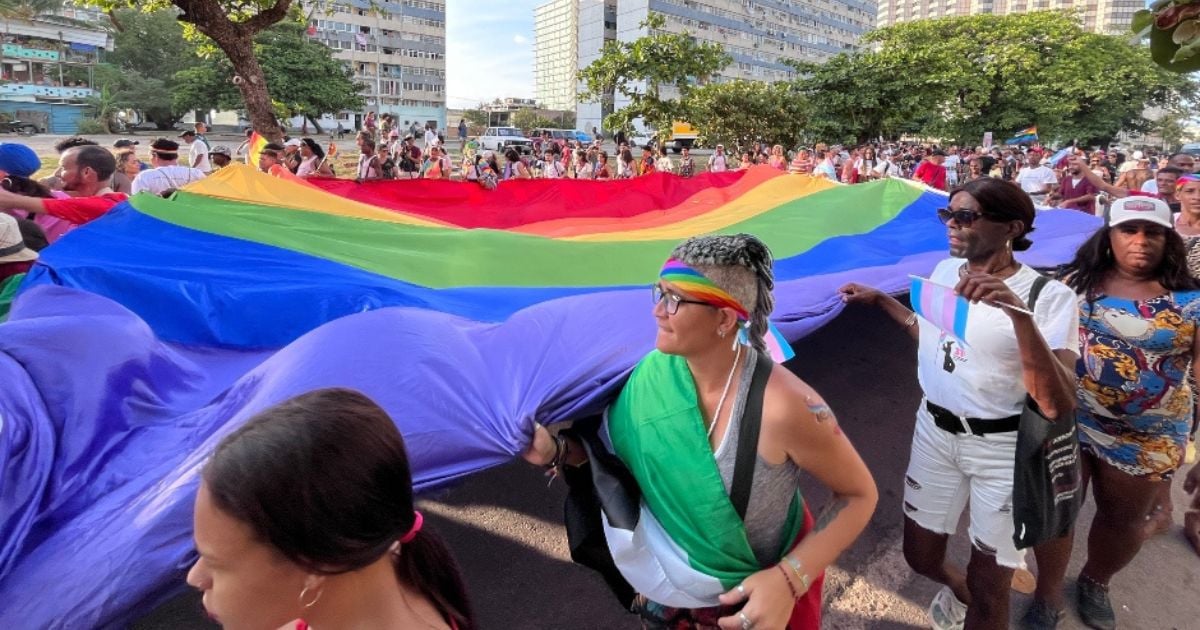
Activists for sexual diversity, community promoters, and representatives from various institutions participated this Saturday in a conga in Havana as part of the Cuban Days Against Homophobia and Transphobia, an initiative strongly influenced by the government.
According to Cubadebate, the march gathered several hundred people just a few meters from the waterfront and was led by Mariela Castro Espín, the director of the National Center for Sexual Education (CENESEX) and daughter of Raúl Castro.
During the event, banners were displayed with messages such as "Socialism yes, transphobia no" and "Cuba is love," in a day characterized by an official narrative that sought to connect LGBTIQ+ rights to the country's political project.
The event took place just weeks before the National Assembly of People's Power discusses a Civil Registry Bill, the news portal reported.
According to the announcement, this will allow citizens to change their sex on their identity documents according to their self-perception, without the need for genital reassignment surgery or a court order.
If approved, the law would represent a technical advancement within the Cuban legal framework, in continuity with the Family Code enacted in 2022, which legalized same-sex marriage and other aspects related to family diversity.
However, transgender activists present at the event and Mariela Castro herself acknowledged that the proposed regulation maintains the male/female binary framework and does not include non-binary identities, reported Cubadebate.
Additionally, gender reassignment surgeries that were offered in the public health system are currently on hold due to a lack of resources, which limits real access to rights that are recognized on paper.
"Some laws are still pending updates, on which work is already underway (such as the Civil Registry law) to ensure that what is established in the Constitution is properly reflected," commented Castro Espín before the march began.
She also emphasized that the current advancements are the result of a cultural transformation process driven, according to her, by the Revolution.
The activity is part of the annual events organized by CENESEX, which will continue until May 18.
Despite the vibrant colors and music of the conga, the context of economic crisis, state control over mobilizations, and ongoing legal restrictions continue to limit the real impact of these public expressions in defense of the LGBTIQ+ community in Cuba.
In the 2023 edition, the director of CENESEX, Mariela Castro Espín, and Lis Cuesta Peraza, led the conga against homophobia in Havana, in an event that was part of the official celebrations promoted by the regime.
The event also featured the presence of authorities from the Communist Party of Cuba, officials from the capital government, and representatives from the Ministry of Public Health. This, for critical sectors, highlights the contradiction that those who historically repressed the LGBTIQ+ community on the island are now presenting themselves as promoters of inclusive spaces, without any real reparations for past abuses having taken place.
In contrast, in 2019 the official response to a peaceful demonstration independently organized by the LGBTI+ community was completely different.
That year, activists called for an alternative march after the official conga was canceled, and the State Security and Cuban police responded with arbitrary detentions and the use of force against those who attempted to walk along the Paseo del Prado in Havana.
Frequently asked questions about the March Against Homophobia in Cuba
Who led the march against homophobia in Havana?
The march was led by Mariela Castro Espín, director of the National Center for Sex Education (CENESEX) and daughter of Raúl Castro. This march was part of the Cuban Days Against Homophobia and Transphobia in Havana.
What legal advancements are being discussed in Cuba for the transgender community?
In Cuba, a draft Civil Registry Law is being discussed that would allow citizens to change their gender on their identity documents according to their self-perception, without the need for gender reassignment surgery or a court order. However, the regulation maintains a binary framework and does not consider non-binary identities.
What criticisms does the event organized by CENESEX face?
The event is facing criticism for its alignment with the government, which limits its potential as a true expression of LGBTIQ+ rights. Additionally, the narrative that links the rights of these communities to the political agenda of the Cuban regime is also criticized, as there has been no genuine redress for past abuses.
What is the situation of gender reassignment surgeries in Cuba?
Gender reassignment surgeries are currently halted in the Cuban public health system due to a lack of resources, which limits real access to these legally recognized rights.
What symbolism does the march hold in the current political context of Cuba?
The march symbolizes an attempt by the Cuban regime to show progress in LGBTIQ+ rights, although in practice it is limited by state control and a lack of real freedoms. In a context of economic crisis and restrictions, these public expressions are characterized by contradictions between the official narrative and social reality.
Filed under: