
Related videos:
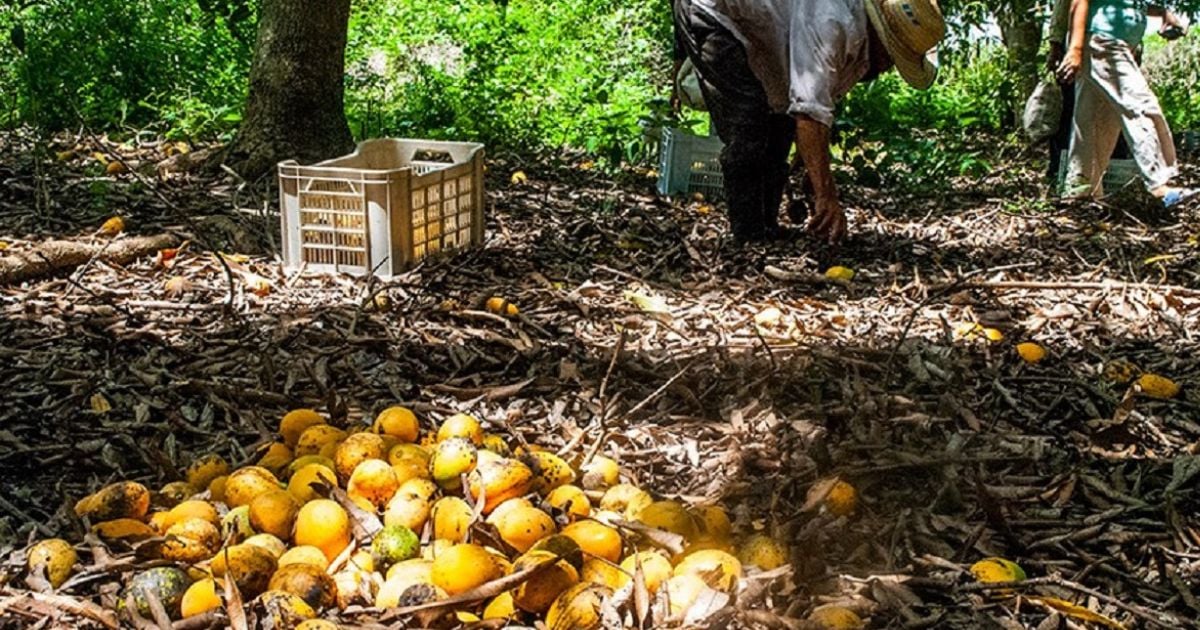
In El Caney, one of the most fertile valleys of Santiago de Cuba and renowned for its fruits, high-quality mangoes are spoiling due to a lack of packaging, electricity, and transportation.
According to a report published by the official newspaper Granma, the Cooperative of Credit and Services Martyrs of El Caney, which cultivates about 292 hectares of mango, expects to harvest over 600 tons this year.
However, their own leaders acknowledge that they have not been able to purchase a single new container in this campaign.
Additionally, there is electrical instability, which forces the suspension or rescheduling of essential manufacturing tasks to utilize the fruit and thus avoid waste.
"The countryside will have the final word," expressed the president of the CCS, Bacilis Leyva Durán, in light of the uncertainty surrounding a harvest that does not always fully reach the people’s table.
The cooperative has a mini-industry that operates as a state-owned micro, small, and medium-sized enterprise, dedicated to transforming part of the production into pulp, creams, sweets, and vinaigrettes, with prices considered accessible for the population.
However, much of that work depends on the availability of electricity and airtight containers, both of which are scarce.
"When the electricity arrives, we will move to the mini-industry," stated Leyva Durán, referring to the work routine affected by power outages.
The mangoes that are not processed in time end up being affected by rapid ripening or even by theft on the farms, as reported by Dulce María Cedranes Rivera, one of the associated producers.
"We can't keep up. And on top of that, they're selling them for a fortune in the city," he lamented.
Despite local efforts to preserve the spirit of the announcement immortalized by Félix B. Caignet, the reality is that the fruit that symbolizes El Caney is dwindling due to a combination of logistical neglect, a shortage of supplies, and a lack of effective state planning.
The official report itself acknowledges that it's not enough for there to be mangoes, nor even for the fair day to arrive.
The essential —and what continues to fail— is that this food reaches Cuban households in a stable and accessible manner, amidst an increasingly hot summer and a market marked by high prices and scarcity.
Because Cuba is experiencing one of the worst economic crises in its history, one might assume that the country cannot afford to let valuable foods like mangoes go to waste, a fruit that is in high demand both among the population and in the food industry. However, reality shows the opposite, and this is not a new problem.
In 2021, for example, at Finca El Palmar in Manzanillo, located in the south of Granma province, the total loss of a mango harvest was reported due to the inefficiency of the state enterprises of the Ministry of Agriculture, which failed to ensure timely collection, distribution, and marketing of the product.
Four years later, the reality remains unchanged. The current mango harvest in the province of Granma, which runs from May to August, could turn into another campaign characterized by improvisation, underutilization, and the loss of thousands of tons of fruit, acknowledged officials from the agricultural sector.
What are the consequences? Content creator Jesús de Cuba (@jesusdecuba) recently shared a video on TikTok that surprised many Cubans due to the exorbitant prices that a mango can reach on the island, where it can be priced at 500 pesos.
Frequently Asked Questions about the Mango Production Crisis in Santiago de Cuba
Why are the mangos rotting in El Caney, Santiago de Cuba?
The mangos in El Caney are rotting due to a lack of containers, electricity, and transportation, which hinders their proper processing and distribution. Electrical instability and the absence of effective state planning are additional factors that worsen the situation.
How does the lack of electricity affect mango production in El Caney?
The lack of electricity forces the suspension or rescheduling of essential tasks in the mini-industry that processes mangoes, resulting in a significant loss of the harvest. The lack of electricity also leads to thefts on farms and affects the ripening of the fruit.
What role does the government play in the mango crisis in Santiago de Cuba?
The Cuban government is criticized for its lack of planning and logistical support, which contributes to the loss of large quantities of mangoes in Santiago de Cuba. The situation reflects a state inefficiency in resource management and the distribution of agricultural products.
What are the economic consequences of the loss of mangoes in Cuba?
The loss of mangoes in Cuba, especially in fertile regions like El Caney, affects both the income of producers and the availability of food for the population. Furthermore, it contributes to inflation and the high cost of fruits in the markets, turning basic products into a luxury for many Cubans.
Filed under: