
Related videos:
The National Office of Statistics and Information (ONEI) confirmed this Wednesday that Villa Clara is the Cuban province with the highest dependency ratio of elderly people, recording 514 seniors for every 1,000 people of working age (between 15 and 59 years old).
The information is part of the official report "The Aging of the Population. Cuba and Its Territories 2024," publicly disseminated through its institutional channels.
Through a post on Facebook, ONEI explained that this indicator measures the economic and social pressure that the population aged 60 and over represents for those who are of working age.
"The burden on the active population in terms of economic and social support is increasing more and more," the institution warned in its message.
At the other extreme is Guantánamo, with a ratio of 377 elderly people for every 1,000 in the working age group, making it the territory with the lowest dependency ratio among this age group.
According to the graph published by the ONEI, the national average is 440, confirming the increasing significance of aging in Cuba's demographic structure.
Most of the central provinces show the highest values: Havana (494), Sancti Spíritus (456), Cienfuegos (456), Camagüey (459), and Pinar del Río (450), surpassing the national average.
Below average are territories such as Artemisa (386), Santiago de Cuba (391), Granma (398), Isle of Youth (405), and Ciego de Ávila (404).
These data reflect regional disparities that must be considered in the design of public policies.
This index, known as the elderly dependency ratio, summarizes one of the most serious demographic trends in the country: the rapid aging of the population, exacerbated by low birth rates and the massive emigration of young people of working age.
The ONEI warns that the growth of this relationship presents increasing challenges for the pension system, healthcare services, and social protection policies, especially in a context of economic crisis and institutional precariousness.
The report is part of the periodic demographic studies conducted by ONEI and aims to provide statistical tools for decision-making.
However, the figures not only confirm a trend already known, but they also highlight the urgency of adapting the Cuban economic and social model to a rapidly changing population structure in a country that ranks among the oldest in Latin America and the Caribbean.
Cuba is experiencing accelerated demographic decline, characterized by an aging population, massive emigration, and a decrease in the number of births.
The country remains one of the most aged in Latin America and the Caribbean, with indicators showing that this phenomenon not only persists but is also worsening.
Aging is happening at full speed, especially affecting central provinces such as Villa Clara, Sancti Spíritus, and Cienfuegos, where the elderly significantly outnumber the young in the working age population.
The exodus of young people is another key factor in this crisis. The exodus even affects rural areas, where fields are emptying as young people leave in search of opportunities outside the country.
This pattern is repeated across entire cities and provinces; for example, Las Tunas has lost 11.5% of its population in the last eight years, while Guantánamo has seen a decrease of 40 thousand inhabitants over the past decade.
This population decline directly impacts the social and economic balance of the country. As the workforce decreases, pressures on the already fragile health and pension systems, exacerbated by the prolonged economic crisis, increase.
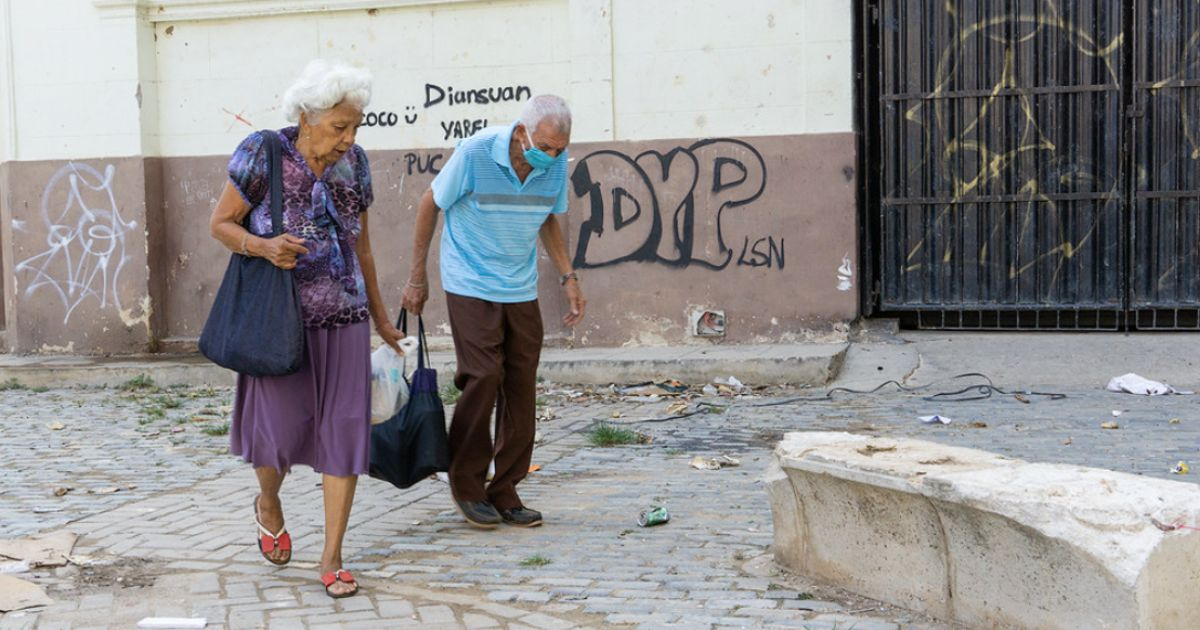
Old age in Cuba is increasingly associated with poverty, abandonment, and loneliness, conditions that highlight the inadequacy of effective public policies to address this vulnerable segment of the population.
In parallel, the country maintains alarming figures of adolescent pregnancy, reflecting structural gaps in sexual education and access to reproductive health services. Although these births could represent a demographic counterbalance, in reality, they exacerbate inequalities and perpetuate cycles of poverty, especially in rural and marginalized areas.
Frequently Asked Questions About Population Aging in Cuba
Which province in Cuba has the highest proportion of dependent elderly adults?
Villa Clara is the province with the highest dependency ratio of elderly individuals, recording 514 older adults for every 1,000 people of working age. This statistic reflects the economic and social pressure faced by the productive age population due to demographic aging.
What is the aging index in Cuba and its most affected provinces?
As of the end of 2024, 25.7% of the Cuban population was 60 years or older, solidifying Cuba as the most aged country in Latin America and the Caribbean. The provinces most affected are Villa Clara, with 29.1% of its elderly population, and Havana, with 28.1%. This rapid aging poses significant challenges for the pension system and healthcare services.
What challenges does Cuba face due to its accelerated aging population?
The rapid aging of the population in Cuba creates significant pressure on the pension system, health services, and social protection policies. The shortage of young people of working age hinders economic sustainability, exacerbating the country's economic and social crisis. Furthermore, the massive emigration of youth and low birth rates complicate the situation even further.
How does the massive emigration of Cubans affect the issue of population aging?
The mass emigration of Cubans, especially young people of reproductive age, has heightened the aging of the population by reducing the proportion of people in the workforce. In 2024, over 250,000 Cubans left the island, which has significantly contributed to the population decline and the increase in economic dependency on the elderly.
Filed under: