
Related videos:
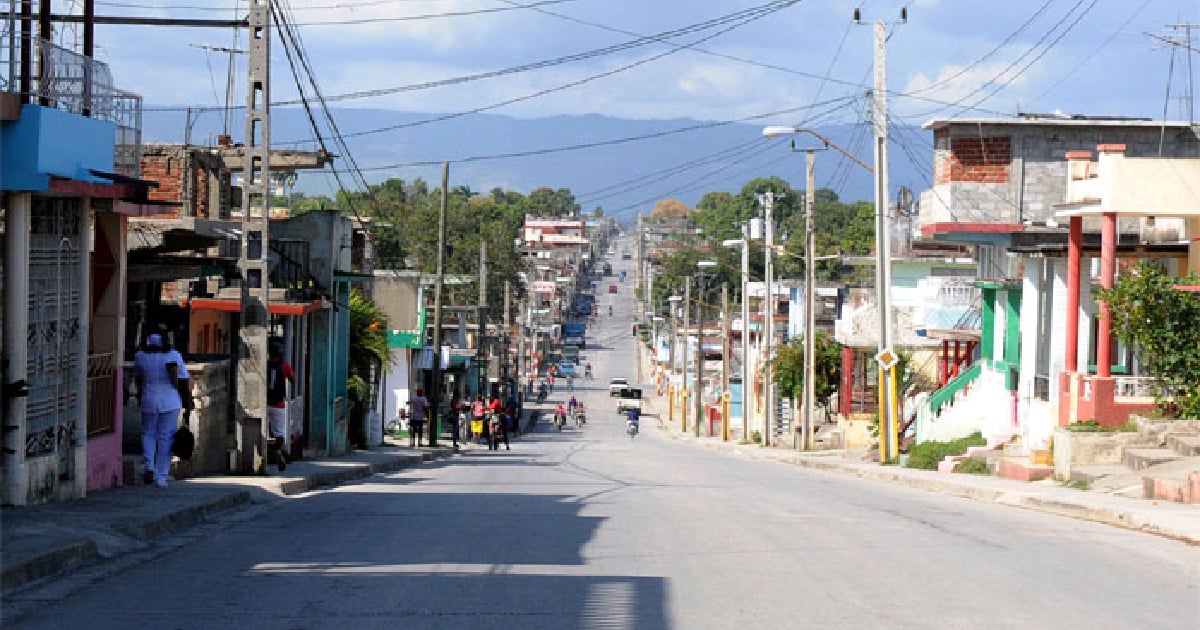
The Provincial Council of Social Sciences of Guantánamo acknowledged the severe population decline facing the territory, with a loss exceeding 40,000 residents since 2019, according to official data.
Roidis Coello Márquez, a member of the provincial commission for addressing demographic dynamics, presented alarming figures: of the more than 40,000 people lost in the last five years, 38,000 belong to the working-age population.
According to the National Office of Statistics and Information (ONEI), the current population of Guantánamo stands at 465,429 people, “with a progressive increase in emigration, both external to the province and the country, and internal from rural areas to urban zones,” noted the official newspaper Venceremos.
This massive exodus reflects the progressive impoverishment of the province and the failure of policies aimed at encouraging the retention and development of its residents, particularly young people. It also illustrates the precariousness that severely impacts rural communities.
During the meeting, the participants agreed that “there are many social challenges posed by the demographic trends in Guantánamo,” and that, in their opinion, these should be understood and utilized in “a competent governmental management that advances the quality of the population,” although they refrained from pointing out responsibilities or structural errors.
Instead of concrete proposals, there was an emphasis on the "linking" of figures with plans such as the Tarea Vida State initiative or territorial development strategies. The territorial delegate of the Ministry of Science, Technology, and the Environment (CITMA), Jesús Martín Pérez, also spoke to highlight the usefulness of the demographic observatory, although without translating those analyses into specific actions.
Cuba is experiencing an unprecedented demographic crisis. In 2024, the country lost over 300,000 inhabitants and recorded its lowest birth rate in decades.
At the end of 2024, the effective population on the island was below 10 million inhabitants and the lowest number of births in over six decades was recorded, confirmed at the end of May the deputy head of ONEI, Juan Carlos Alfonso Fraga.
“We are estimating, please, estimating, that this year (2025) the number of births will be even lower than the figure of 71,000”, said Alfonso Fraga, referring to the 71,358 registered births in 2023, the lowest figure in the last 65 years.
According to ONEI, between 2020 and 2024, Cuba lost over 1.4 million inhabitants, with a natural decrease of 56,740 people in just the last year.
Nonetheless, an independent demographic study pointed out that the resident population in Cuba is already below eight million people. This figure represents a 24% drop in just four years, a number comparable to war scenarios.
The study, conducted by the renowned Cuban economist and demographer Juan Carlos Albizu-Campos, which was accessed by the agency EFE, estimates that by the end of 2024, 8,025,624 people were living on the island, significantly lower than the 9,748,532 reported in the official Cuban statistics.
In the study, partially published on the scientific platform ResearchGate, Albizu-Campos describes the phenomenon as a "demographic emptying" resulting from a "quasi-permanent polycrisis" that the country is experiencing. For the author, depopulation is now a leading indicator of the collapse of other structural variables in Cuban society, acting as "the canary in the mine."
The phenomenon of the sustained decline in birth rates has been accompanied by a high level of population aging. Currently, 25.7% of the Cuban population is 60 years old or older, a rate comparable to that of developed countries, but without the institutional or economic support that characterizes those contexts.
The Cuban economist Pedro Monreal has described the situation as “a significant negative impact” and warned that the policies implemented thus far to address aging “are not sufficient.” He also noted that there is no strategic public policy vision to comprehensively tackle this challenge.
Frequently Asked Questions about the Exodus and Demographic Crisis in Cuba
Why has Guantánamo lost more than 40,000 residents in the last six years?
Guantánamo has experienced a significant exodus due to the progressive impoverishment and the lack of effective policies to retain the population, especially young people of working age. This phenomenon reflects a broader trend in Cuba, where the economic crisis and lack of opportunities have driven mass migration.
What is the current demographic situation in Cuba?
Cuba is facing an unprecedented demographic crisis, with a population that has drastically declined in recent years. It is estimated that by the end of 2024, the effective population will be below 10 million inhabitants, with a decreasing birth rate and a high aging population index. Massive emigration also contributes to this decline.
How does the demographic crisis affect the economic and social system of Cuba?
The demographic crisis negatively impacts the Cuban economy by reducing the available workforce, which limits economic growth and increases the burden on the state to support an aging population. Furthermore, the decline in the young population affects innovation and economic development in the country, while the pressure on the pension and healthcare systems increases.
What measures has the Cuban government taken in response to the demographic crisis?
Despite acknowledging the seriousness of the situation, the Cuban government has not implemented effective policies to mitigate the demographic crisis. Although they have mentioned the need to encourage birth rates and curb emigration, concrete measures are scarce, and planning is hindered by the lack of an updated population census.
Filed under: