
Related videos:
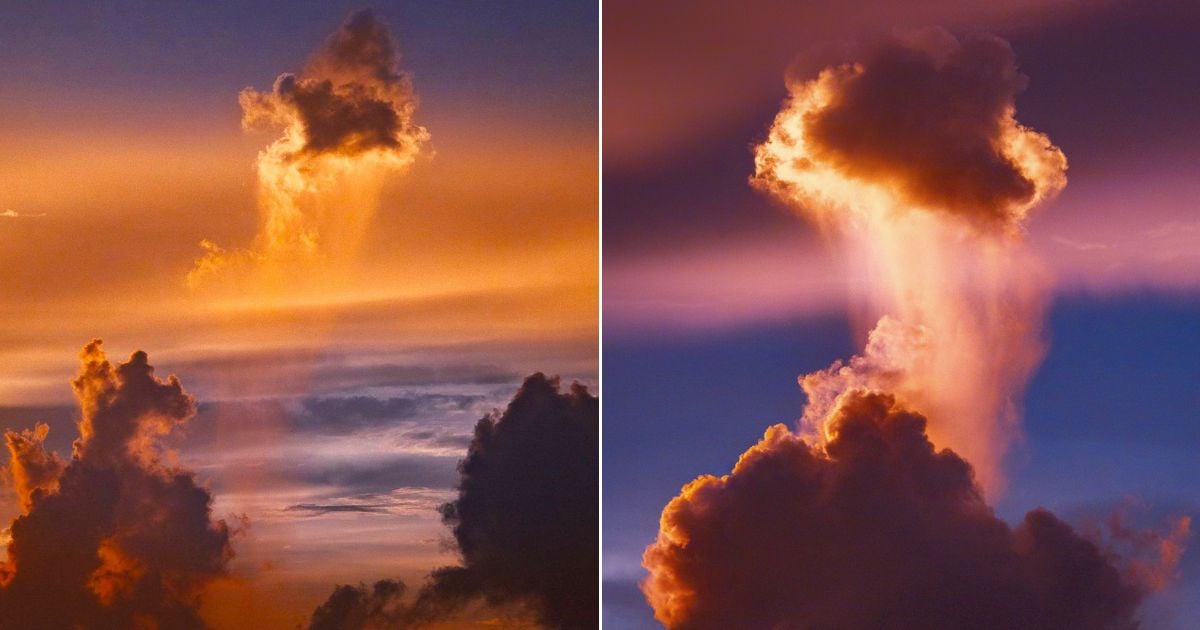
A curious atmospheric phenomenon surprised the residents of Havana this Tuesday, when rain trails were observed that never reached the ground.
It is about the virga, also known as "ghost rain," a rare phenomenon of significant meteorological interest.
The Cuban specialist Henry Delgado Manzor explained on Facebook that these precipitation events originate at the base of a cloud and evaporate before reaching the ground due to the dryness of the air.
"Virgas have a vertical or oblique shape and occur when there is low water content in the cloud or a very dry layer between the cloud and the surface," he explained.
The phenomenon is more common in summer, in areas where the air close to the ground is very dry but with enough humidity at higher levels to allow for cloud formation.
It can be observed in various types of formations such as Cirrocumulus, Altocumulus, Cumulonimbus, or Nimbostratus.
The photograph accompanying the explanation was taken in Havana by Enrique González Santaballa, who captured the scene that quickly piqued the curiosity of internet users.
According to Delgado, these "ghost rains" serve as a reminder of the complexity of atmospheric processes and how clouds, in addition to captivating us with their beauty, help us understand the climate's functioning on the island.
In recent weeks, various atmospheric phenomena have surprised Cubans, from skies tinted with colors to impressive air funnels.
An iridescence in Matanzas revealed multicolored reflections among Cirrocumulus clouds, a phenomenon caused by the dispersion of sunlight in ice crystals at high altitudes. The spectacle was explained by meteorologist Henry Delgado Manzor and generated excitement on social media.
Shortly after, a thunderstorm lit up the sky in Havana, providing spectacular images captured by photographer Miguel Kosta.
The phenomenon caused astonishment and also concern due to the increasing frequency and intensity of similar events in the country.
In Mantua, Pinar del Río, two waterspouts surprised the residents as they formed simultaneously in the sky.
The images showed a vertical waterspout and another at an angle, a rare phenomenon that adds to other similar sightings in various areas of the country, such as the Havana seafront and Youth Island.
Frequently Asked Questions about Atmospheric Phenomena in Havana
What is the virga or "phantom rain" observed in Havana?
The virga, also known as "phantom rain," is an atmospheric phenomenon where precipitation originates from the base of a cloud and evaporates before reaching the ground due to the dryness of the air. This phenomenon is more common in areas where the air near the ground is very dry but there is enough moisture at higher levels for cloud formation.
Why do Asperitas clouds form in Havana?
Asperitas clouds are a type of uncommon cloud formation, recognized for their turbulent and undulating appearance. They form under conditions of atmospheric instability, particularly before or after a storm, due to air movements similar to ocean waves.
What are the differences between a waterspout and a tornado?
A waterspout is a meteorological phenomenon that forms over water and is characterized by a rotating funnel of air that connects the ocean to the clouds. Unlike a tornado, which occurs over land, waterspouts are usually less intense and destructive, although they can pose a danger to boats and coastal areas if they move ashore.
What is the cause of the recent extreme weather phenomena in Cuba?
Cuba has experienced an increase in the frequency of extreme weather phenomena, such as waterspouts and thunderstorms, due to unstable atmospheric conditions. These events are enhanced by a combination of high humidity, daytime warming, and the presence of troughs at mid and lower atmospheric levels.
Filed under: