
Related videos:
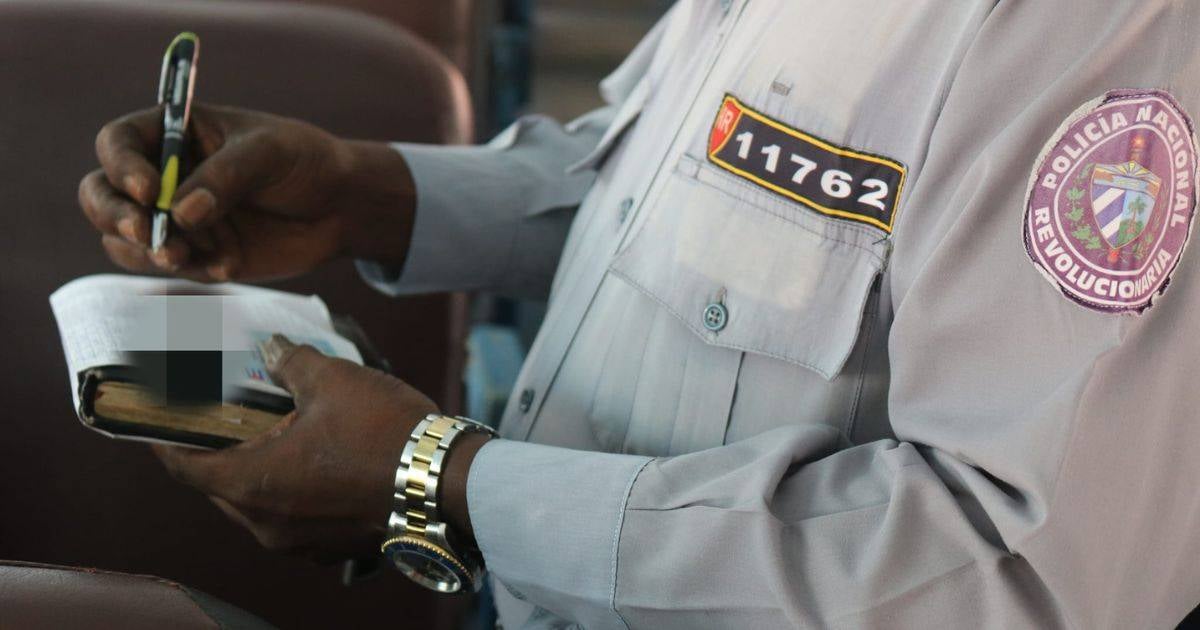
The Cuban regime carried out a drug operation in the Centro Habana municipality that resulted in the arrest of two individuals accused of involvement in the sale of illegal substances, commonly referred to as “the chemical”.
According to user Elizabeth Ferrer, affiliated with the Cuban regime, the deployment took place in the vicinity of Amistad Street, between Dragones and Reina, in the Colón neighborhood, near Curita Park, an area known as a regular spot for consumption and trafficking.
According to the source on , the operation has been described as "successful" for neutralizing a distribution point that was causing significant concern among residents.
He also emphasized that these operations are part of the strategy to curb the rise of drug trafficking and consumption in the capital and stated that they will continue to strengthen surveillance.
He also emphasized the importance of citizen cooperation in reducing risks and ensuring a safer environment against this scourge.
Cuban doctors have identified "the chemical" as part of the group of synthetic cannabinoids, substances designed to mimic marijuana but with significantly higher potency and toxicity.
The reactions they provoke range from convulsions and extreme hallucinations to irreversible neurological damage.
The inclusion of compounds such as formaldehyde—used in funeral homes—hospital anesthetics, and even remnants of tea or other plants has been documented, aimed at reducing costs and enhancing their effects.
The social alarm and the government's inaction have given rise to various hypotheses regarding the origin and rapid spread of this drug.
Some suggest that the State itself would be introducing "the chemical" as a mechanism of social distraction, causing people to forget about widespread poverty.
In response to the increasing visibility of the phenomenon, the authorities have reacted by emphasizing the repressive aspect with large-scale anti-drug police operations that have resulted in dozens of arrests in Havana and other provinces.
In February, the Ministry of Justice announced the creation of the National Drug Observatory (OND), with an early warning system to identify new substances and monitor consumption and trafficking trends, supported by the Police and Customs.
In December, exemplary trials were held that imposed sentences of up to 15 years in prison for the possession and sale of small amounts of narcotics.
However, for many Cubans, this strategy has proven insufficient, as it relies solely on repression and confiscation.
Civil organizations and families of addicts insist that substance use should also be addressed from a public health perspective: with prevention campaigns, specialized medical assistance, and emergency protocols for those experiencing severe intoxications.
Frequently Asked Questions about Drug Trafficking in Cuba
What is "the chemical" and why is it so dangerous?
"The chemist" is a synthetic cannabinoid designed to mimic marijuana, but with significantly greater potency and toxicity. Its effects can include seizures, extreme hallucinations, and irreversible neurological damage. Furthermore, its clandestine production often includes hazardous compounds such as formaldehyde and anesthetics, which increases its health risks.
How is the Cuban government addressing the problem of drug trafficking?
The Cuban government has intensified police operations against drug trafficking, conducting mass arrests and establishing the National Drug Observatory to identify new substances. However, it is criticized that the strategy primarily focuses on repression without adequately addressing the social and public health causes that contribute to the problem.
What is the social impact of drug consumption in Cuba?
The consumption of drugs, especially "the chemical," has generated a social crisis in Cuba, primarily affecting young people in vulnerable neighborhoods. The phenomenon is linked to the lack of economic opportunities and the deterioration of social services. Images of young people under the influence of these drugs are becoming increasingly common, which has heightened social alarm.
What role does citizenship play in the fight against drug trafficking in Cuba?
Citizen cooperation has been essential for identifying drug sale points and conducting police operations in Cuba. Neighbors have alerted authorities about suspicious activities, thus facilitating law enforcement interventions. Despite these efforts, there is a call for greater participation in prevention and education campaigns.
Filed under: