
Related videos:
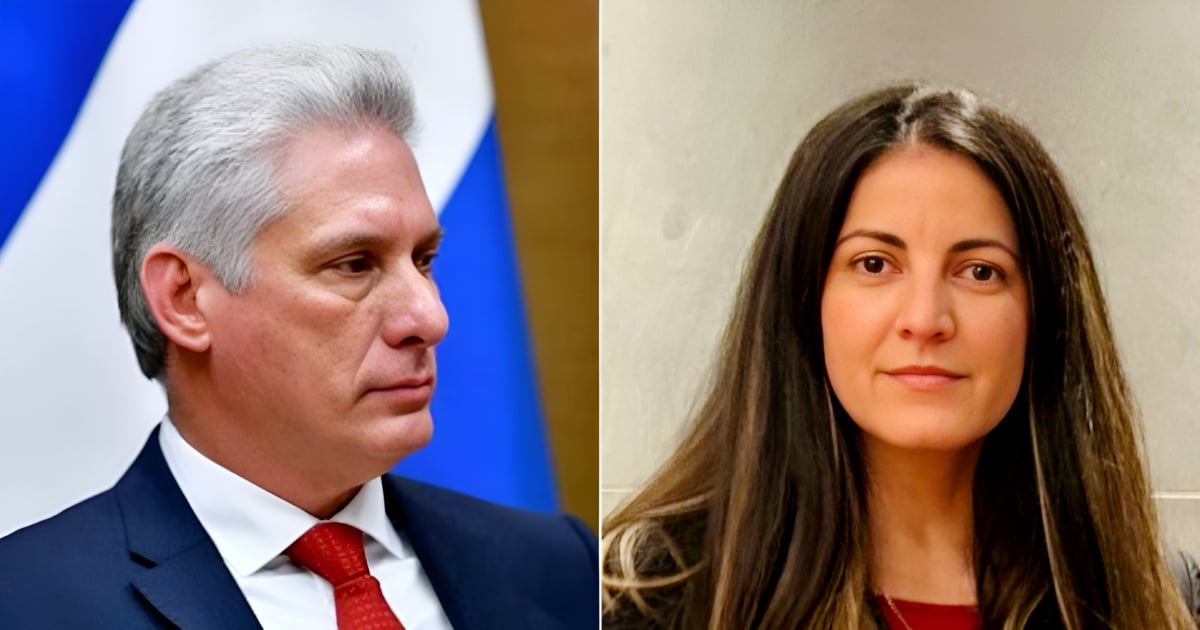
The Cuban activist Rosa María Payá Acevedo launched a new denunciation against the regime in Havana, stating that Miguel Díaz-Canel and the other communist leaders do not represent the people, as Cubans have not had the opportunity to vote in free and multiparty elections for over six decades.
“Ese orden se rompió hace más de 70 años, ni Canel es presidente, ni tú canciller, Cuban people have never voted for communism. Usurpar el poder no es representar al pueblo”, escribió Payá en su cuenta de X, en respuesta a declaraciones del canciller Bruno Rodríguez Parrilla.
With that phrase, the opposition figure summarized what political scientists and legal experts describe as the core of the Cuban problem: the absence of democratic legitimacy in political power, an accusation that Payá Acevedo has maintained for years.
A regime without free elections
Since 1959, following the triumph of the Revolution, Cuba has never held genuinely competitive elections. The current electoral system is based on the monopoly of the Communist Party, "the superior and only legalized force on the island", which prevents the participation of alternative forces.
According to political theory, democracy requires the existence of party pluralism, free elections, separation of powers, and respect for civil liberties. In the Cuban case, all of these elements have been absent for over 66 years.
The model established by the dictator Fidel Castro and perpetuated by his successors is characterized by the absolute control of political and social life through a single-party structure. In this framework, power does not stem from the citizen vote, but from the vertical imposition of leaders appointed within the communist elite.
For Rosa María Payá, this makes Díaz-Canel a "usurper" of the position, as he lacks legitimacy in both origin and exercise.
The dictatorial nature of the system
From the perspective of political science, the Cuban regime is classified as a single-party dictatorship with totalitarian traits, particularly pronounced in its early decades.
Unlike classical authoritarian regimes, where there may be limited spaces for competition or tolerance, in Cuba power is exercised with the systematic exclusion of the opposition and the persecution of all dissent.
The state's security apparatus, media censorship, lack of judicial independence, and control over the economy create a closed system that, in terms of political science, is situated at the most restrictive end of the non-democratic spectrum.
This structure has allowed the ruling elite to maintain control for over half a century, at the cost of denying the fundamental right to vote and be elected.
The figure of Rosa María Payá
In this scenario, the figure of Rosa María Payá emerges as one of the most prominent voices in the international denunciation of that illegitimacy. Daughter of the late opposition leader Oswaldo Payá Sardiñas, the activist has promoted the movement Cuba Decide, which proposes a binding plebiscite to pave the way for free elections.
Her stance combines direct criticism of the regime with a democratic transition project based on civic mobilization and international support.
For many analysts, Payá represents the profile of opposition leadership that could play a key role in a future democratization process. Her insistence on a peaceful approach, emphasis on human rights, and the articulation of a concrete political agenda distinguish her as a reference both in exile and within the island.
The dilemma of legitimacy
The denunciation of illegitimacy is not just a moral argument, but a fundamental political question. A government that has never been endorsed in free elections lacks the basic principle of representation.
According to the legitimacy criteria defined by Max Weber, authority can be based on tradition, charisma, or legal-rationality. The Cuban case does not fit into any of those modern democratic parameters: it is a power maintained by force, repression, and propaganda.
By labeling Díaz-Canel as a "usurper," Payá emphasizes that the regime's permanence does not rest on the consent of the governed, but rather on the exclusion of any political alternative.
Hence, their message resonates both within Cuba, where citizens live under the imposition of a system without options, and on the international stage, where the condemnation of the dictatorship is strengthened.
An outstanding transition
The transition to democracy in Cuba remains a significant pending issue. Activists like Rosa María Payá propose concrete pathways to initiate that process, while the regime tries to cling to a non-existent legitimacy.
The contrast between the denied will of the citizens and the official discourse that claims to speak on behalf of the people makes it clear that, without free and plural elections, there will be no true legitimate government on the island.
Filed under: