
Related videos:
On Wednesday, Cuba experienced its fifth national blackout in less than a year, a figure that starkly illustrates the fragility of the National Electric System (SEN) and the regime's inability to resolve a crisis that impacts the daily lives of millions of people.
The history of recent collapses is eloquent:
October 18, 2024: General blackout due to failure at the Antonio Guiteras power plant, in Matanzas.
November 6, 2024: Total blackout of the SEN during Hurricane Rafael, whose winds caused the disconnection of the SEN.
December 4, 2024: New national blackout due to another failure at the Guiteras power plant.
March 14, 2025: Collapse due to a failure at the Diezmero substation in Havana, caused by a high fluctuation in the system.
September 10, 2025: Last fall of the SEN following the unexpected departure of the Guiteras.
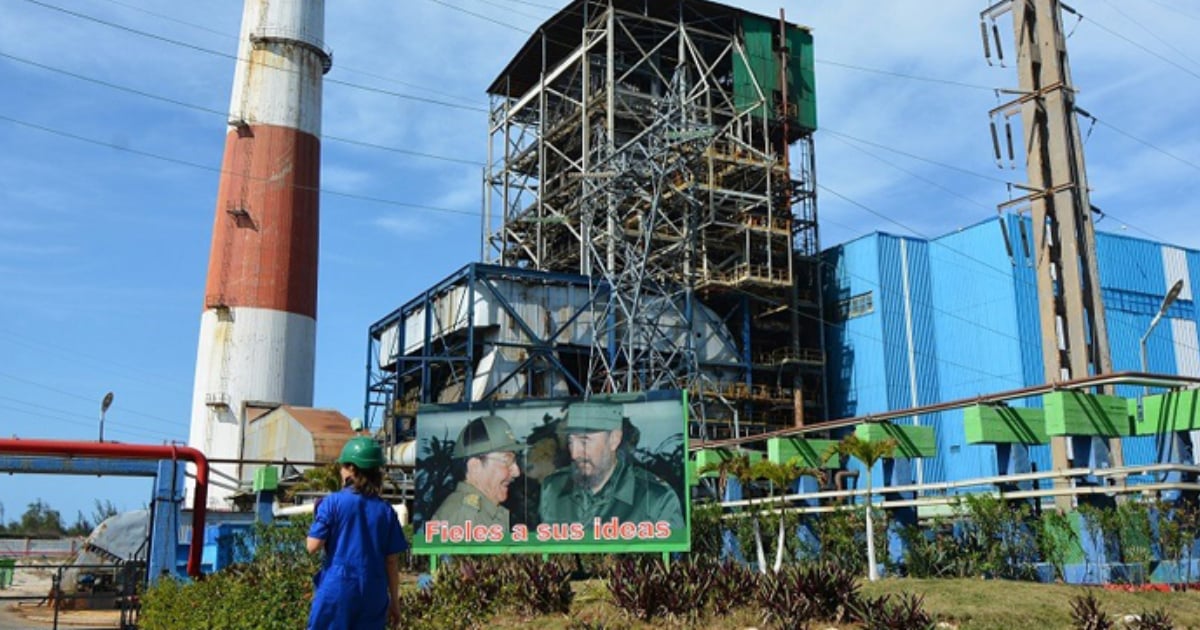
This latest blackout occurred at 9:14 AM this Wednesday, when the Antonio Guiteras power plant, the largest and most significant on the Island, unexpectedly went offline, leading to the complete collapse of the national electrical system.
The Electric Union (UNE) confirmed the incident in a report published on Facebook, in which it stated: "9:14 am. Collapse of the National Electroenergetic System following the unexpected shutdown of the CTE Antonio Guiteras. We will continue to provide updates."
Chain blackouts before the national collapse
The new cut comes just days after another mass event that mainly affected the eastern part of the country.
On September 7th, a fault in the 220 kV Nuevitas-Tunas line caused the total disconnection of the electrical system from Las Tunas to Guantánamo, leaving millions of Cubans without service.
According to UNE, the collapse was due to adverse weather conditions and low generation in that region, which even affected unit 6 of the Mariel thermoelectric plant in the west.
Also, Havana experienced a widespread blackout in August, caused by a major breakdown at the Naranjito substation, which impacted other critical facilities and affected 14 of the 15 municipalities in the capital.
It was the second one in less than a month, as on July 17 the city was left almost in darkness, allegedly due to an electrical discharge that caused multiple high voltage substations to trip and led to the disconnection of key areas.
Endless power outages
These episodes add to a summer characterized by increasingly prolonged blackouts that reflect the deep and structural deterioration of Cuba's energy system.
On August 5th, the UNE reported a deficit exceeding 2,000 MW, one of the most severe peaks of the year, which virtually plunged the country into darkness.
At the beginning of September, the state-owned company acknowledged that the system was operating under conditions of "critical instability," with capacity far below demand and several thermoelectric plants out of service.
The UNE management has attempted to justify the crisis by pointing out that most of the plants have been in operation for over 40 years without receiving major maintenance.
The director general, Alfredo López Valdés, admitted this week that the repairs are plagued by improvisations and delays due to a lack of funding, and even revealed the existence of "hidden defects" in components purchased in 2019 and 2020.
The Ministry of Energy and Mines, for its part, insists on promoting new solar projects and battery systems worth one billion dollars, a venture that contrasts sharply with the reality of power outages and the chronic dependence on obsolete thermal plants with no spare parts.
The government acknowledged on Tuesday that the situation of the electrical system is "harsh" and that the Antonio Guiteras thermoelectric plant will need to shut down in the coming months for maintenance, which predicts further impacts.
These statements also highlight the regime's inability to fulfill its promise to alleviate blackouts during the summer and reduce them to "only" four hours a day.
According to the authorities, the crisis is due to a generation deficit, lack of financing, and technological obsolescence.
"Better not to put it on anymore", is the phrase repeated by hundreds of Cubans on social media in response to the official statements from the Electric Union.
The outrage is total. The comments reflect frustration, hopelessness, and demands for change, as they continue to face daily electricity outages without a solution.
"This has become a psychological torture where human beings have lost the desire to live, work, and even breathe," commented a user in Matanzas.
Many question the lack of real solutions. "What needs to be stopped is not the Guiteras, but the incompetents who run it," pointed out another.
Another added, "It's no longer living; it's surviving. They might as well execute us, because this is not life."
A structural crisis
Far from being an isolated incident, the series of widespread blackouts demonstrates the regime's inability to ensure a stable electricity supply.
While officials promise solutions and discuss technical investigations, the reality is that the country relies on an outdated thermal power plant, lacking proper maintenance and long-term investments.
The Cuban energy crisis has become a symbol of the structural deterioration of the system under state control.
For the population, each blackout means the loss of food, damaged appliances, and digital disconnection in a country already marked by isolation.
With five nationwide blackouts since 2024, Cubans face a bitter reality: the regime fails to turn on the light, both literally and politically.
Frequently Asked Questions about Power Outages in Cuba and the Energy Crisis
What is the main cause of blackouts in Cuba?
The main cause of the blackouts in Cuba is the unexpected shutdown of the Antonio Guiteras thermoelectric plant, the largest and most important on the island, along with the obsolescence and lack of proper maintenance of the country's thermoelectric infrastructure. These structural issues have led to an inability to ensure a stable electricity supply.
What impact do power outages have on the Cuban population?
Power outages in Cuba severely impact the daily lives of the population, leading to food loss, damage to appliances, and digital disconnection in a country where isolation is already a problem. Furthermore, they cause social unrest and desperation due to the lack of effective solutions from the government.
What is the current situation of the National Electric System (SEN) in Cuba?
The National Electric System (SEN) in Cuba is facing a chronic deficit, with generation capacity significantly below demand. Currently, the country is experiencing widespread blackouts due to the inability to meet energy needs, with a deficit that can exceed 1,800 megawatts (MW) during peak hours.
What measures is the Cuban government taking to address the energy crisis?
The Cuban government has promised investments to modernize energy infrastructure and restore generation capacity. However, the lack of credibility in these promises is growing, as the crisis continues to worsen and no significant improvements have been seen. The population continues to face prolonged blackouts and precarious living conditions.
Filed under: