
Related videos:
Fidel Castro Smirnov, grandson of the Cuban dictator Fidel Castro, stated in a recent interview that Cuba “remains a medical powerhouse”, despite the deep crisis facing the healthcare system on the island.
The scientist, a doctor in biology and a member of the International Medical Society, defended, in a conversation with the CNN network, the legacy of his grandfather in scientific and health matters, praising the training of doctors and the biotechnological development of the country.
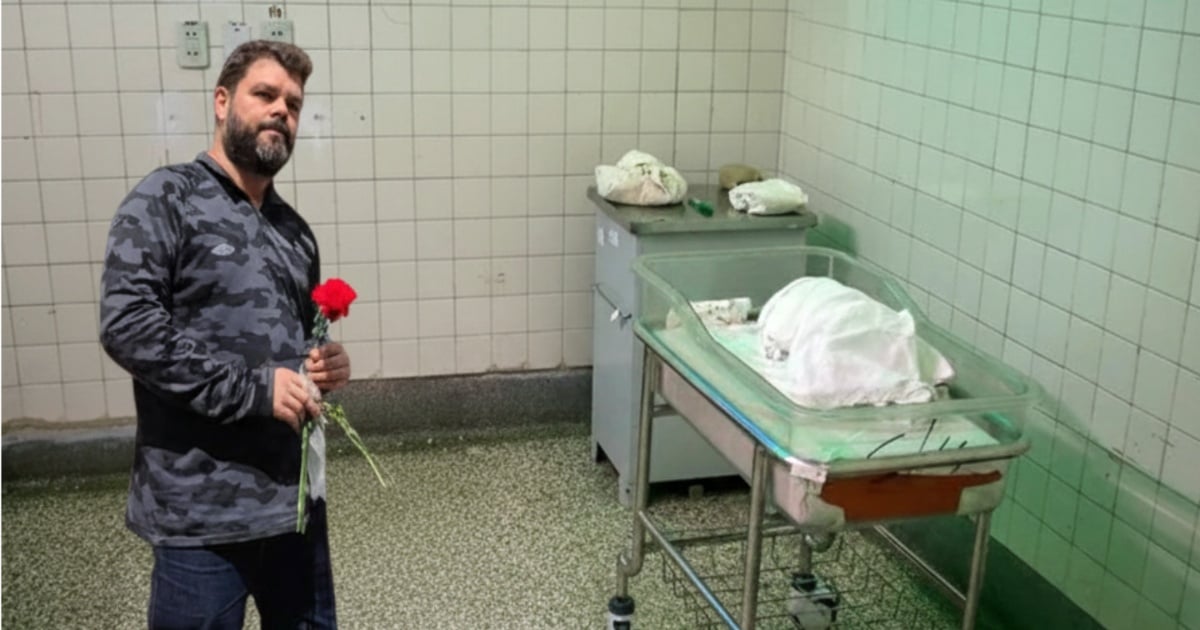
The statements made during an academic meeting in Chile contrast with the reality faced by millions of Cubans: collapsed hospitals, shortages of medications, lack of basic supplies and a massive exodus of healthcare professionals.
While Smirnov highlights the supposed historical achievements of the revolution, patients on the island are forced to resort to the "medical fine," the black market, or outside assistance to survive.
The grandson of the former ruler spoke about the “strategic vision of his grandfather in promoting biotechnology and the Latin American School of Medicine (ELAM), an institution that has graduated thousands of foreign doctors.
According to Smirnov, these programs are evidence of the "humanistic and supportive character of the Cuban system". "They are doctors trained in humanistic principles, who treat healthcare as a human right and not as a business," he said.
During the conversation, he defended the investment in research and the creation of centers such as the Center for Genetic Engineering and Biotechnology or the Center for Molecular Immunology, presenting them as pillars of Cuba’s international prestige, while access to those medications and technologies is far from within reach for most citizens, who must contend with crumbling hospitals, a lack of antibiotics, and shortages of basic equipment.
The official discourse, now echoed by Fidel Castro Smirnov, deliberately ignores the structural decay of the healthcare system.
"Cuba today showcases a development in nuclear medicine. We even have an accelerator for the production of radiopharmaceuticals. We have also incorporated molecular imaging applications, positron emission tomography, while cancer patients suffer from the lack of access to these diagnoses."
In practice, Cuba has ceased to be a "medical power" and has turned into a country with a critically impaired healthcare system, where even a simple consultation depends on political connections or the ability to pay in foreign currency.
The contrast between the regime's propaganda and real life is evident: while there is insistence on selling the world an image of medical power, the population is suffering from unprecedented deterioration in healthcare.
The words of the dictator's grandson, rather than reflecting the truth, seem to be an attempt to sugarcoat the crisis with the same official rhetoric that denies the ruin of Cuba.
Castro, Full-time Academic at the Academy of Sciences of Cuba and Full Professor in Nuclear Physics and Senior Researcher at the Higher Institute of Technologies and Applied Sciences (Instec) in Havana, vtraveled to Valparaíso at the end of August for the XII Meeting of alumni of the Latin American School of Medicine (ELAM).
He is one of the three children of the marriage between the Russian Natasha Smirnova and Fidel Castro Díaz-Balart, who committed suicide in Havana in February 2018 due to a depressive state, according to official information.
Frequently Asked Questions about the Statements of Fidel Castro Smirnov and the Health Situation in Cuba
What did Fidel Castro Smirnov assert about the Cuban healthcare system?
Fidel Castro Smirnov stated that Cuba remains a "medical power," despite the deep crisis affecting the health system on the island. His statements contrast with the reality of collapsed hospitals, the shortage of medications, and the exodus of healthcare professionals that the country is experiencing.
What is the reality of the healthcare system in Cuba according to citizens and experts?
The reality of the healthcare system in Cuba is critical, with hospitals in ruins, a lack of basic medications, and limited access to modern technologies and treatments. The population is facing a significant deterioration in healthcare, which is contradicted by official statements that attempt to maintain the image of a medical powerhouse.
How does access to healthcare contrast between the Cuban political elite and the general population?
Access to healthcare in Cuba presents a stark contrast between the political elite and the people. While Fidel Castro Smirnov received medical care from Havana in Chile, the Cuban population faces long waiting lists and shortages in the healthcare system, highlighting the inequality in access to health services.
What role do Cuban medical missions play abroad?
Cuban medical missions abroad are presented by the regime as "solidarity missions," but they have been denounced as schemes of labor exploitation and political manipulation. These programs generate significant income for the Cuban government, while the internal healthcare system faces a severe crisis.
Filed under: