
Related videos:
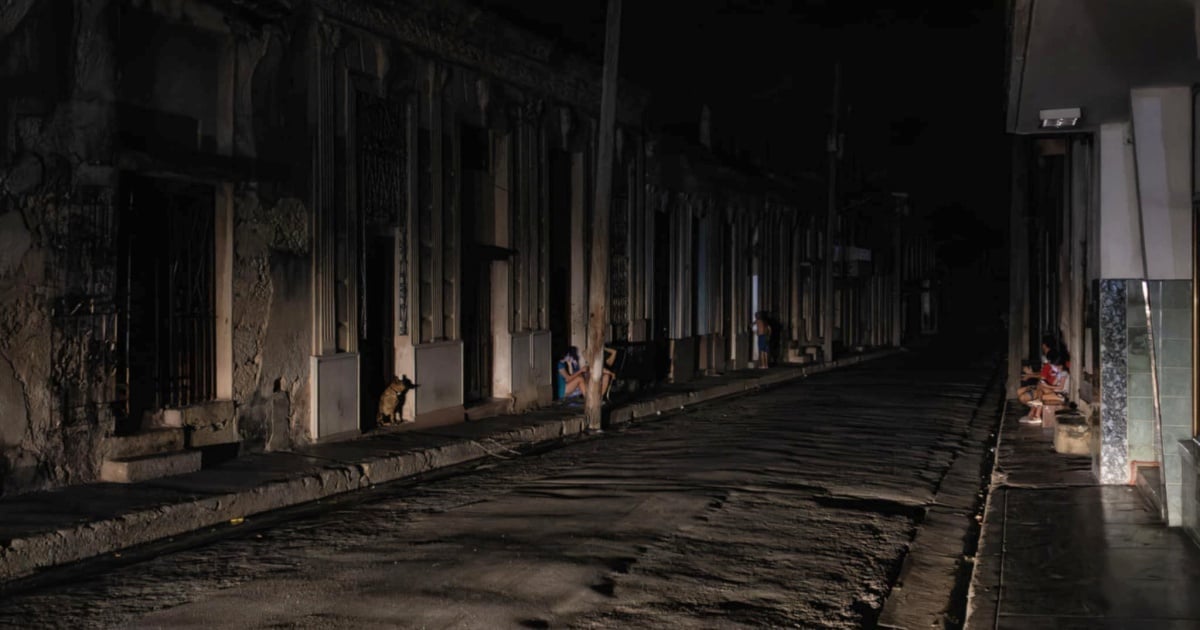
The National Electric System (SEN) continues to experience widespread disruptions due to a significant generation capacity deficit, leaving the Cuban population facing daily and prolonged blackouts throughout the country.
The Electric Union (UNE) announced this Thursday that the impact on electrical service lasted throughout the previous day, and continued into the early hours of today. The highest recorded impact was 1,885 megawatts (MW) at 9:30 PM on Wednesday.
The current situation is critical
- Generation availability: 1,499 MW
- National demand: 2,679 MW
- Current deficit: 1,180 MW
- Forecast for midday: up to 1,450 MW affected
Peak hours (night): a demand of 3,450 MW is expected, with an availability of only 1,690 MW, resulting in a deficit of 1,780 MW and impacts that could reach 1,830 MW.
Failures, maintenance issues, and fuel shortages exacerbate the crisis
Among the main incidents reported in the thermal power plants are breakdowns in Unit 5 of the Nuevitas CTE, Unit 3 of Renté, and Unit 2 of Felton. Additionally, scheduled maintenance is underway on four other units:
- Unit 5 of Mariel
- Unit 1 of Felton
- Unit 2 of Santa Cruz
- Unit 4 of the CTE Carlos Manuel de Céspedes (Cienfuegos)
Thermal limitations add another 401 MW offline, and the fuel shortage keeps 43 distributed generation plants inactive, equivalent to 257 MW, in addition to 166 MW unavailable due to a lack of lubricant. In total, 423 MW are affected by these issues.
Havana also experienced power outages
The Electric Company of Havana (EELH) confirmed that the capital of the country experienced blackouts throughout the previous day, with a maximum impact of 155 MW at 6:00 PM. The service was partially restored at 2:23 AM. All six scheduled blocks were affected, which hindered compliance with the planned schedule.
Despite the energy provided by the 31 photovoltaic solar parks, with a total production of 2,149 MWh and a maximum capacity of 477 MW, renewable generation is insufficient to meet the high national demand.
The outlook for the coming days remains uncertain, with no signs of immediate improvement, as millions of Cubans endure long hours without electricity, impacting daily life and deepening social discontent.
Frequently Asked Questions About Power Outages in Cuba
Why do widespread blackouts happen in Cuba?
The massive blackouts in Cuba are caused by a significant deficit in electricity generation, which exceeds 1,800 MW in some cases. This deficit results from breakdowns in thermal power units, scheduled maintenance, and a severe fuel shortage. The lack of investment in energy infrastructure and the reliance on non-renewable energy sources exacerbate the situation.
How does the lack of fuel affect electricity generation in Cuba?
The lack of fuel has caused numerous distributed generation plants to be out of service, representing a significant loss of generation capacity. Some reports indicate that over 500 MW are affected solely for this reason, which contributes to the overall energy deficit and worsens the situation with power outages.
What is the role of solar energy in Cuba's electricity crisis?
Despite having several photovoltaic solar parks, solar energy does not manage to compensate for the structural deficit of the Cuban electrical system. Although these parks contribute a significant amount of MWh, the output remains insufficient to meet the country's high energy demand.
What is the situation regarding power outages in Havana?
The capital of Cuba, Havana, also experiences significant blackouts. The power outages are scheduled in blocks and affect various areas of the city. Despite efforts to adhere to the blackout schedules, the extent of the energy deficit often hinders maintaining the planned timetable.
Filed under: