
Related videos:
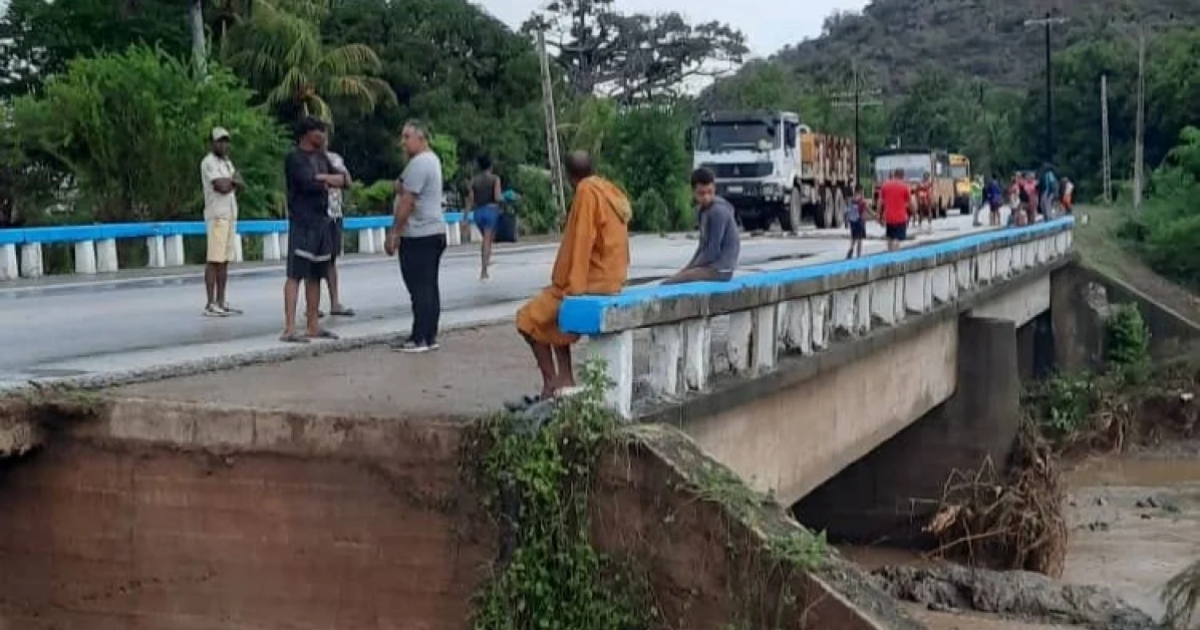
The Minister of Transport, Eduardo Rodríguez Dávila, offered a summary on Facebook regarding the situation in the sector following the intense rains that devastated several eastern provinces in recent days.
Although the official information outlines specific measures to address the collapse of roads, bridges, and services, the situation reveals a deeper reality: the vulnerability of Cuban infrastructure is the result of years of neglect and government inattention.
Rodríguez specified that in Guantánamo, departures of Ómnibus Nacionales to Baracoa, with connections to Camagüey, Santiago de Cuba, and Havana, remain suspended until transit on the roads can be resumed.
In Maisí, transportation is also halted, and passengers of the national train had to be transferred through intermodal operations to Baracoa and Maisí.
The rains caused landslides on the La Farola viaduct, leading to restrictions on night traffic.
The alternative bridge in Imías remains closed, and work is ongoing on the access roads to the Yacabo bridge. For emergencies, school buses and those from the Provincial Transport Company in San Antonio have been arranged and are ready for evacuations.
In Santiago de Cuba, the activation of several railway branches is anticipated: branch 1 has already been opened to allow the entry of trains, the Refinery branch will become operational for fuel transportation, and branch 2 could be ready by October 4, if the promised resources arrive.
Despite this, the floods have kept the technological areas of the Automotive Technical Review Company (ERTA) out of service.
Roadblocks are also reported in Guamá and Baconao, where the Military Construction Unit and ECOI 55 are attempting to restore access.
The minister insisted that work is being carried out "without rest" to restore services, but the extent of the damage exceeds the capacity for response.
And it's no coincidence: during each storm, the eastern part of the country is left at the mercy of its fragile infrastructure. Natural disasters turn into social catastrophes not only because of the intensity of the rain but also due to years of unresolved issues that the government has never addressed.
Local reports confirm the seriousness.
In Guantánamo, the rising rivers flooded communities like Hatibonico, Caimanera, and San Antonio del Sur, with totals of up to 657 millimeters in just 72 hours.
Streets and homes were flooded and thousands of people were evacuated. The province suspended classes at all levels.
In Santiago de Cuba, the tropical depression left dramatic scenes: entire neighborhoods underwater, collapsed homes, landslides, and families trapped in flooded houses.
Residents of the Antonio Maceo neighborhood reported that water reached the first floor of the buildings, while others complained of leaks even on the higher floors.
The lack of drainage, the precarious housing conditions, and the deterioration of the roads turned every downpour into a threat.
In areas such as the Hoyo de Chicharrones and Perucho Figueredo, landslides destroyed houses and kept entire communities on edge. Shops, restaurants, and streets like Alameda and Avenida Jesús Menéndez were flooded.
Testimonies from the provinces reflect a repeated pattern: each weather phenomenon exposes the State's inability to maintain and protect basic infrastructure.
Transport, essential for evacuation, supply, and assistance, collapses along with bridges, roads, and railway lines.
Although the authorities claim that "work is being done on the restoration," the reality is that the population suffers the consequences of years of neglect.
The transport crisis in the east following the floods is not an isolated incident: it is the direct consequence of a country that sinks with each storm because the government never addressed the issues when it should have.
Frequently Asked Questions about the Transportation Crisis in Eastern Cuba Following the Floods
What is the current situation of transportation in eastern Cuba following the floods?
Transportation in eastern Cuba is severely affected due to the recent floods, with bus and train routes suspended and roads damaged. In Guantánamo, departures of Ómnibus Nacionales to Baracoa are suspended, and transportation in Maisí is also halted. The rains have caused landslides on the La Farola viaduct and the Imías bridge remains interrupted.
What measures is the Cuban government taking to restore transportation in the affected areas?
The Minister of Transport, Eduardo Rodríguez Dávila, has stated that efforts are being made "without rest" to restore services. School buses and those from the Provincial Transport Company have been activated for evacuations, and railway branches in Santiago de Cuba are being set up for the transport of fuel. However, the extent of the damage exceeds the immediate response capacity of the government.
Why is Cuba's transportation infrastructure so vulnerable?
The vulnerability of the transportation infrastructure in Cuba is due to years of neglect and lack of maintenance by the government, which has resulted in a network of roads and bridges in poor condition. Recent rains have exposed this fragility, exacerbating the transportation crisis after each weather event.
How have the floods affected the daily lives of the residents of eastern Cuba?
The floods have had a devastating impact on the daily lives of the inhabitants of eastern Cuba, with entire communities such as Hatibonico, Caimanera, and San Antonio del Sur submerged and thousands of people evacuated. In Santiago de Cuba, entire neighborhoods are under water, with housing collapses and landslides, severely affecting the quality of life of the residents.
What role does the Cuban government play in managing natural disasters such as floods?
The Cuban government has been criticized for its ineffective management of natural disasters, such as the recent floods in the eastern part of the country. Despite promises to "work tirelessly," the reality is that the infrastructure remains inadequate to prevent or mitigate the impacts of these events, leaving the population vulnerable to recurring social catastrophes.
Filed under: