
Related videos:
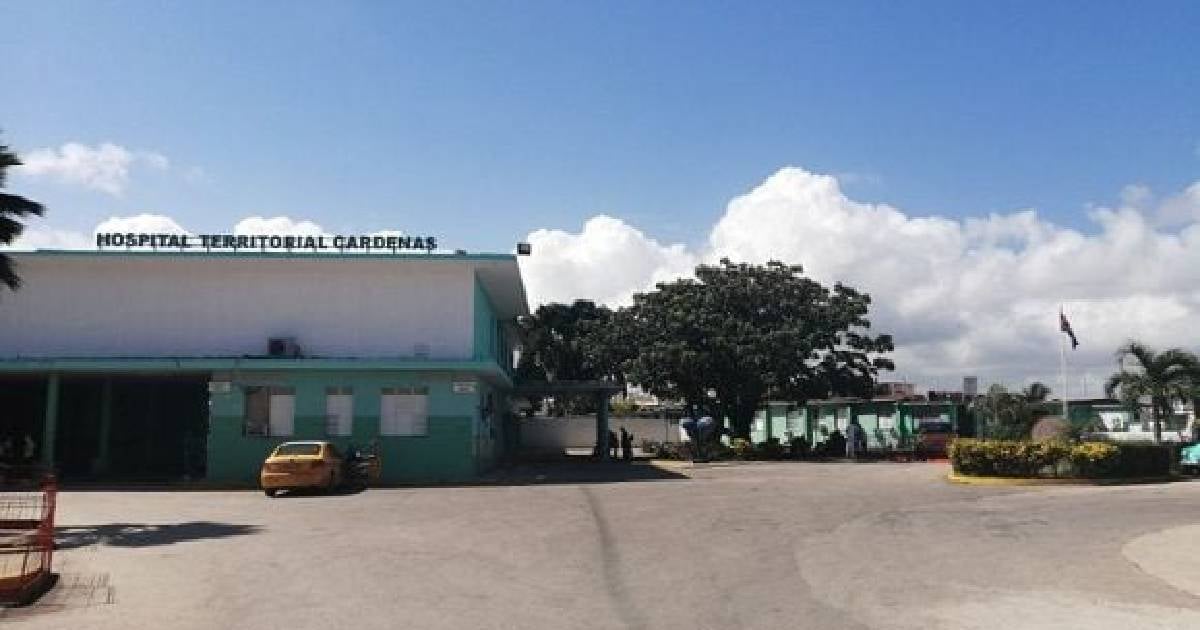
The Provincial Health Directorate of Matanzas denied today that the "Julio M. Aristegui Villamil" general teaching hospital in Cárdenas has suspended its laboratory services due to a lack of reagents, following reports on social media about serious shortages in medical care.
In an official note published on the entity's Facebook profile, the authorities stated that the hospital maintains “a stable and sufficient supply of reagents and materials” and that essential laboratory tests have not been suspended.
They acknowledged that “specific situations of inventory replenishment” may arise, but they insisted that these “have not affected patient care.”
They also invited the community "to stay informed through official channels and not to spread rumors that may cause confusion or distrust."
However, the official version contrasts with multiple testimonies from citizens on the very page of the Provincial Health Directorate of Matanzas.
"I personally have had to buy the reagent for $10 on several occasions in order to have my children tested," reported a mother.
Other users described the lack of basic materials such as thermometers, dipyrone, diazepam, trocar, and even water at the hospital, although they acknowledged the quality of the medical staff.
Another comment warns that "with hepatitis cases, there are no transaminases to run tests; with fever, there's not even a complete blood count. Doctors work miracles with nothing."
Others point out that the serum costs 2,000 CUP and that the only way to obtain tests is by turning to the informal market.
Criticism also targeted the official denial itself: “Whenever they come out to deny something, it’s because they are exposed. This is about the health of human beings; leave the circus to other matters,” wrote a user.
The official reaction comes after the Cuban doctor Miguel Alejandro Guerra Domínguez reported on social media serious deficiencies in the care of dengue patients at the hospital in Cárdenas, where he claimed that basic tests such as leukogram, hematocrit, and platelets necessary for diagnosing and properly monitoring the disease were not being conducted.
“Isn't dengue an emergency? Doesn't thrombocytopenia that isn't detected in time endanger the patient's life?” questioned Guerra, who restricted his Facebook profile after the complaint.
Dengue, transmitted by the mosquito Aedes aegypti, has seen a spike in several Cuban provinces.
The epidemiological situation in Cuba has been complex for several months, with several diseases such as Hepatitis A and chikungunya circulating simultaneously, amid the health crisis and the deterioration of hospital services.
In Matanzas, a Cuban woman described on social media her experience with a virus that caused her intense fever, joint inflammation, and unbearable pain, symptoms consistent with chikungunya.
In the case of Ciego de Ávila, the authorities declared the transmission of diseases caused by arboviruses in at least two areas of the healthcare system: the Belkis Sotomayor polyclinic in the main city and the Sur de Morón polyclinic.
The decision is due to a significant increase in cases of fever and the proliferation of the mosquito Aedes aegypti, which is a vector for several diseases.
Frequently Asked Questions about the Health Crisis at the Hospital in Cárdenas, Cuba
Have the laboratory tests at the Cárdenas hospital been suspended?
According to the Provincial Health Directorate of Matanzas, the Cárdenas hospital maintains a stable and sufficient supply of reagents and supplies, and has not suspended essential laboratory tests. However, testimonies from citizens contradict this version, indicating that they have had to turn to the informal market to obtain analyses.
What is the current situation of dengue at the Cárdenas hospital?
The Cárdenas hospital is facing serious deficiencies in the care of patients with dengue, according to complaints from Dr. Miguel Alejandro Guerra Domínguez, who stated that basic tests such as leukogram, hematocrit, and platelets are not being conducted, which are essential for the diagnosis and monitoring of this disease.
What supply and resource issues is the Cárdenas hospital facing?
Testimonies from citizens indicate a lack of basic materials in the Cárdenas hospital, such as thermometers, dipyrone, diazepam, trocar, and water. It has been reported that even the serum costs 2,000 CUP and that lab tests must be obtained from the informal market. These shortages reflect a serious deterioration of the healthcare system in Cuba.
How is the shortage of healthcare resources affecting the population in Matanzas?
The shortage of healthcare resources in Matanzas has led to the population facing diseases such as dengue and chikungunya without the necessary supplies for their diagnosis and treatment. The lack of insecticides and the accumulation of garbage have complicated vector control, while the population reports government inefficiency.
Filed under: