
Related videos:
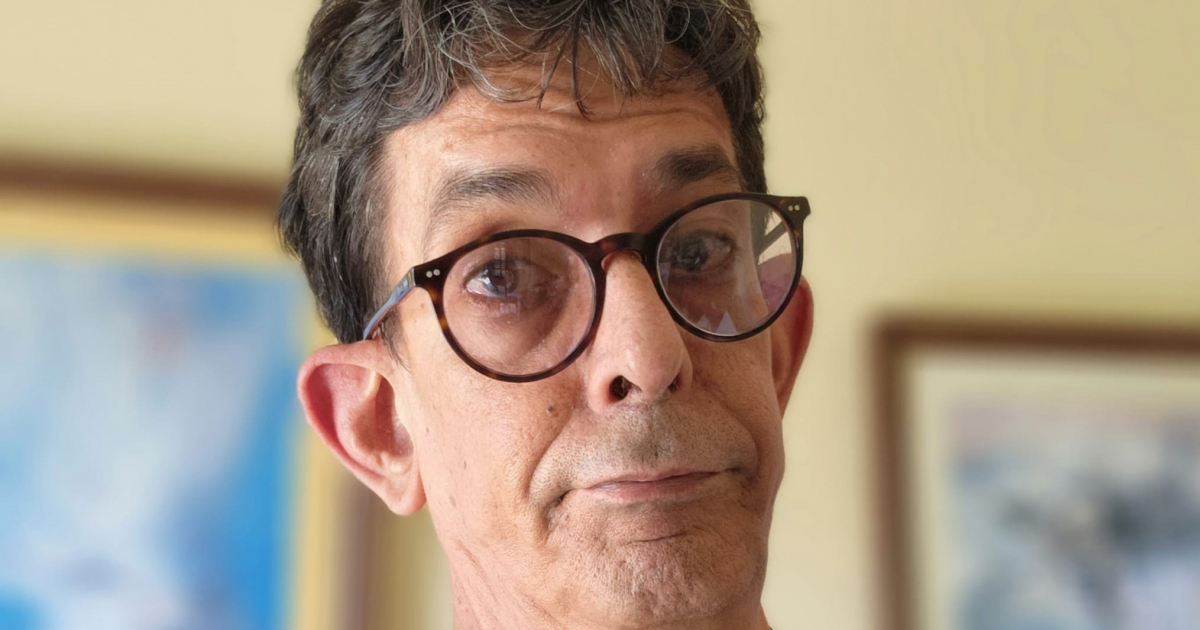
The Cuban actor and comedian Ulises Toirac launched a strong critique of the Cuban government on Facebook, denouncing negligence, the lack of citizen participation, and the inefficiency of state policies that have left the people in an increasingly precarious situation.
In his publication, Toirac noted that the official rhetoric has been marked by the idea that "you are responsible and you are the ones who must solve it," while a "super-paternalism" persists that prevents the population from actively participating in economic and social planning.
According to the artist, the National Assembly and government bodies function more as a formality than as spaces for debate or real decision-making, highlighting the concentration of power in what he refers to as the "Holy Trinity" of Party-State-Government.
"The plans are 'discussed' (with a perennial verticality) in committees that decide what has already been decided, and in each session of the Government, more effort is put into propaganda than into analysis and planning participation," he said.
Ulises outlined the impact of those policies: "Our seas do not produce fish or salt, our lands do not yield crops or animals, our industries are outdated and unable to provide products, and our service companies fail to meet commitments."
He also pointed out that, although the U.S. embargo exists, blaming external factors for all the ills ignores the country's structural problems and turns into a narrative of "blaming others" that fails to produce solutions.
The comedian also criticized the repression against those who attempt to express their opinions, to whom the government only responds with "contempt, defamation, laws, twisted mechanisms of punishment."
It also denounced the growing social deterioration: deaths, suicides, the sick, the poor, and people who are forced to leave the country severely impact the economy, the workforce, and the future of Cuba.
"The people unable to establish a prosperous business or to earn a living for themselves and their families... With every passing minute, the demographic crisis resulting from the exodus deepens the misery of the present and future of our workforce and the essential talents," he emphasized.
The actor concluded with a direct message to the authorities: "Perpetuating oneself in power, regardless of the precepts one believes justify it, hinges on the efficiency of the administration of that power. (...) The future cannot wait until after we die. The future is the next second."
Ulises Toirac's post has generated numerous reactions among his followers, who highlight the growing frustration of the Cuban population due to resource scarcity, lack of opportunities, and the absence of real mechanisms for civic participation.
Frequently Asked Questions about Ulises Toirac's Critiques of the Cuban Government
What criticisms has Ulises Toirac made of the Cuban government?
Ulises Toirac has criticized the inefficiency and paternalism of the Cuban government, pointing out that state policies have left the people in a precarious situation. He has also denounced the lack of civic participation and the repression against those who express critical opinions.
What are Ulises Toirac's main concerns about the economic situation in Cuba?
Ulises Toirac has highlighted the economic collapse in Cuba, warning that the current economic model is unsustainable. He criticizes the lack of production, the inability of industries, and the country's dependence on attracting foreign currency without generating true production. He also points out the severity of the energy crisis and the unchecked inflation.
What is Ulises Toirac's position on the U.S. embargo?
Toirac acknowledges the existence of the embargo but criticizes its use as a excuse to justify Cuba's internal problems. He advocates for internal changes and points out that one cannot rely on a project that cannot be developed due to external factors.
How has the Cuban public reacted to Ulises Toirac's statements?
Ulises Toirac's statements have generated strong support and resonance among the Cuban public. Many citizens share their frustration with the current situation and see in his words a reflection of their own worries and discontent.
Filed under: