
Related videos:
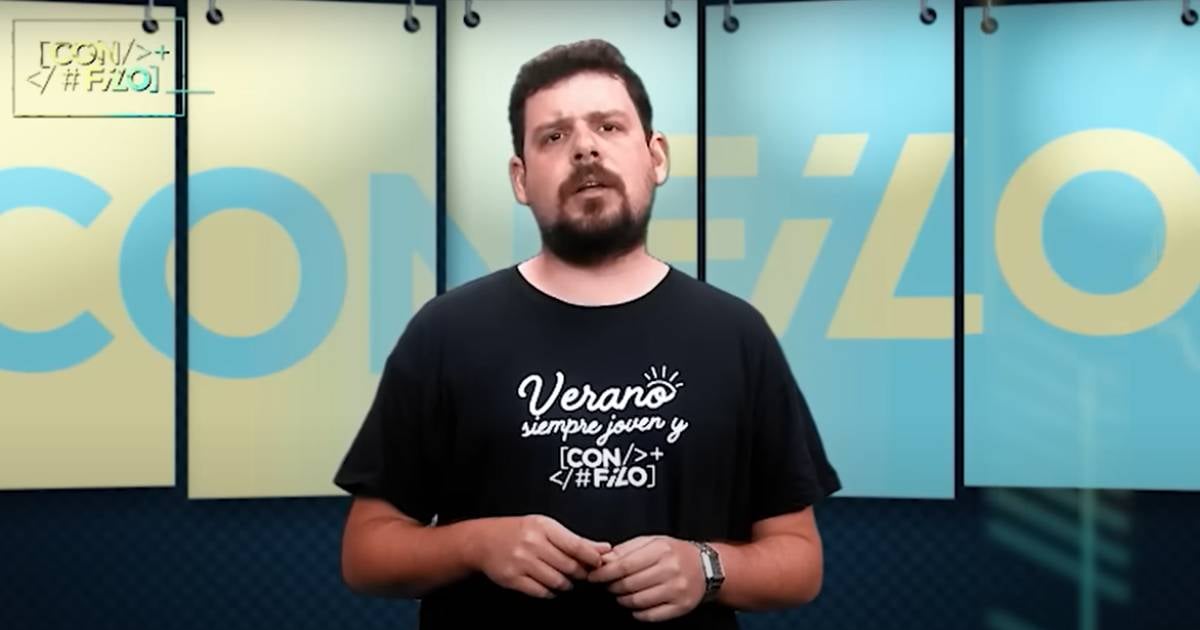
The journalist and host of the television program Con Filo, Michel E. Torres Corona, published a message on his Facebook profile on October 20, Cuban Culture Day, in which he called for staying on the island and praised the resilience of those confronting the crisis from within Cuba.
"A lot of blue, a lot of green, a lot of palm and flag for this October 20th. We experienced a blackout, but at Grupo Editorial Nuevo Milenio, we continue working on the book, by hand and without permission: presentations, authors, donations, libraries, fairs... There is no electricity, but we stubbornly fight for culture, which remains the first thing we must save (to save ourselves)," the presenter wrote.
In his post, Torres defended the duty to stay in the country despite the hardships: "It is our duty to remain on this ship, against all odds, to remain on the island that struggles but never sinks. Cuba needs us, and we need her to be educated, to be free."
The speaker accompanied their text with references to José Martí, Mario Benedetti, and Fidel Castro, along with phrases that highlight the ideas of sacrifice and belonging. In one of the most striking passages, they wrote: “They will have electricity, but not the sugar borrowed from the neighbor... They will not become grain of this sand, they will not be a drop of this violent sea, they will not suffer the pains of this birth of the future.”
Torres concluded his message with a postscript dedicated to those living outside the country: “To the friends and compatriots who were not born or do not live in Cuba but think of it and, above all, act to help it, my fraternal embrace.”
A repeated and contradictory speech
The new sermon from Torres comes just weeks after the host himself acknowledged that the Cuban Revolution is “stuck” and denounced the double standards and the enrichment of a few amidst the national crisis. At that time, he complained about the blackouts and criticized those who “demand sacrifice without experiencing it.”
Despite these flashes of discontent, the presenter has maintained a position defending the regime. In September, he used Con Filo to justify the official manipulation regarding the protests in Gibara, where he denied repression and detentions, echoing the discourse of state media.
And in August, he openly mocked the Cubans who were calling for the closure of Con Filo, sarcastically writing: “Oh, well, if the Cubans are asking for it... let the Norwegians fund us!”. The gesture was interpreted as yet another display of contempt towards the population, in a context of blackouts, hunger, and mass exodus.
The propagandist who preaches from the shadows
Torres Corona, one of the most aggressive voices in state propaganda, has been known for using her television platform to attack independent media —such as CiberCuba—, opponents, artists, and critical journalists. Her rhetoric combines sarcasm, moralism, and patriotic appeals, in defense of the political power that supports her.
In his latest text, he once again resorts to revolutionary epic and the language of resistance, but without providing answers to the crisis affecting the country. While he praises the "integrity and sacrifice" of those who remain in Cuba, he ignores the reasons that have driven more than half a million Cubans to emigrate in recent years: hunger, blackouts, repression, and a lack of future.
Between the blackout and the sermon
Paradoxically, their publication begins by acknowledging that Grupo Editorial Nuevo Milenio, where they work, was without electricity, yet they continued “working by hand and without permits,” which many interpreted as an attempt at empty heroism. “The blackout is not a symbol of dignity, but of the system's failure,” wrote an internet user.
While the regime celebrated Cuban Culture Day amid blackouts and censorship, voices like that of Michel Torres insist on glorifying misery as resistance, in a country where more and more Cubans choose to turn on their own light far from the island.
Filed under: