
Related videos:
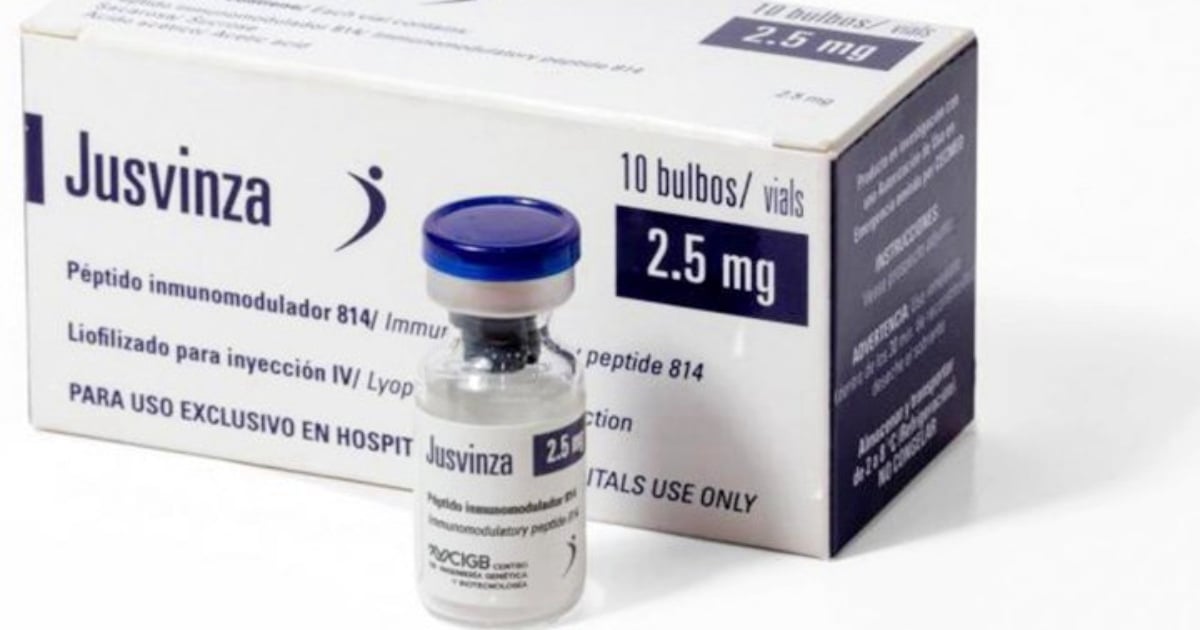
Cuban health authorities have begun a clinical trial with the medication Jusvinza to treat residual polyarthritis in patients recovering from Chikungunya, as confirmed by the state group BioCubaFarma through its social media channels.
The study, approved by the Ministry of Public Health (MINSAP) and the Health Innovation Committee, will be conducted in four hospitals in Havana and Matanzas, two of the regions with the highest incidence of the virus in recent weeks.
The main objective is to evaluate the effectiveness of the drug in reducing joint pain and inflammation, one of the most common and persistent consequences of the disease, which can affect patients' quality of life for months or even years.
What is Jusvinza?
Jusvinza is a synthetic immunoregulatory peptide developed by the Center for Genetic Engineering and Biotechnology (CIGB).
It was initially conceived as a treatment for rheumatoid arthritis, and during the COVID-19 pandemic, it was used in severe and critical patients to control inflammatory processes.
Its use against chikungunya represents an attempt to redirect the product towards new therapeutic indications, in this case, during the convalescent phase of an arboviral disease that is currently affecting tens of thousands of people in Cuba.
The BioCubaFarma group has stated that this strategy responds to "the need to address the chronic sequelae left by the virus," and that the approach is part of a broader national plan for the control of vector-borne diseases.
A critical epidemiological context
The announcement of the trial comes amid a particularly delicate epidemiological situation.
MINSAP itself has confirmed that three viruses are actively circulating in the country: Chikungunya —the one with the greatest current impact—, dengue, and Oropouche.
As of November 5, more than 20,000 cases of Chikungunya had been officially reported.
The national director of Epidemiology, Francisco Durán, has acknowledged the complexity of the situation, particularly in provinces like Havana, Cienfuegos, and Matanzas.
The authorities have announced an increase in fumigation and vector control efforts, with support from specialized vehicles and targeted actions. However, many communities report that the campaigns are sporadic, inadequate, or even nonexistent in some municipalities.
Divided reactions: Between hope and skepticism
The news of the clinical trial has generated multiple reactions on social media, from expressions of support to direct criticism of the healthcare management.
Some users have welcomed the fact that the aftermath of Chikungunya is finally being addressed, describing the persistent symptoms as “debilitating pain” and “a complete loss of quality of life.”
Convalescing individuals have expressed their desire to be included in the study. Others, however, have focused on the lack of preventive care and the basic shortcomings of the healthcare system:
"Why are there no painkillers, antipyretics, or oral rehydration solutions in pharmacies? How is it possible that the basics are not guaranteed, but a trial is launched with a high-tech medication?" questioned an internet user in the comments section of Biofarma's post.
"Prevention is more cost-effective and efficient than treating consequences. The urgent issue is vector control. The virus is not new; why are we only reacting now?" questioned another.
The most common criticism is that the strategy prioritizes the recovery phase of the disease instead of investing more efforts in prevention, especially in the eradication of the transmitting mosquito.
Several users have recalled international experiences with approaches such as the Wolbachia bacteria or genetic modification of vectors, which have not yet been implemented on a large scale in Cuba.
Key data about the clinical trial is missing
So far, no detailed information has been released regarding the inclusion criteria for the trial, nor the expected timeline for its progress or possible subsequent phases. It is also unclear whether, in the event of positive results, the medication will be available for free to patients with sequelae from the virus or if its use will be implemented in the public health system.
In response to citizens' questions, BioCubaFarma has indicated that the trial is essential to legally expand the drug's indication and that there are protocols in place to "accelerate study times without compromising the quality of the process."
However, many affected individuals worry that the results will arrive too late:
"When the trial concludes, we will have already gone through all the aftermath of the virus, and we probably won't benefit from the treatment," someone pointed out.
Lack of transparency and access gap
Comments on social media also highlight the gap between scientific research and everyday care.
Amid the rise of viral diseases, multiple provinces are reporting a shortage of doctors, difficulties in accessing hospitals, a lack of basic medications, and adverse reactions to makeshift treatments.
The MINSAP itself has recommended avoiding self-medication and has advised against the use of ibuprofen in the early stages of Chikungunya, without any clarity on which treatments are available for acute symptoms.
Meanwhile, allegations of corruption related to fumigation services and the informal buying and selling of essential medications persist, with black market prices significantly exceeding the average monthly salary.
A step forward or an incomplete solution?
Although the clinical trial with Jusvinza may represent a real opportunity to alleviate the effects of Chikungunya, it also highlights the structural limitations of the Cuban healthcare system, characterized by disorganization, shortages, and a lack of timely responses.
The scientific initiative comes at a time when thousands of people are still waiting not only for sophisticated cures but also for basic solutions: a pain reliever, a quick diagnosis, timely spraying.
Cuban science is advancing, but public health requires more than clinical trials: it needs coherence, transparency, and responsiveness to a crisis that is affecting not only hospitals but the daily lives of millions of people.
Filed under: