"The national healthcare system continues to face a complex epidemiological situation." With these words, the Deputy Minister of Public Health, Carilda Peña García, confirmed to the national media that Cuba has officially reported 20,062 cases of chikungunya, in addition to a high incidence of dengue and other arboviral diseases.
The report, broadcast by the state television, highlighted that the provinces most affected are Havana, Camagüey, Cienfuegos, Artemisa, and Villa Clara, where the confirmed cases are concentrated.
However, the figure acknowledged by the Ministry of Health (MINSAP) is far from the reports that flood social media daily, where neighbors report entire neighborhoods and families falling ill and question the lack of medical attention and medications.
Very high focus of the Aedes aegypti mosquito, acknowledged the official, noting that 62% of the hotspots are concentrated in Havana, Santiago de Cuba, Camagüey, and Villa Clara, which indicates sustained inefficient work.
He added that the "active search for fever cases" continues with the support of medical students, while nine provinces are conducting intensive fumigations, although there are reports that this treatment has become a business in plain sight of local officials.
Moreover, despite the official rhetoric, public perception is quite different: in numerous municipalities, citizens report that fumigation is irregular, there are no doctors or basic supplies, and many people avoid going to hospitals due to the shortage of medications or the overwhelming demand for services.
The deputy minister also announced that clinical trials will soon begin in Matanzas to apply the immunoregulatory peptide Juzvinza in the treatment of chronic symptoms of chikungunya, and referred to the "international solidarity" received by the healthcare system.
However, the contrast between the official message and the reality experienced by the population remains vast.
In a country where epidemic outbreaks spread quickly and access to medicine is limited, Cubans face arboviral diseases without resources, without trust in institutions, and often without medical care.
What the deputy minister conveniently omits is that there are countless stories of improvisation circulating on social media.
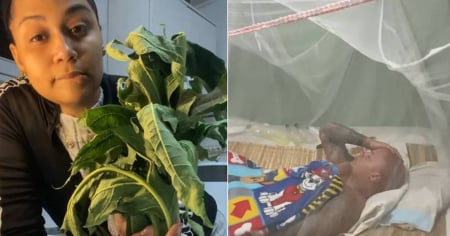
Many people, for example, turn to natural remedies, such as using papaya leaves, to combat diseases like chikungunya, a viral infection that causes high fever, intense joint pain, and general weakness.
Officially, the regime acknowledged in October three fatalities due to dengue. However, according to reports on social media, this number could be higher and even, some attributed to other diseases.
Filed under: