
Related videos:
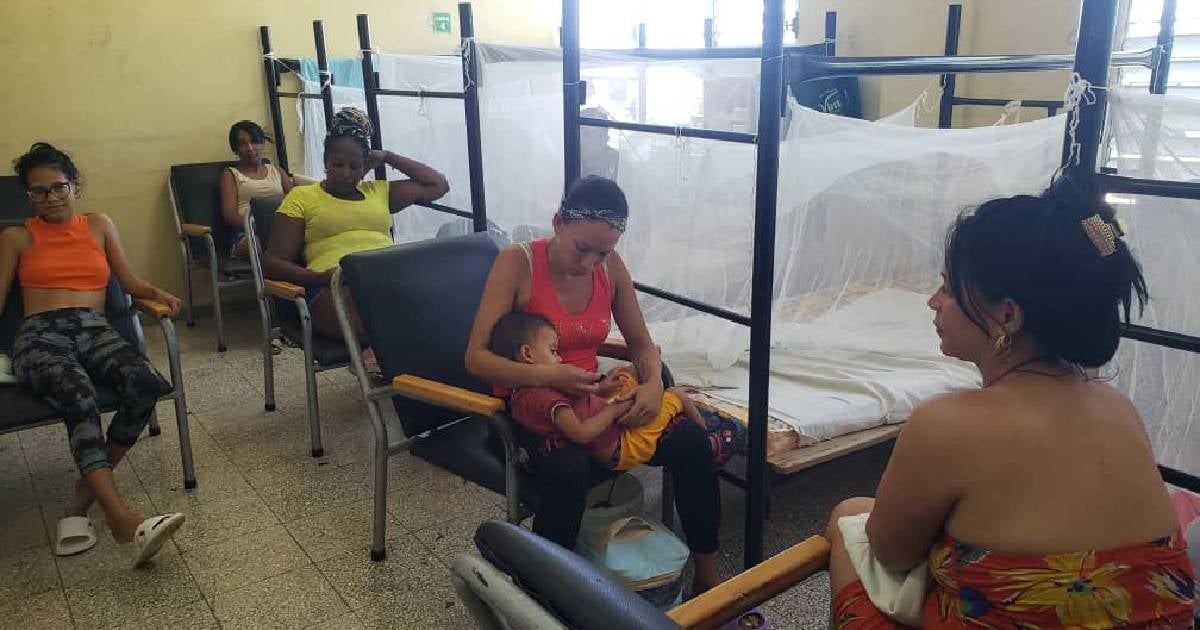
In response to the rise in cases of dengue and chikungunya, the province of Guantánamo has activated a children's shelter at the José Maceo Grajales Pre-University Vocational Institute of Exact Sciences (Ipvce), intended for children with mild symptoms and under constant medical supervision.
The space, which serves as an extension of the Pedro Agustín Pérez pediatric hospital, aims to alleviate the strain on the healthcare system and ensure timely care for minors affected by arboviruses.
It is aimed at children over two years old, without any warning signs, and at patients with chronic illnesses requiring monitoring, reported the official broadcaster Radio Guantánamo through its Facebook account.
According to the report, the shelter provides oral hydration, fever and pain management, laboratory tests, and medical observation 24 hours a day.
Teams of doctors, nurses, laboratory technicians, and sanitation staff work at the site.
The authorities explained that the measure aims to alleviate congestion in the provincial hospital, which is facing a high demand due to the resurgence of arboviruses in the Guantanamo capital and nearby municipalities.
Guantánamo is one of the provinces most affected by the outbreak of dengue and chikungunya, amidst a general deterioration of the public health system and a shortage of basic medical resources throughout the eastern region.
The decline in hospital pediatric care coincides with a significant increase in cases of febrile and gastrointestinal illnesses across the island.
Recently, a woman in Cuba highlighted the critical situation faced by families at the Juan Manuel Márquez pediatric hospital in Havana.
Sick minors must register on makeshift lists before receiving emergency care, while dozens wait for their turn.
The independent journalist José Luis Tan Estrada documents an equally concerning situation at the local pediatric center in Camagüey, where entire families spend hours waiting for appointments for children exhibiting symptoms suggesting dengue, such as high fever, vomiting, and extreme weakness.
The response from the Ministry of Public Health (Minsap) has been labeled as hasty in light of the epidemiological emergency.
With dengue, chikungunya, and other mosquito-borne diseases spreading simultaneously, authorities have advised the public to "cover the body" as a form of protection, due to the lack of repellents and effective tools to combat Aedes aegypti.
The fumigation teams mentioned by the official Peña García are insufficient against a widespread outbreak across the territory, with an incidence of 24.3 cases per 100,000 inhabitants, according to official statistics from Minsap.
The deputy minister herself acknowledged that the fumigations are concentrated "in the areas of greatest intensity and where there is evidence of transmission," a euphemism that reveals the shortage of fuel and insecticide to tackle the problem on a national scale.
Filed under: