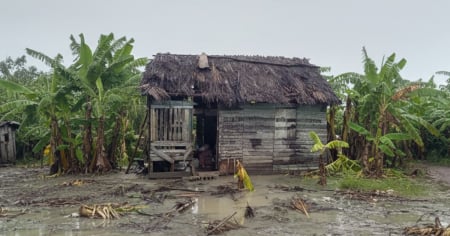
Cuban leader Miguel Díaz-Canel delivered a speech in Santiago de Cuba in which he urged Cubans to reflect on all that they are capable of creating, amidst the misery and devastation left by Hurricane Melissa in the eastern part of the country.
The cyclone made landfall in Cuba on October 28, and three weeks later, the situation has turned into a torment for the residents that seems never-ending, rather than improving.
The ruler acknowledges that Cuba "is going through a particularly difficult moment," but evaded any responsibility of the Government regarding the hardships faced by thousands of families.
"There is still much to recover regardless of the effort that has been made. Many areas remain without electricity and potable water service, hundreds are still evacuated, and the greatest work is yet to be done in the entire area that is underwater, where there are floods and we also face the threat of the rains from the past few days," he stated.
The cyclone left in its wake destroyed crops, collapsed homes, and thousands of evacuees without electricity or access to drinking water. However, instead of offering concrete solutions, Díaz-Canel insisted on "calling on the people to create" and emphasized the need for "greater popular participation."
These types of political statements are a repeated formula by the regime whenever the country plunges into a new crisis. "The moment is one of struggle and recovery," the president asserted, urging the Committees for the Defense of the Revolution (CDR) and other official organizations to "take on a leading role" in the reconstruction efforts.
Their words, spoken amidst ruins, mud, hunger, and despair, stand in stark contrast to the reality of thousands of families who have lost everything and are still not receiving assistance from the State, which charges for basic necessities such as mattresses and building materials.
In Santiago de Cuba, Holguín, and Granma, testimonies from residents reveal a scene of neglect. Many survive with the little they managed to salvage, while others have been waiting for an official response for weeks.
The shortage of food, the collapse of the electrical system, and the lack of safe housing exacerbate a humanitarian situation that the regime tries to disguise with propaganda. "From the National Defense Council, we will continue working tirelessly," assured Díaz-Canel.
Filed under: