
Related videos:
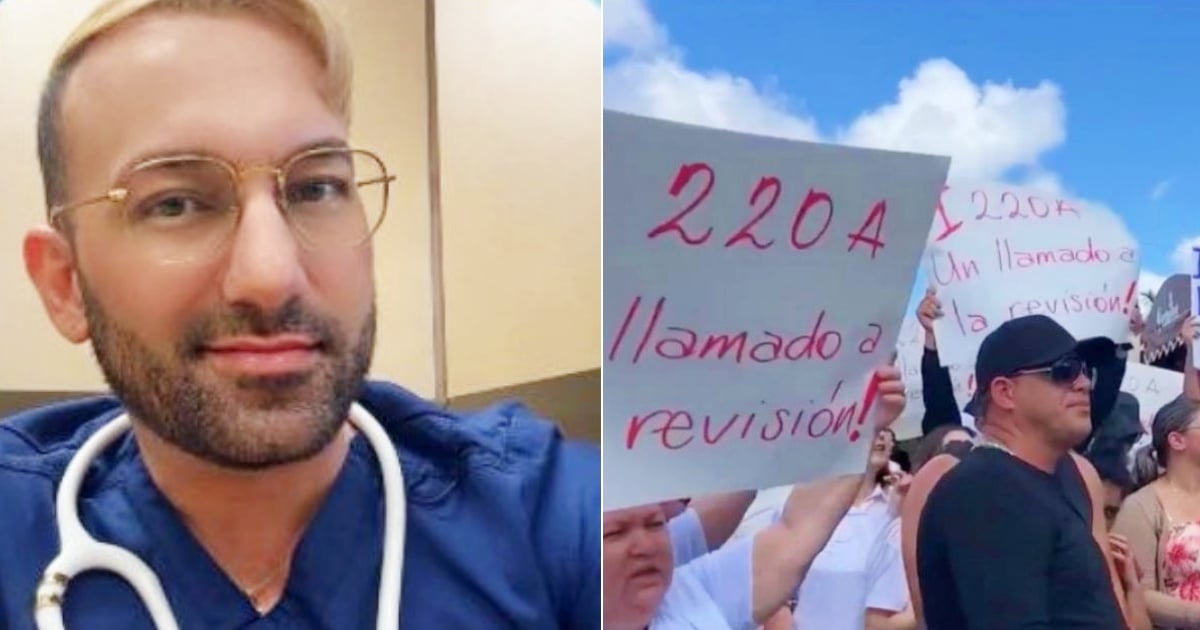
José Enrique Batista Méndez, a Cuban doctor with an I-220A who has been detained by U.S. immigration authorities since June, has lost his final hearing for political asylum and is one step away from being deported.
Dr. Batista was arrested in San Antonio, Texas, on June 26, and has since been in ICE custody.
According to a report by the journalist from Univision, Javier Díaz, the judge who handled his case did not grant him political asylum, dismissing the reasons presented by his defense and closing the door to his legal stay in the United States, unless an urgent appeal is successful.
The case has become another symbol of the ordeal faced by thousands of immigrants with I-220A status in U.S. territory.
Five months of confinement and an unfavorable final decision
From Cuba, his mother, deeply affected by the news, wrote to Díaz: "I am a Cuban mother who suffers, Javier."
His message conveys the anguish of a family that, like many others, hoped for a better future outside the island.
According to her own account, José Enrique, upon arriving in the United States, registered as a medical assistant and joined the organization Solidaridad sin Fronteras, with the intention of validating his profession and contributing to the U.S. healthcare system.
Now, he faces the real threat of being sent back to a country where, according to his mother, “he will never be able to practice as a doctor.”
The weight of an increasingly restrictive immigration policy
The case has highlighted what many immigration lawyers have been reporting: the disconnect between some U.S. courts and the reality in Cuba.
“Judges in other states don’t even know where Cuba is on the map, nor are they aware of the political situation,” said a lawyer quoted by Díaz, noting that many proceedings seem to prioritize deportation statistics over individual justice.
The I-220A tag—a type of supervised release without parole granted by ICE—has become a legal trap for thousands of Cubans who crossed the border believing in a more humanitarian immigration policy.
Without access to the Cuban Adjustment Act and without immediate protection against deportation, many have been detained without having committed any crimes and face deportation despite their professional background or commitment to the community.
A collective cry: "Don't deport him!"
The reaction on social media was immediate and overwhelming. Hundreds of Cubans, both within the United States and from the island, have expressed their anger and sadness. The messages, ranging from pleas to political denunciations, depict a desperate community.
“May God place His hand upon this young man, a prepared man who needs it”, wrote an internet user.
Another mother shared her own story: “My daughter has also been detained since June, waiting for her final hearing. It’s very sad to witness what is happening.”
Some people denounced the apparent arbitrariness of the system: “I don’t understand anything. That young doctor is a professional and they want to deport him, while others committing outrageous acts are granted bail.”
Another user added: “In Cuba, it’s not easy to become a doctor these days. They work in terrible conditions and don’t even have prescriptions.”
Among the dozens of testimonies, one sentiment stands out: the pain of seeing a professional treated like a criminal.
"All Cubans fleeing a regime deserve political asylum. This doctor, if he returns to Cuba, won't even be able to practice his profession," commented an internet user.
"The American dream has become a nightmare."
The disappointment with the current immigration policy is a recurring theme.
"This is the country of the American nightmare, not the American dream," wrote an outraged commentator. Another asked, "Where are the congress members who promised laws for the I-220A?"
There were also those who expressed their bewilderment with the judicial system: “It’s madness. They have denied asylum even to people who defected from official missions. They only care about deporting us.”
Others pointed out the apparent contradiction between the strictness towards doctors and the leniency towards certain public figures, such as the recent leak that El Cangrejo's friend was released at the beginning of this month.
"While they let the regime's friend go, they want to deport this poor doctor," asserted an internet user.
Amid the pain, hopeful voices also emerged: “God has His perfect timing”; “God will be your advocate. Do not lose faith. He will make it happen.”
The doctor's mother, Alina, also expressed her confidence in faith: “You were born to heal. To give love. You will achieve it wherever you are. Mom adores you.”
José Enrique Batista Méndez can still appeal the judicial decision, although the chances of success largely depend on the system that has kept him incarcerated for five months without a criminal conviction.
Its story, however, has already impacted thousands. Not just as an individual drama, but as a portrayal of a crisis that involves doctors, teachers, engineers, young people, and entire families.
Filed under: